




Medical PCB Requirements: Density, Reliability and Flexibility
Medical electronics has been a driver of board technology for longer than most people realise. Imaging systems, monitors and laboratory instruments were among the first products to demand high layer counts, tight impedance control and traceability, and the pressure has not eased: the devices have become smaller, and some of them now go inside the patient.
This article looks at what medical applications ask of a printed circuit board, how those requirements differ from ordinary consumer products, and which of the current trends are changing the design rules. The direction of travel is consistent across all of them: more function in less space, with a higher standard of evidence that the design behaves as specified.
Why Medical Products Push Board Technology
The function of a medical device is usually concentrated in a small volume. A monitor that a patient wears, a camera that is swallowed, or an implant that replaces a physiological function all have to perform in a space where there is no room for a large assembly and no tolerance for a failure.
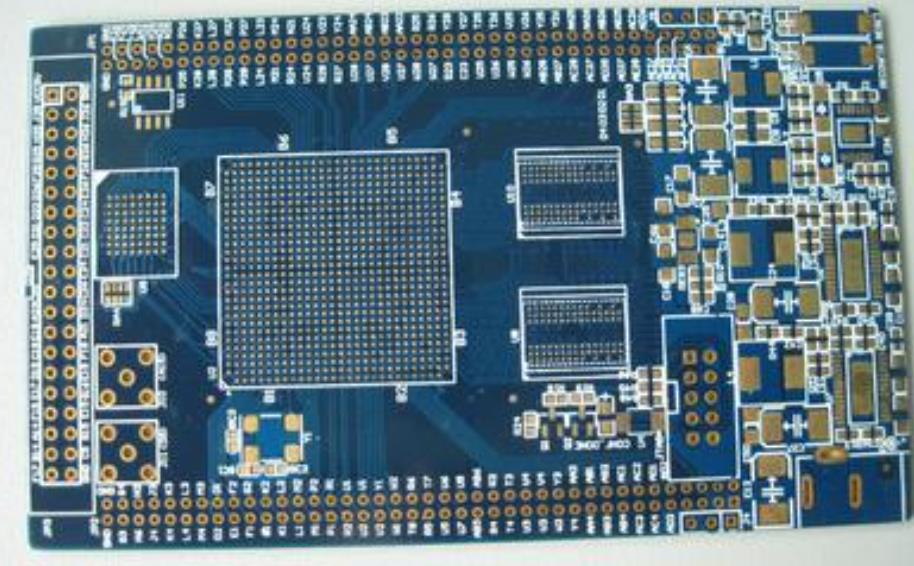
That combination drives density. Devices that were once through-hole with generous lead pitches are now fine-pitch surface mount, and packages with pitches that were unusual a decade ago are routine. As the packages shrink, the escape routing has to move to inner layers, which is why the constructions that were once reserved for portable consumer products now appear in medical designs.
Reliability Requirements and What They Change
A failure in a medical device is not a warranty event. It can affect a diagnosis, interrupt a therapy or endanger a patient, and the design consequence is that reliability is treated as a specification rather than a goal. Components are derated, redundancy is added where the function justifies it, and the board itself is qualified against the environment it will see. That qualification is a documented process, and it covers the assembly rather than only the components.
The fabrication follows the same logic. Plating thickness, via construction, cleanliness and the finish are all controlled and recorded, because the assembly has to be traceable back to the panel it came from. Processes that are optional on a consumer board, such as additional plating steps, surface metallisation and controlled cleanliness, become part of the standard route. The characteristics of a carefully made board are the ones that matter most here.
Embedded Components and Inner-Layer Parts
One of the clearest trends is that components are moving inside the board. A resistor can be formed as a layer of resistive material laminated to an inner layer, which removes the part from the surface and frees the area above it for routing or for another device.
The benefit is not only space. An embedded part shortens the circuit path, which improves behaviour at high frequency, and it removes a solder joint from the assembly, which removes a potential failure site. The cost is that the value is set during fabrication and cannot be changed afterwards, so the design has to be right before the board is built. The filling and plating steps used in high density construction are part of the same toolbox.

Wearable and Flexible Electronics
A patch that monitors a vital sign, a sensor worn on the skin or a device that conforms to a limb cannot be built on a rigid board. Flexible circuits and stretchable interconnects are made by patterning metal and semiconductor layers on a bendable substrate, or by using materials that deform with the body.
Conductive polymers, thread-based conductors and thin-film transistors all belong to this family, and they allow an assembly to be woven into fabric or bonded to skin. The design problem changes from impedance to mechanical endurance: the board has to survive repeated bending, and the failure mode is a cracked conductor rather than a solder joint. The requirements for a prototype build apply, with the mechanical cycling added.
Implantable Devices and Hygiene Requirements
A device that is placed inside the body has to satisfy requirements that have nothing to do with electronics. It must be sealed against moisture, it must not release materials that the body will react to, and it must survive the sterilisation process it will be subjected to.
Sterilisation is often the constraint that shapes the design. Heat, radiation and chemical sterilants each affect materials differently, and a coating that is acceptable on an ordinary board may not be acceptable here. A medical PCB intended for implantation is therefore specified with its coating, its cleaning and its sealing as part of the same requirement, and the finished board is qualified as a system rather than as an electrical assembly.
Manufacturing Trends: Printed and Additive Processes
Additive manufacturing is beginning to change how boards are produced. Printing the substrate layer by layer, and then adding conductive or functional inks, allows a board to be built where it is needed rather than cut from a panel, and it allows properties to be varied from one area to another.
For medical products the attraction is customisation. A device that has to fit one patient can be produced as a single unit, and a sensor array can be printed directly onto a conformal surface. The technology is not yet a replacement for conventional fabrication, but it is already used where the shape matters more than the density. The combination of a conventional core with printed elements is where the protection provided by a conformal coating becomes part of the design rather than a finishing step.
What Medical Designs Ask of the Data Package
The documentation that accompanies a medical board is part of the product. The stack-up, the impedance targets, the finish, the cleanliness specification and any special process are stated rather than assumed, because the assembly has to be reproducible years after the design was released.
Traceability is the other requirement, and it reaches back to the panel and forward to the finished device. Recording which finish was used and which soldering process the assembly uses is normal practice in a consumer product and mandatory here, because a change that is invisible on the bench can invalidate a qualification.
Sensors, Imaging and Monitoring Devices
Most of the electronic content of a medical product is sensing and signal processing. Imaging systems have used boards for decades, and the same technology now sits behind blood pressure monitors, glucose meters and heart rate sensors, where the accuracy of the reading depends on the quality of a very small analogue signal.
That puts analogue layout rules at the centre of the design. A sensor interface carries microvolt signals next to digital logic and switching supplies, and the arrangement of the grounds, the filtering at the connector and the placement of the conversion stage decide whether the reading is stable. The mixed-signal layout guidelines describe the arrangement that keeps those two domains apart.
FAQ
Do medical boards always need the highest possible layer count? No. Density is driven by the function and the package sizes. Many medical products use conventional constructions, and the reliability requirements are met by process control rather than by layer count. The layer count follows the routing requirement, exactly as it does on any other board.
Why are embedded components attractive in medical designs? They save surface area and remove solder joints. In a device where a failure is serious, eliminating a joint that can fail is as valuable as the space it saves.
Is flexible electronics ready for volume production? For wearable sensors, yes, and the volume is growing. For implanted devices the qualification burden is much heavier, and rigid or rigid-flex constructions remain the practical choice.

1 Comment
Component Sourcing and Counterfeit Parts
[…] a documented purchase is worth more than a cheaper one without paperwork. The approach used for regulated medical boards is the same discipline applied because the consequences are […]