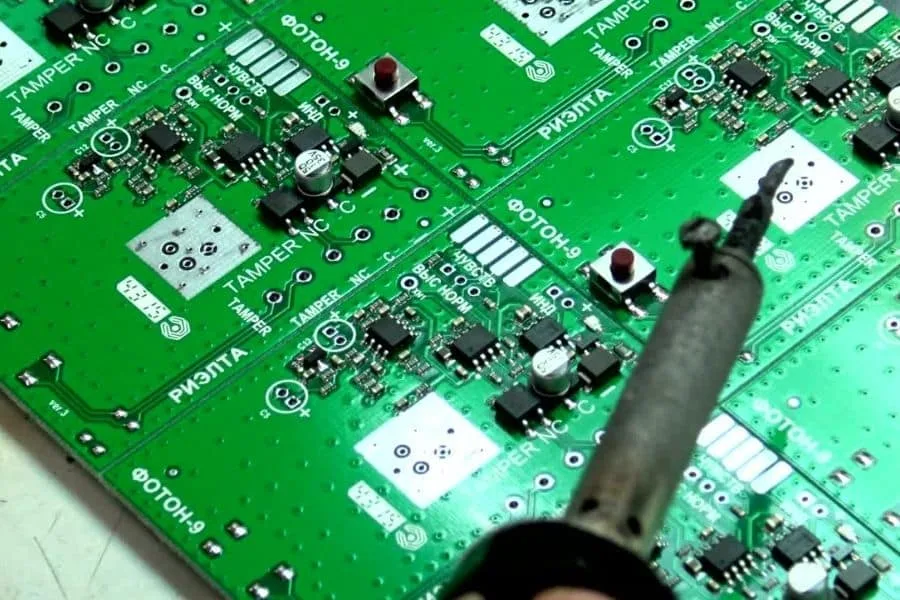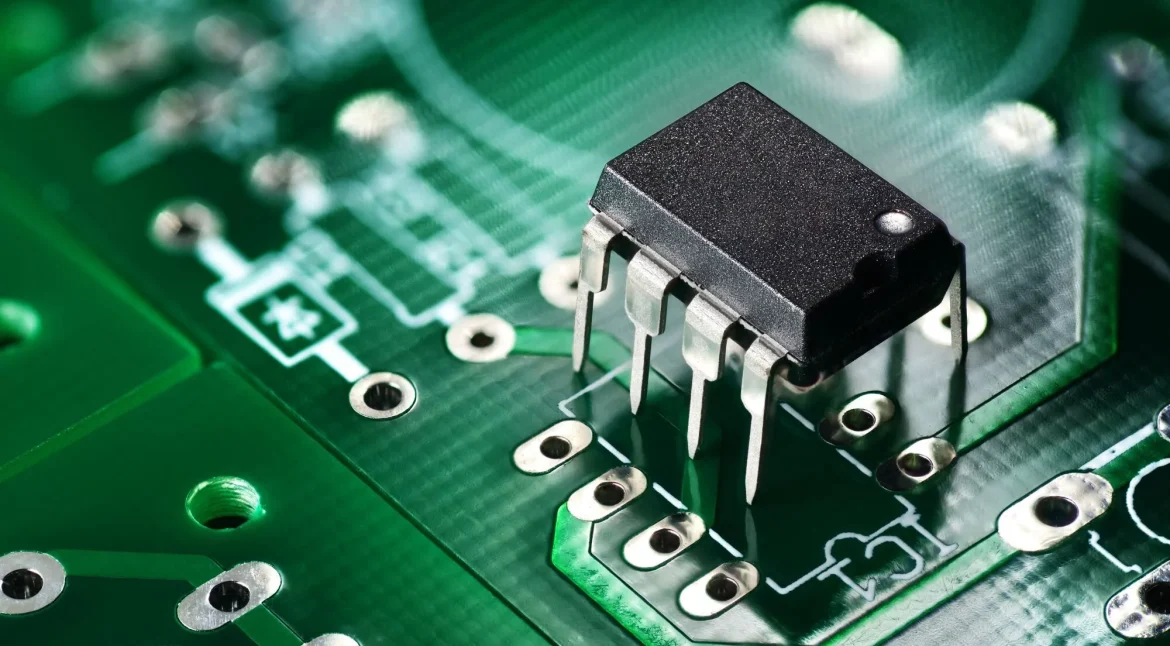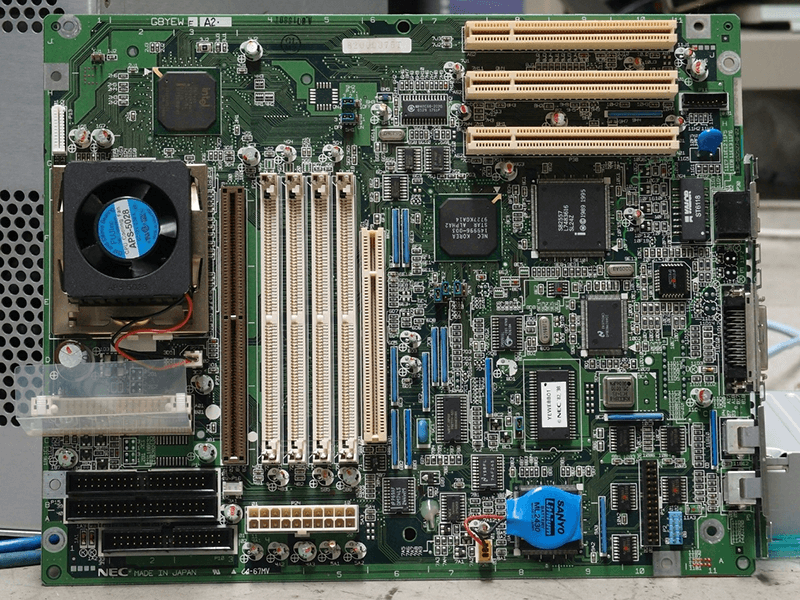
Solder Mask Opening Over PCB Traces: When and How Most copper on a finished board is covered by solder mask, and that covering is assumed rather than designed. Occasionally a designer deliberately removes the mask over a trace, and the result is a solder mask opening that exposes bare copper.…
Blind Via PCB Manufacturing: Stackup, Process and Reliability A blind via is a hole that starts on an outer layer and stops at an inner layer instead of passing through the board. The idea is simple and the manufacturing is not: the hole has to be drilled to a controlled…
Flexible PCB Thickness: Choosing Between 0.05 mm and 0.5 mm Thickness is the first number anyone asks about a flexible circuit and the last one that gets designed properly. It decides how tightly the board can bend, whether it can survive being bent repeatedly, whether it will feed through an…
EMC and EMI Control in PCB Design: Practical Rules Electromagnetic compatibility is rarely decided by a single component. It is decided by the shape of the current paths on the board, and those paths are laid out long before anyone runs a compliance test. Every signal that leaves a driver…
Hierarchical Design for Complex Schematics A schematic that fits on one sheet is easy to read and easy to review. A schematic that describes a system with a processor, two interfaces, a power supply and a dozen connectors does not, and the point at which a flat drawing stops working…
Flying Probe Testing: What It Catches and When to Use It Electrical test is the last chance to find a defect before a board leaves the factory, and it answers a question that no amount of visual inspection can. A board can look perfect and still have an open circuit,…
Pad Design Criteria for Reliable Solder Joints A pad is the only place where the board and the component are physically joined, and it is sized and shaped by a set of rules that are less about the electrical design than about the soldering process. A pad that is too…
PTFE Dielectric Constant in FR4 Boards: A Design Guide The question of what PTFE dielectric constant applies inside an otherwise ordinary board sounds simple, and the short answer is that it does not change: the material keeps its own value wherever it sits. The longer answer is that putting two…
Lead-Free Solder vs Leaded Solder in PCBA Assembly Soldering is one of the few areas of electronics where two entirely different processes coexist in the same industry, and the choice between them is made long before the oven is switched on. Lead-free solder dominates consumer production because regulation demands it,…
High Current PCB Design: Width, Copper and Heat Sooner or later a design has to move more current than a comfortable trace width allows. A motor driver, a battery charger, a distribution rail or a heater all push the copper toward the point where one millimetre per ampere stops being…