Stackup Choices: Low Loss Laminate or FR4 Every board begins with a stackup, and that decision is hard to reverse. An FR4 PCB stackup fixes the dielectric constant, the loss, the layer count and the impedance targets before a single trace is routed, while a high frequency PCB stackup changes…
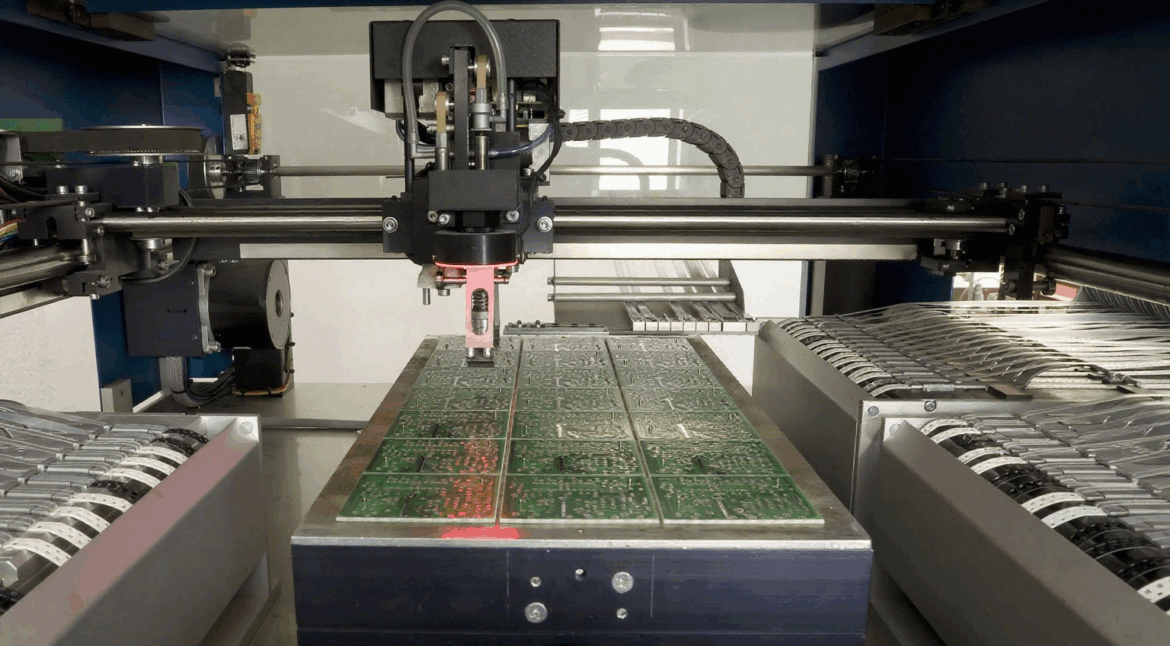
A PCB Design Process From Request to Release A PCB design process is less about the layout tool than about the sequence of checks that turn a schematic into a manufacturable board. Boards fail not because the routing was technically difficult but because the inputs were incomplete, the key nets…
PCB Short Circuits: Tracing the Cause in Fabrication A short circuit found after fabrication is expensive, but the conditions that produce one are usually visible in the process long before the boards reach electrical test. Most shorts originate in the wet process, where a thin residue of metal survives the…
Rigid Flex PCB Cost: Layer Count, Volume and Region Rigid flex boards are the most expensive mainstream interconnect technology in volume production, and they are also the one whose price is hardest to predict from a drawing alone. Layer count, flex layer material, stiffener placement, via structure and order quantity…
HDI Board vs Blind and Buried Via Boards Two boards can both be described as high density and still be built by completely different processes. One may need a single laser drilling step on each side of a conventional stack; the other may need two lamination cycles and four laser…
PCB Annular Ring: Drill Tolerance and Design Rules Every plated hole in a board is surrounded by a ring of copper, and the width of that ring is one of the least glamorous and most consequential dimensions in the design. An annular ring that is too narrow breaks out of…
PCB Plasma Etching vs Chemical Etching: Which Process Fits Etching is the step where a circuit pattern stops being a drawing and becomes copper, and the process chosen decides how faithfully that transfer happens. Chemical etching dissolves metal in a wet bath and remains the backbone of ordinary PCB production,…
Ultrasound Probe PCB Design: Channels, Materials and Stackup An ultrasound probe is a dense analogue front end wrapped in a hand held package. Its printed circuit board carries the transmit pulses, the returning echoes, the beamforming connections and the control signals, all inside a body small enough to press against…
FPC Design Rules for Flex Circuits That Bend Repeatedly A flexible circuit that fails in the field usually fails mechanically, and the mechanics are decided long before the layout is drawn. The copper type, the film, the adhesive system, and the pad finish all contribute, and several of them interact…
Ceramic Substrate Manufacturing: Tape Casting to Co-Firing A ceramic substrate is used where neither FR-4 nor a metal core board can do the job. Ceramic offers the best combination of electrical insulation, thermal conductivity, and dimensional stability at temperature, which is why it appears in power modules, high-brightness lighting, and…