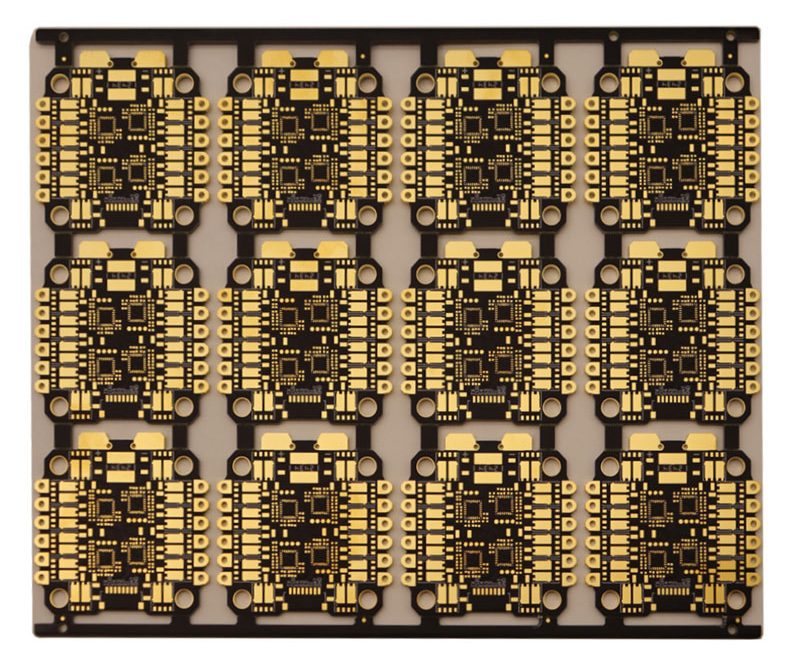
FPC Process Capability: Limits of Flexible Boards Every fabricator publishes a capability sheet, and every experienced designer knows that the numbers on it describe what is possible rather than what is economic. On a flexible printed circuit the gap between the two is wider than on a rigid board, because…

LED Strip FPC: Voltage Drop, Pitch and Bend Design A flexible circuit behind an LED strip is a power distribution board with a lighting function. It carries a constant current along its length, feeds a large number of light emitting diodes at a regular pitch, and then has to be…
Switching Power Supply Layout: Current Loops, Placement and Routing A switching converter lives or dies by its layout. The schematic can be textbook correct and the component values perfect, yet the finished board can still radiate badly, run hot, or refuse to regulate under load. The reason is that a…
Operational Amplifier Layout: Input Range and Feedback Stability An operational amplifier looks like the simplest part of a board. A handful of resistors, a couple of capacitors and a supply connection are usually enough to make it work on a bench. Yet the same circuit can oscillate, latch or drift…
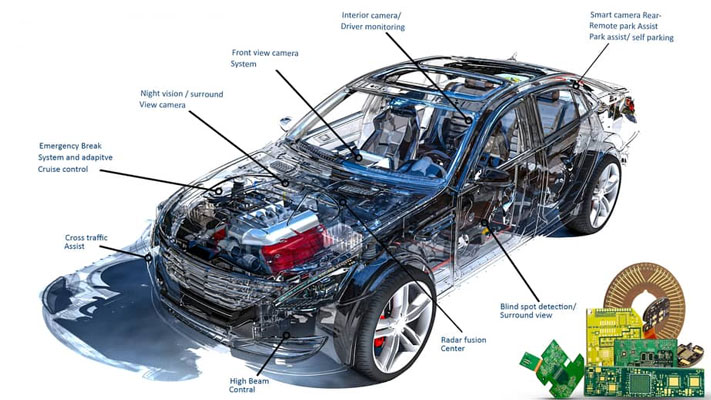
EV Battery Protection Board: BMS Layout and Isolation Every electric vehicle carries a board whose only job is to decide whether the battery is allowed to deliver current. The battery protection board sits between the pack and the vehicle, it monitors the voltage, the current and the temperature, and it…
HDI Lamination and Structure: Sequential Build-Up with Resin Coated Copper High density interconnect boards are not made by drilling smaller holes in a conventional stack. They are built in stages, adding a pair of thin, dense layers on top of a finished core, then repeating the cycle if the design…
Microcontroller Support Circuitry on a PCB A microcontroller is a complete computer on one die: a processor, memory for data, non-volatile memory for the program, and interfaces to the outside world. What it is not is a finished circuit. It still needs power, a timebase, a way to be reset,…
Wet Film vs Dry Film Photoresist in PCB Image Transfer Image transfer is where a circuit pattern stops being artwork and becomes copper, and it is one of the few steps that every board passes through regardless of layer count. The resist that carries the pattern decides how fine the…
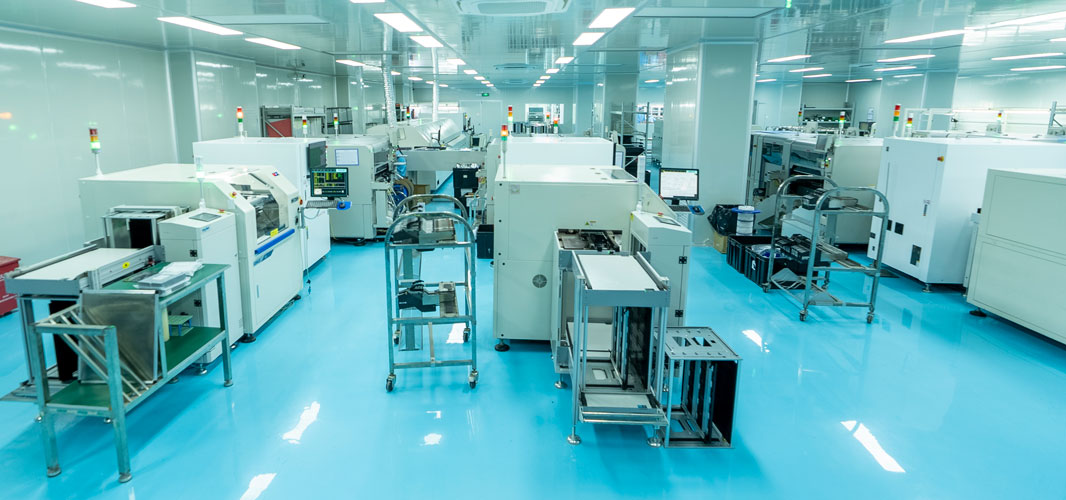
Reflow Soldering and Wave Soldering in the SMT Line An assembly line is a sequence, and the sequence is not arbitrary. Each station performs an operation that assumes the previous one was done correctly and prepares the board for the next, so a mistake at the printing stage cannot be…
Chemical Etching vs Laser Etching for PCBs Etching is the process that turns an image on a copper clad panel into a circuit. The two families that matter in practice are chemical etching, which dissolves the metal through a mask, and laser etching, which removes it with focused energy or…