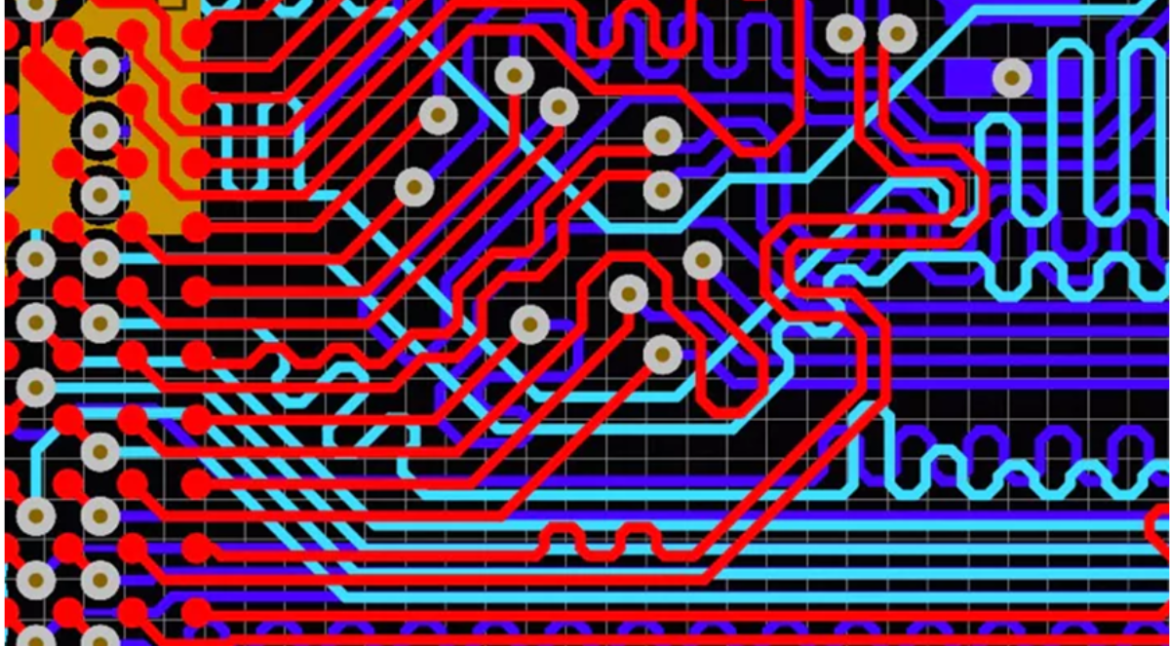
High Frequency PCB Design: Materials, Impedance and Loss Above a few hundred megahertz the board stops being a set of connections and becomes a transmission medium. Trace geometry, the material between the trace and its reference plane, and the roughness of the copper all shape the signal, and a design…

Wireless Charging PCB: Coil Drive, Shielding and Thermal A wireless charging board converts a DC supply into an alternating magnetic field and couples it into a coil in the device being charged. The electronics are a resonant converter with a coil as its load, and the layout has to handle…
FPC Adhesive Backing: Acrylic, Epoxy and Adhesiveless Most flexible circuits are built from layers that are bonded together, and the material doing the bonding is the adhesive backing. It sits between the copper and the polyimide film, holds the coverlay in place, and to a large extent decides how many…
GPU PCB Design: Layer Counts, Materials and Signal Integrity A graphics card is not a motherboard with a bigger chip on it. The GPU package carries thousands of solder balls, the memory sits on very short and carefully matched traces, and the power delivery section can pull hundreds of amps…
Medical PCB Prototyping to Production: Process and Requirements A medical PCB is not simply a well made circuit board. It is a board whose behaviour has to be demonstrable, whose materials have to be traceable, and whose process has to stay identical from the first prototype to the ten thousandth…
PCB Laminate Materials: Dielectric Properties, Tg and Reliability A laminate is chosen by its specifications, and the specifications that matter most are the dielectric constant, the glass transition temperature and the reliability data that sits behind them. Brand names are convenient shorthand, but the same family of materials is available…
ENIG Surface Finish: Process, Thickness and Performance Electroless nickel immersion gold is the surface finish that most engineers specify when they want a flat, long lasting, solderable pad and are prepared to pay for it. It is the finish of choice for fine pitch components, for ball grid arrays and…
Controlled Impedance PCB: Principles and Stack-Up Design Controlled impedance means that a trace has a defined characteristic impedance and that the board is built to keep it there. It is one of the few requirements in printed circuit design that cannot be satisfied by the layout alone, because it depends…
Copper Core PCB: Thermal and Electrical Advantages Explained A copper core PCB uses a solid copper base instead of aluminium under the dielectric. The construction looks like an ordinary metal core board, but the difference in thermal conductivity is large enough to change what the board can do. Copper conducts…
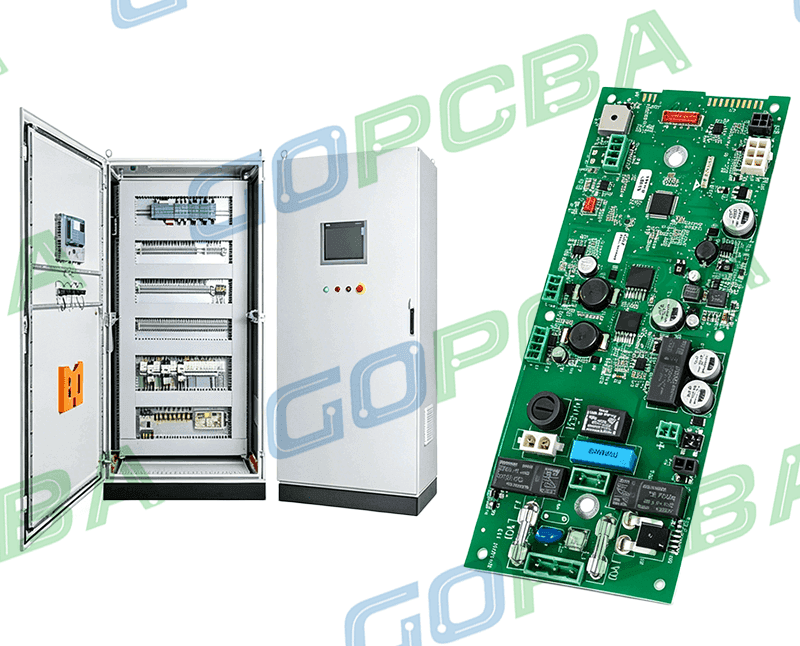
Data Acquisition PCB Design for Industrial Systems A data acquisition PCB in an industrial setting has to measure signals that arrive from sensors tens or hundreds of metres away, in an environment full of motors, contactors and variable-frequency drives. The measurement chain has to survive that environment and still resolve…