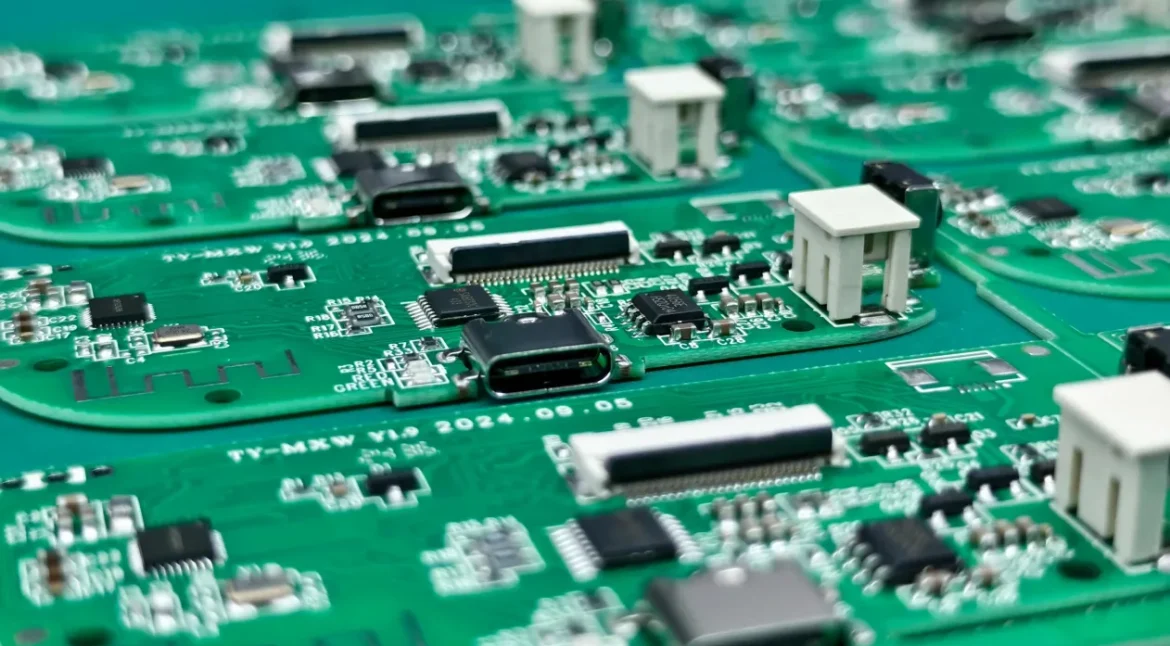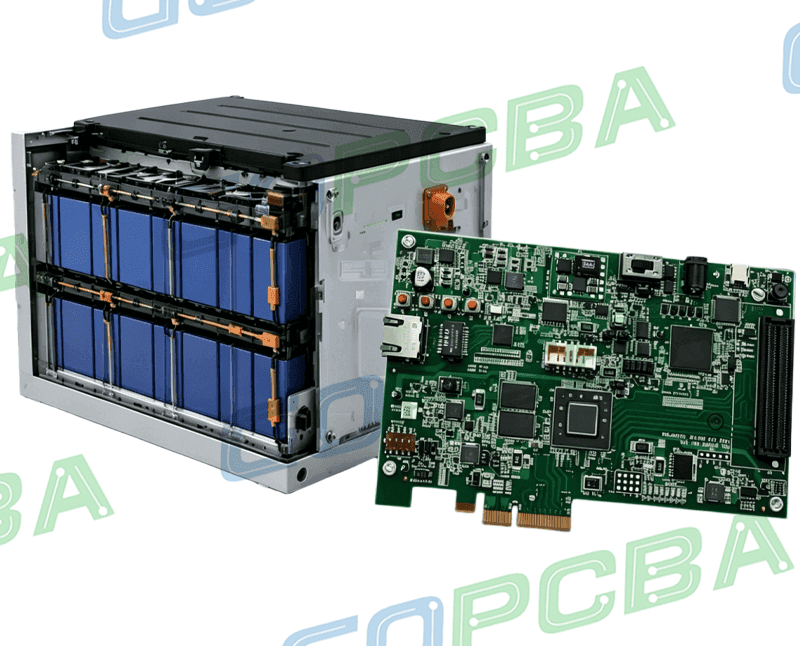
Lead-Free PCB vs Halogen-Free PCB: What the Labels Mean Lead-free and halogen-free sound like two ways of saying the same thing, and in specifications and purchase orders the two labels are quoted interchangeably. They are not the same requirement, they are not enforced by the same regulation, and satisfying one…
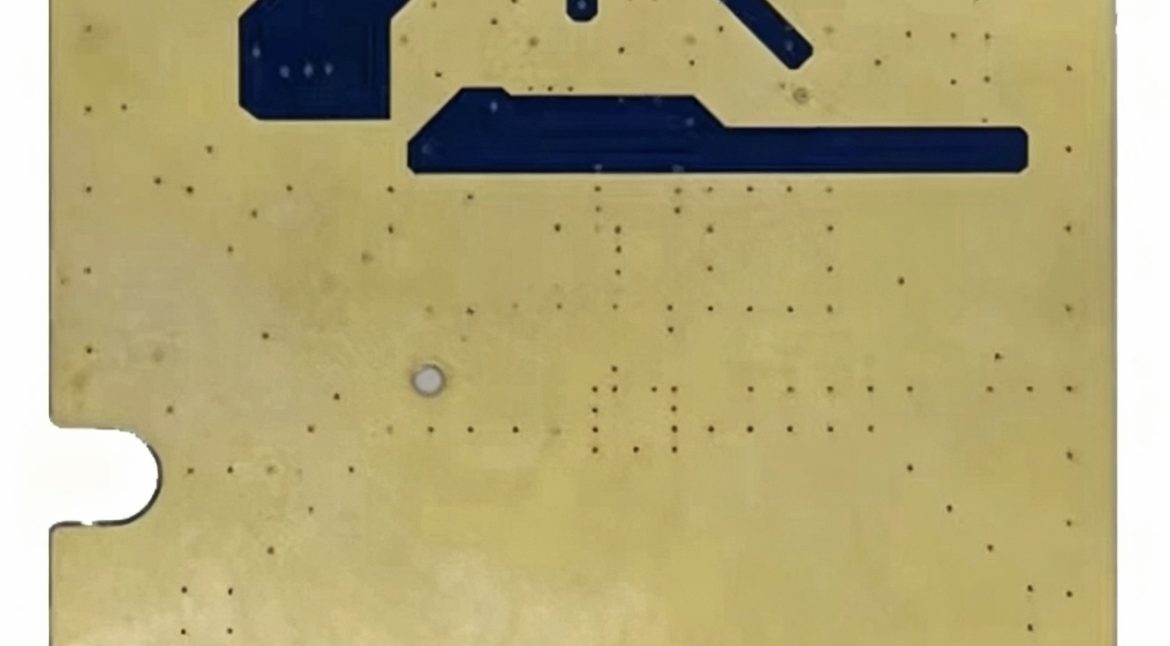
PTFE PCB: Properties, Grades and Applications Teflon is a trade name that has become a shorthand for a family of materials, and in printed circuit work it usually means a laminate built on polytetrafluoroethylene. The reason it appears in electronics is that PTFE has a combination of properties no ordinary…
Power Supply PCB Design Cost Drivers: What Raises the Price A power supply PCB costs more than a signal board of similar size, and the difference comes from four design requirements: current, heat, isolation and safety compliance. Each of them changes the fabrication route, and they interact with one another.…
Semiflex PCB: Rigid Boards With a Controlled Bend Region A Semiflex PCB is a rigid FR-4 board that has been locally thinned so that it can be bent once during assembly. It uses the same materials and the same fabrication sequence as an ordinary multilayer board, which is what makes…
Capacitive PCB: Electrode Design for Touch and Proximity Sensing A capacitive PCB turns the board itself into a sensor. Electrodes are formed in copper on the surface or on an inner layer, and a controller measures the small change in capacitance caused by a finger approaching the electrode. There is…
Satellite Communication PCB: Manufacturing and Design Guide A satellite communication terminal is a radio that must work once, in a place where it cannot be repaired, after a launch that subjects it to levels of vibration and acoustic energy that no terrestrial product sees. The board inside it is designed…
UPS Circuit Board: Structure, Function and Design An uninterruptible power supply is a product defined by what it does in the two milliseconds after the mains fails. Everything else, the efficiency, the size, the price, is secondary to the requirement that the load never sees the interruption. The UPS circuit…
Halogen-Free PCB: A Complete Technical Guide Halogen-free is a material specification, not a performance claim, and treating it as a marketing label rather than an engineering requirement is how designs end up paying more for a laminate that solves a problem they do not have. The requirement exists because certain…
Laboratory Equipment PCBA: Noise Floor and Stability A laboratory instrument is judged by what it can measure, and that is set by the noise floor of its electronics rather than by the resolution of its converter. A sixteen-bit converter on a board with a noisy supply gives worse results than…
Smart Charger PCB: Design for Battery Charging Circuits A charger board looks simple from the outside and is anything but. It has to convert an input that may range from a weak USB port to a car supply, deliver a controlled current into a battery whose voltage and temperature change…