Black Hole Direct Plating: Carbon Process Control for Hole Walls Black hole direct plating makes a drilled hole conductive with a carbon dispersion instead of a copper layer, so the panel goes into the plating line without a chemical copper step. It removes a complex and expensive process, and in…
Back Drill Depth Control: Stub Length and Depth Tolerance Back drilling removes the unused portion of a plated through hole after the board has been plated, so that the copper that carries the signal stops at the layer it serves. The material left behind is the stub, and it behaves…
Solder Paste Drying on the Stencil: Tack, Open Time and Print Quality Solder paste drying on the stencil is one of the quiet causes of poor printing. The paste is a suspension of alloy powder in flux, and the flux is designed to stay active for a defined period after…
Plating Voids and Copper Coverage Control A plating void is a break in the copper that is supposed to line a hole, and it is one of the few defects that can pass every surface inspection and still fail the first thermal cycle. The void may be a pinhole in…
Copper Foil Profile After Etching: Etch Factor and Trace Sidewall Etching does not cut a trace with vertical sides. The chemistry removes copper downwards and sideways at the same time, so the finished conductor has a trapezoidal cross-section whose width at the top is set by the resist image and…
Drill Breakage Prevention in PCB Drilling Drill breakage is the most expensive routine failure in a PCB drilling room, because the machine keeps running after the tool has gone. The hole is not drilled, the panel may still pass the machine count, and the loss is discovered later as an…
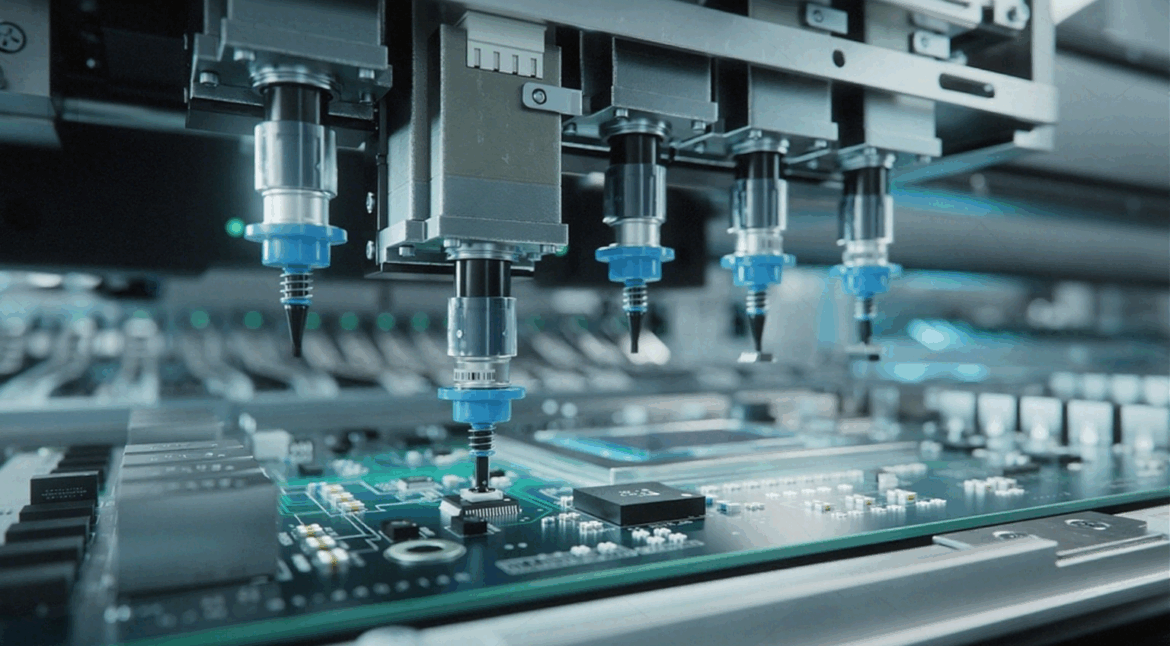
Feed Rate and Gantry Control on SMT Placement Machines Feed rate and gantry settings sit between the two things every placement line is asked to deliver: speed and placement accuracy. A feed rate that is set too high advances the tape before the nozzle has cleared it, while a gantry…
Data Logging for Reflow Process Verification Data logging turns a reflow oven from a machine with setpoints into a process with evidence. A zone temperature display tells you what the oven was asked to do, while a logged profile on a production panel tells you what the assembly actually experienced,…
Panel Plating Thickness Uniformity and Current Density Control Panel plating deposits copper over the whole surface of the panel and into every hole at the same time, before the outer layer pattern is formed. It is the simplest way to build a reliable barrel, but it is also the step…
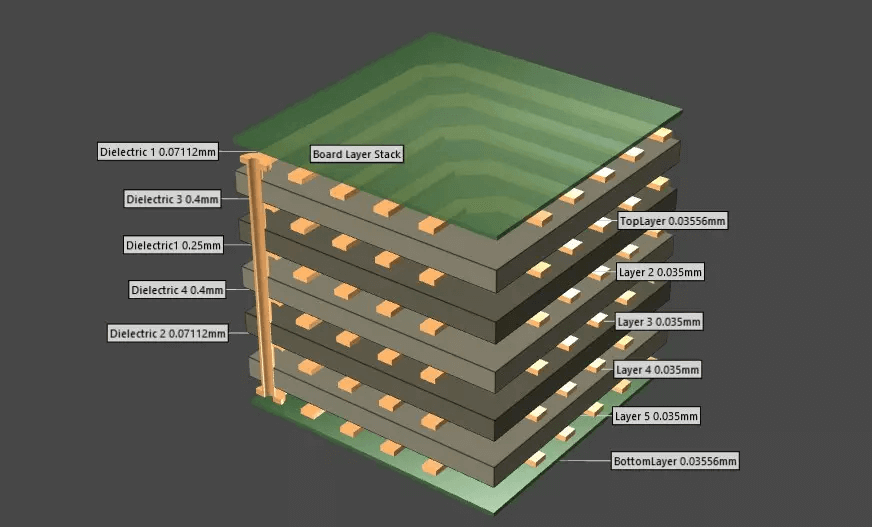
Board Thickness Variation Control in Lamination Board thickness variation is a lamination problem that surfaces as an electrical one. A panel that is 0.08 mm thicker at one corner than at another will show a different dielectric thickness on the same layer, and a controlled impedance design that was simulated…