Crystal Oscillator vs Active Clock in PCB Design Every digital design has at least one clock, and the component that generates it is often chosen in a hurry. A passive crystal and an active oscillator are both sold as clocks, they occupy a similar footprint, and their behaviour is quite…
Impedance Continuity in PCB Design A trace has a characteristic impedance only while its geometry is consistent. The moment the return path changes, the width changes or a via interrupts the structure, the impedance changes with it, and the signal reflects. Impedance continuity is the practice of keeping that structure…
Power Plane Decoupling to Cut Common-Mode EMI Most designs treat a decoupling capacitor as the answer to power integrity, and for the first few hundred megahertz that assumption holds. Above that, the capacitor stops behaving like a capacitor and the power distribution network starts behaving like an antenna. The resulting…
Bluetooth PCB Design Guidelines for Stable 2.4 GHz Links Bluetooth radios are inexpensive, well documented, and easy to buy as a certified part. That is exactly why so many products still fail radiated emissions testing or lose range in the field: the radio is fine, but the layout around it…
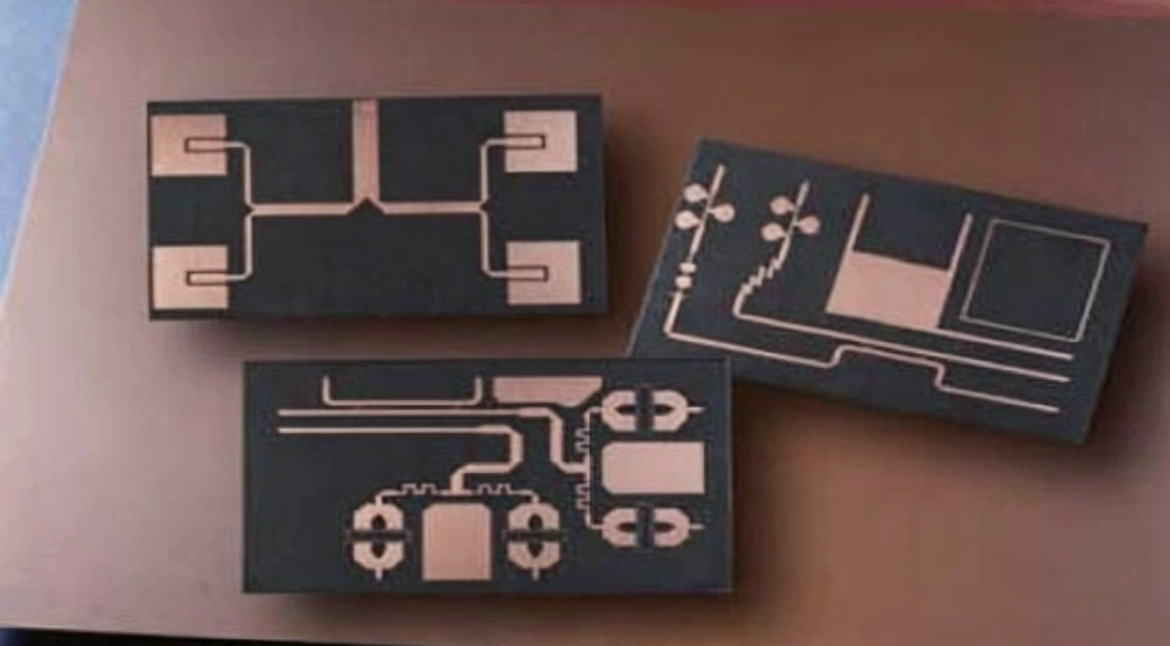
Microstrip vs Grounded Coplanar Waveguide for RF Boards A microstrip line and a grounded coplanar waveguide carry the same signal, but they behave differently in ways that matter once the frequency climbs into the gigahertz range. Both are quasi-TEM structures: the electric field runs between the conductor and the ground,…
RF PCB Design Workflow: From Schematic Capture to Fabrication Data Radio frequency boards fail in ways that digital boards usually do not. A trace that looks harmless on screen can behave like a small antenna, and a ground plane that is perfectly adequate at 10 MHz can turn into a…
How PCB Design Choices Reduce Manufacturing Cost A design that is electrically correct can still be expensive to build. Most of the PCB manufacturing cost is locked in before the first quote is requested, because it follows from geometry, tolerance, layer count and process steps rather than from negotiation. Engineers…
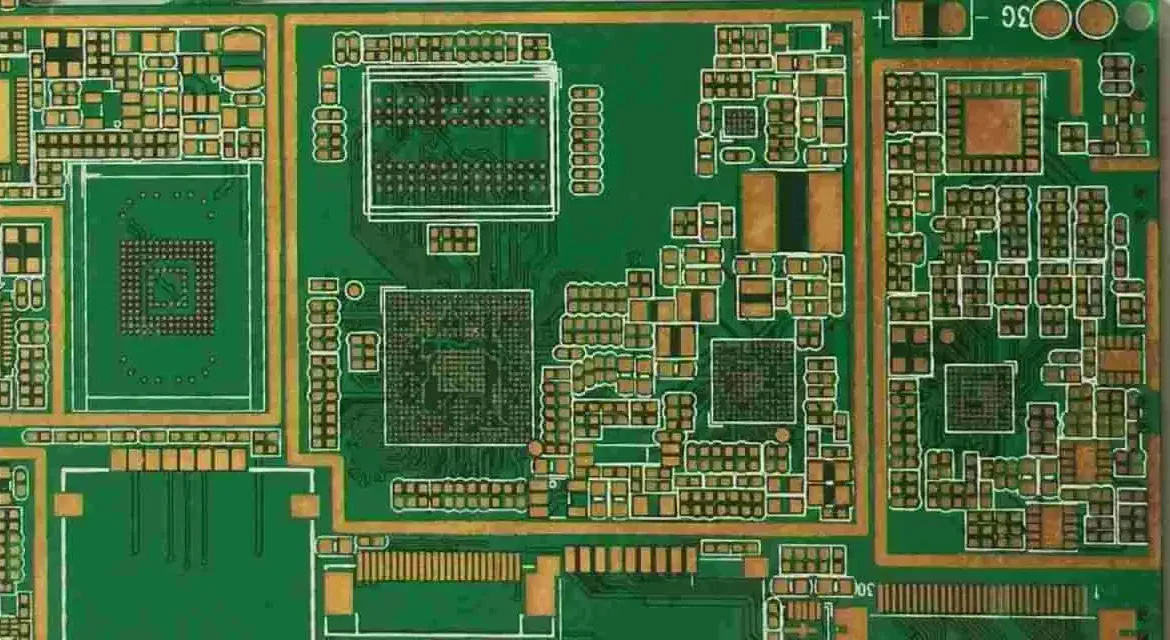
Android Core Board PCB Layout: Routing a Quad-Core Module An Android core board packs a cellular modem, a quad-core application processor, LPDDR memory, eMMC storage and a power management unit into an area smaller than a business card. The PCB layout for that kind of module is unforgiving, because high-speed…
Impedance Boards and How to Choose a Fabricator A controlled impedance board is a normal board with one additional requirement: the characteristic impedance of specific traces must fall within a stated band. That requirement propagates backwards through the whole fabrication process, because impedance depends on trace width, dielectric thickness and…
What Drives PCB Lead Time Lead time is one of the two numbers every buyer asks about, and it is the one that is most often misunderstood. It is not a measure of how fast the machines run. It is the sum of the time each step takes, plus the…