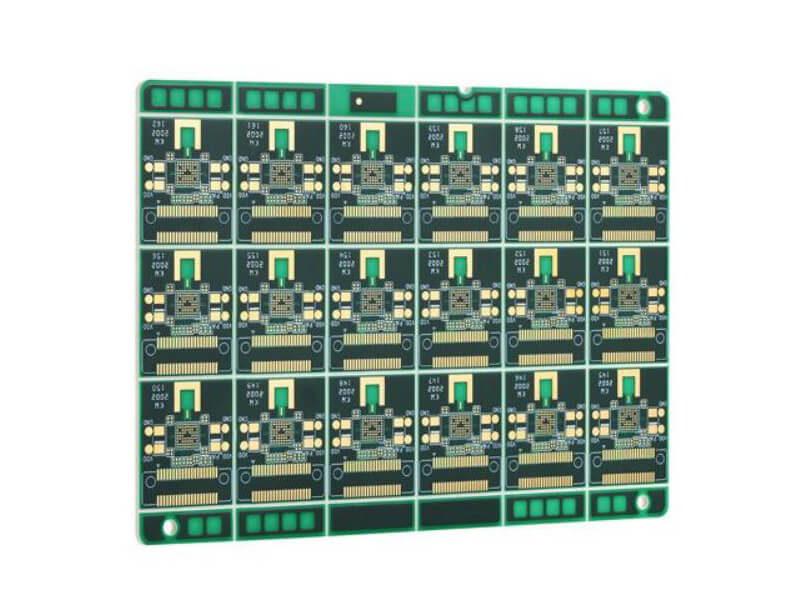
Stepped Substrate Impedance Matching for Millimetre-Wave Boards As frequencies move into the millimetre-wave range, board construction stops being uniform. A design may transition from a very thin core to a standard laminate, from one dielectric constant to another, or from a package substrate down onto the board through an interposer.…
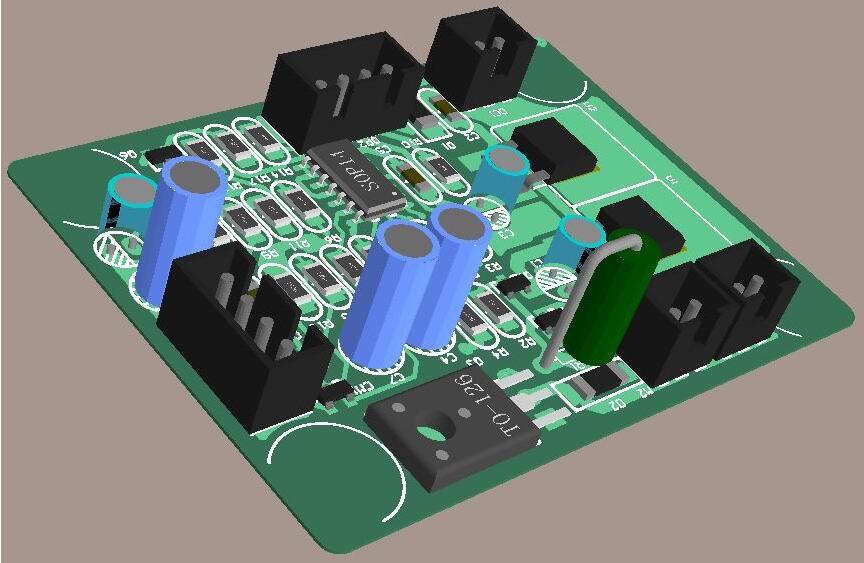
Padless Via Design for High-Density Interconnect Every via in a conventional board carries a pad: a ring of copper around the drilled hole that exists to absorb the tolerance between where the hole was drilled and where the circuit expects it. That ring is a design compromise, and at high…
High-Speed FPGA PCB Design: Stack-Up, Power and SerDes A modern high-speed FPGA is not a component that gets placed on a board; it is a system that imposes requirements on everything around it. Transceiver lanes run at tens of gigabits per second, the device may present dozens of them, and…
Eight DFM Principles for PCBA Assembly Design rules for assembly are not a list of prohibitions. They are the accumulated answers to a simple question: what does the assembly process find easy, and what does it find difficult? The eight principles below are the ones that pay back most often,…
Fabrication Datums and Fiducials in PCB Design Every process in PCB manufacture locates the work against something. Drilling, imaging, pressing and placement all have to know where the board is before they can act on it, and they all get that answer from datums that the designer placed in the…
Filter Circuit Layout in High-Speed PCB Design A filter that performs well on the bench and poorly in the product is usually not a component problem. It is a layout problem: the inductance of the return path, the area enclosed by the current loop and the impedance between the capacitor…
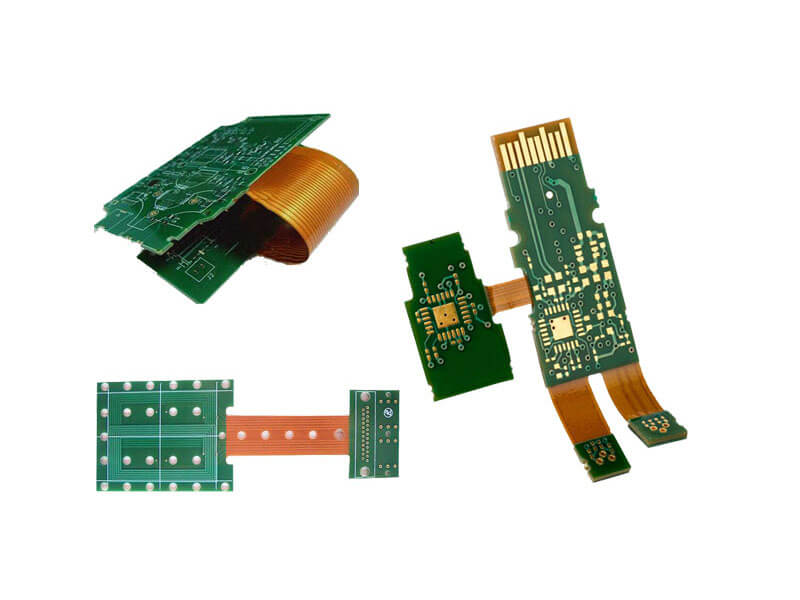
PCB Hole Processing and Rigid-Flex Fabrication Two processes decide how much of a circuit board’s reliability is real rather than assumed: the treatment of the holes that connect its layers, and the construction of the flexible and rigid sections in a board that has both. The first governs whether a…
Preventing Tombstoning and Cold Joints at the Design Stage When a chip component stands up on one end after reflow, or a joint that looks complete turns out to be electrically open, the first suspects are usually the paste, the profile or the placement machine. Production data points somewhere else:…
SMT Process From Printing to Test: Parameters and Defects The surface mount process is a chain of short operations, each with its own parameters, and the quality of the finished assembly is decided by how well they agree with one another. A solder joint that looks wrong is rarely the…
Factory Size and Fit: Which Tier Suits Your Order Assembly businesses fall into recognisable groups, and the grouping is not a ranking. A factory organised around very large orders is not better or worse than one organised around many small ones; it is a different instrument, and the question is…