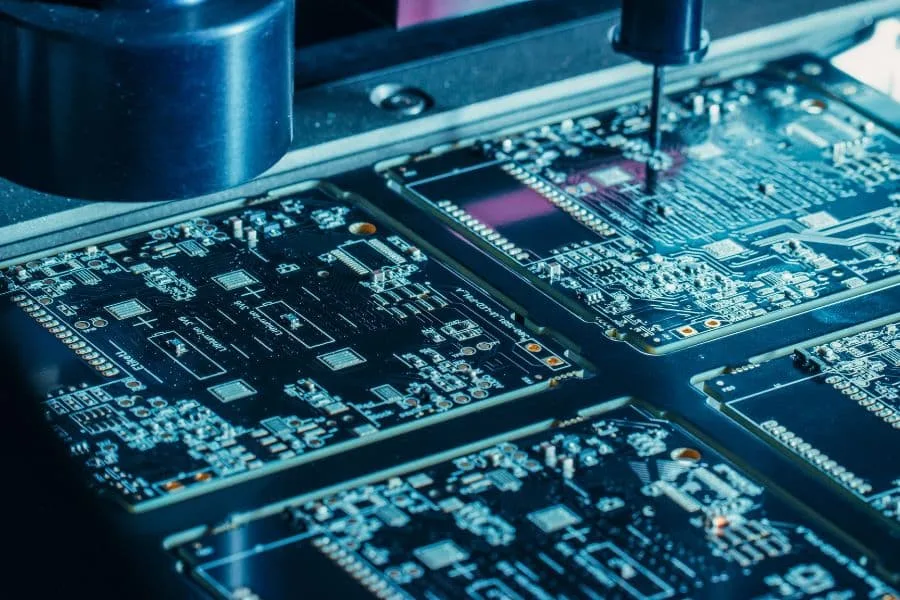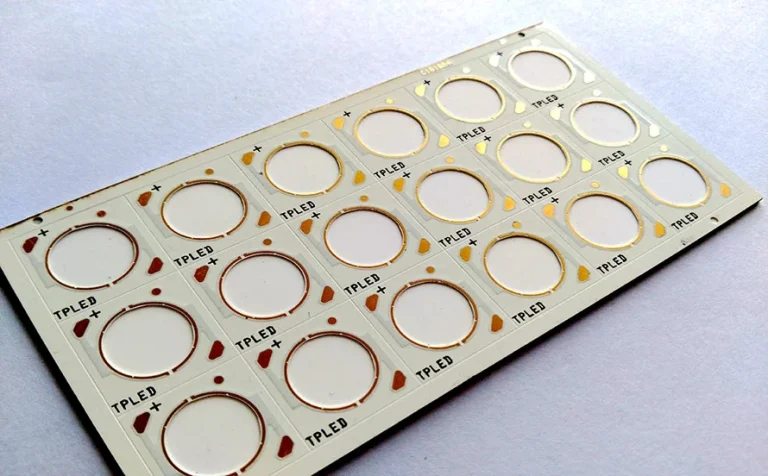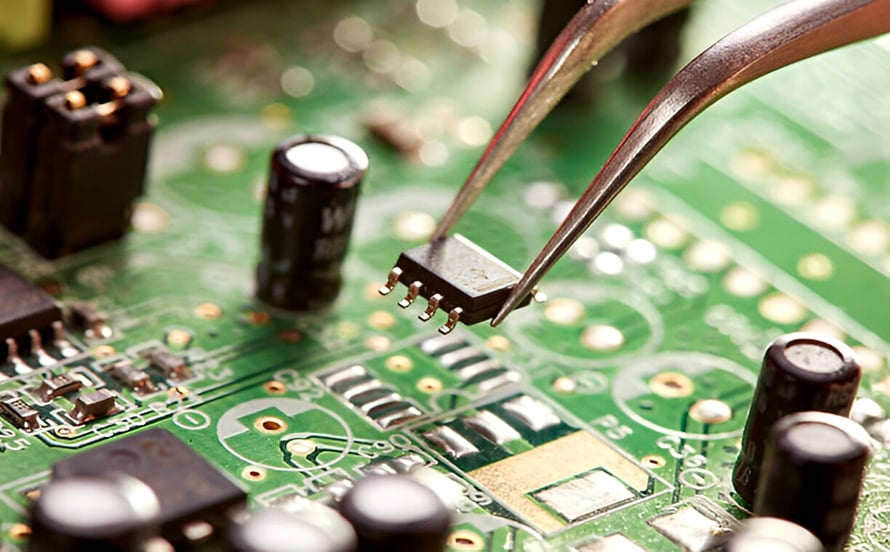
PCB Panelization: Process Edge, Tooling Hole and Fiducial Mark Design Guidelines When designing a PCB for automated manufacturing, panelization and positioning features must be considered before production. Properly designed PCB panelization improves board stability during manufacturing, supports accurate positioning during SMT assembly, and reduces the risk of damage during…
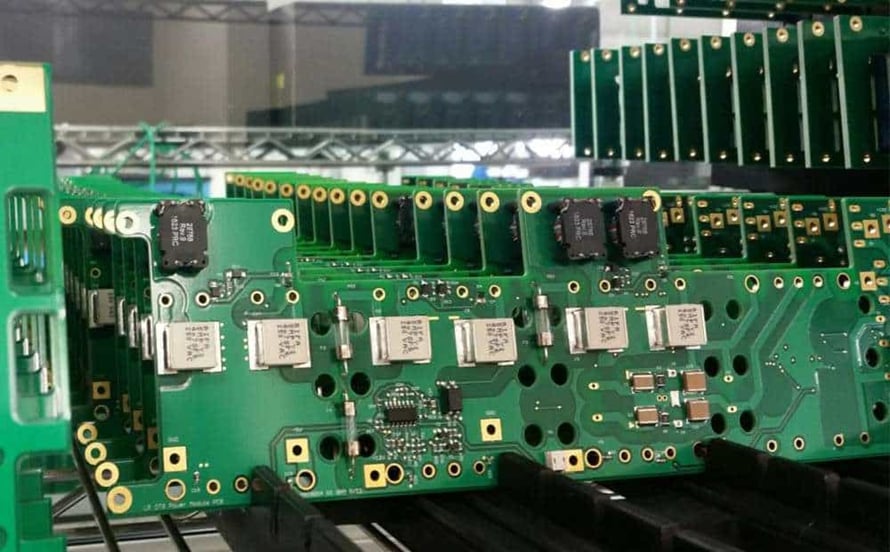
PCB Copper Pour: Applications and Manufacturing Considerations PCB copper pour is a common PCB layout and manufacturing technique in which large areas of copper are added to unused regions of a circuit board. Depending on the design, the copper area may be connected to ground, a power network, or…
Stamp Hole Probe: A Key Tool for High-Precision PCB Testing In modern electronics manufacturing, reliable electrical testing is essential for verifying PCB connectivity, assembly quality, and functional performance. A Stamp Hole Probe provides a practical test interface by contacting dedicated PCB test points or plated holes and transmitting electrical…
Backplane PCB A Backplane PCB is a specialized printed circuit board designed to provide electrical and mechanical connections between multiple electronic modules, daughterboards, cards, connectors, and system components. Instead of performing all computing functions itself, a backplane primarily creates a structured interconnection platform that allows different boards and modules…
What Is a Semiconductor Test PCB? A Semiconductor Test PCB is a specialized printed circuit board used to test integrated circuits (ICs), semiconductor devices, and other electronic components during the manufacturing and validation process. It serves as an electrical interface between the device under test (DUT) and the semiconductor…
What Is a Full-Size Keyboard PCB? A Full-Size Keyboard PCB is the main electronic circuit board that connects the keyboard switches, controller, LEDs, and other electronic components. It detects key presses, processes the input signals, and communicates them to a computer or other host device. A standard full-size keyboard typically…
What Is an 80% Keyboard PCB? An 80% keyboard PCB is the electronic circuit board used in a Tenkeyless (TKL) keyboard. It provides the electrical interface that detects key presses and sends the corresponding signals to a computer while maintaining most of the functionality of a full-size keyboard. The defining…
75% Keyboard PCB: Everything You Need to Know Introduction Mechanical keyboards are available in a wide range of layouts designed for different workflows, preferences, and space requirements. Among them, the 75% layout has become a popular choice because it offers an effective balance between compactness and functionality. A 75%…
What Is a 65% Keyboard PCB? A 65% keyboard PCB is the electronic circuit board designed for a compact 65% mechanical keyboard layout. It connects the keyboard switches, LEDs, controller, and other electronic components to ensure reliable key input and communication with a computer. Compared with a full-size keyboard, a…
Keywords 60% keyboard PCB, keyboard PCB, mechanical keyboard PCB, custom keyboard PCB, PCB assembly Introduction As digital workspaces continue to evolve, users increasingly demand computer peripherals that are compact, functional, comfortable, and visually appealing. A 60% keyboard meets these needs with a smaller layout that retains the essential keys while…