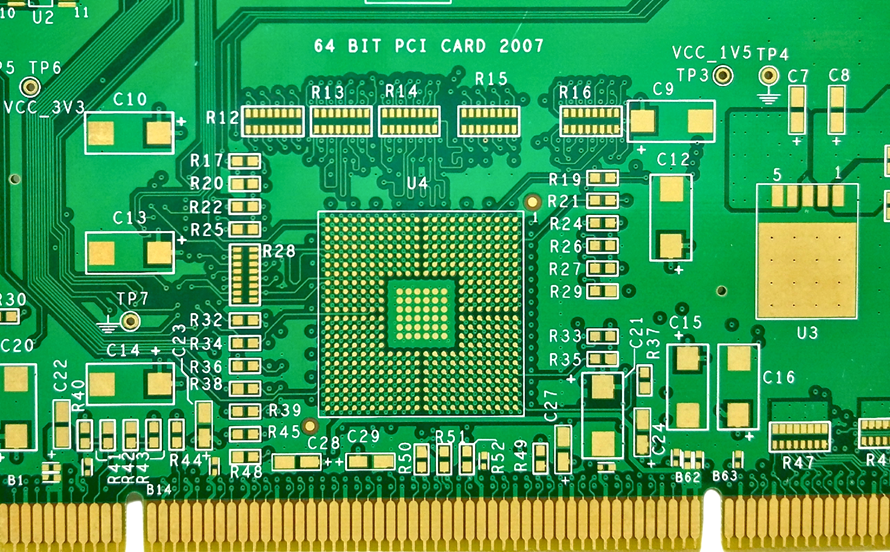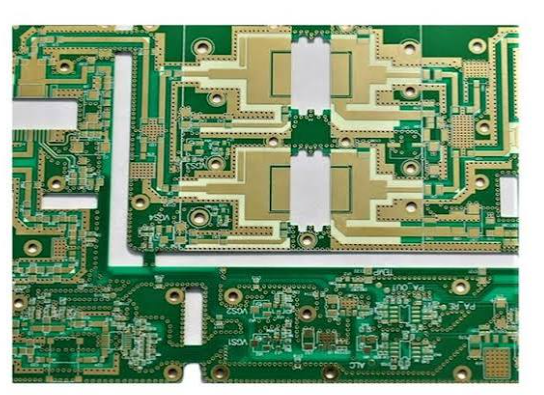
The Assembly Drawing: What It Must Contain What the Drawing Is For The assembly drawing is the document that tells a contract manufacturer what to build and how to check it. It is not the schematic, and it is not the layout file. Its job is to convey everything that…

PCB Copper Trace Signal Delay: The Time the Signal Takes Electronics manufacturing has become a discipline of small details. Solder paste volumes, placement accuracy, temperature profiles and inspection limits all add up to the final result. This guide looks at PCB copper trace signal delay from the perspective of a…
Countersinks, Counterbores and PCB Fasteners Why Holes Are Shaped A plain hole accepts a screw, but the screw head sits proud of the surface. Where the board is mounted against a chassis, where a head must not touch a neighbouring assembly, or where the surface has to be flat, the…
DFM Checks Before You Release a PCB What DFM Actually Catches A design for manufacture check is not a review of whether the circuit works. It is a check of whether the drawing can be built on the process that will make it, at the yield the price assumes. Most…
SMT Reflow Solder Joint Wetting Balance: Weighing the Wetting Modern electronics depend on boards that are assembled correctly the first time. Every product – a phone, a charger, a medical instrument or an industrial controller – relies on thousands of solder joints that must conduct current for years. The same…
Conformal Coating: Coverage and Process Why Coating Is Applied A conformal coating is a thin polymer film applied over an assembled board to protect it from moisture, condensation, salt spray, chemical exposure and, to a lesser extent, mechanical abrasion and tin whiskers. Its value is greatest where the product will…
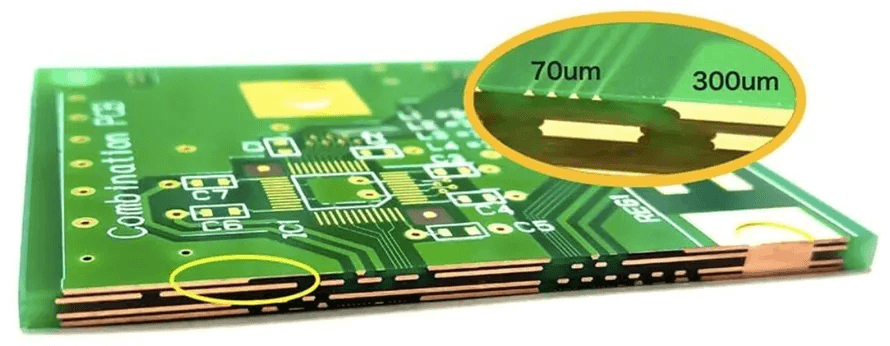
PCB Laminate Thickness Tolerance: Holding the Board Depth Buyers and engineers often focus on the finished product and forget the production line behind it. In practice, most field failures can be traced back to process decisions made during assembly. Understanding PCB laminate thickness tolerance gives you a practical advantage when…
Rigid-Flex Design: Bend Radius and Layers What Makes Rigid-Flex Different A rigid-flex board is a single construction that contains both rigid sections with multiple copper layers and a flexible section that bends. The layers are continuous across the boundary, so the flexible area is made of the same stack as…
SMT Stencil Aperture Shape: The Cut in the Foil Modern electronics depend on boards that are assembled correctly the first time. Every product – a phone, a charger, a medical instrument or an industrial controller – relies on thousands of solder joints that must conduct current for years. This article…
BGA Fanout and Escape Routing The Escape Problem A ball grid array presents its connections on a grid of pads, and only the outermost row is directly accessible. Every other ball has to reach the rest of the board through a via, and those vias have to be placed without…