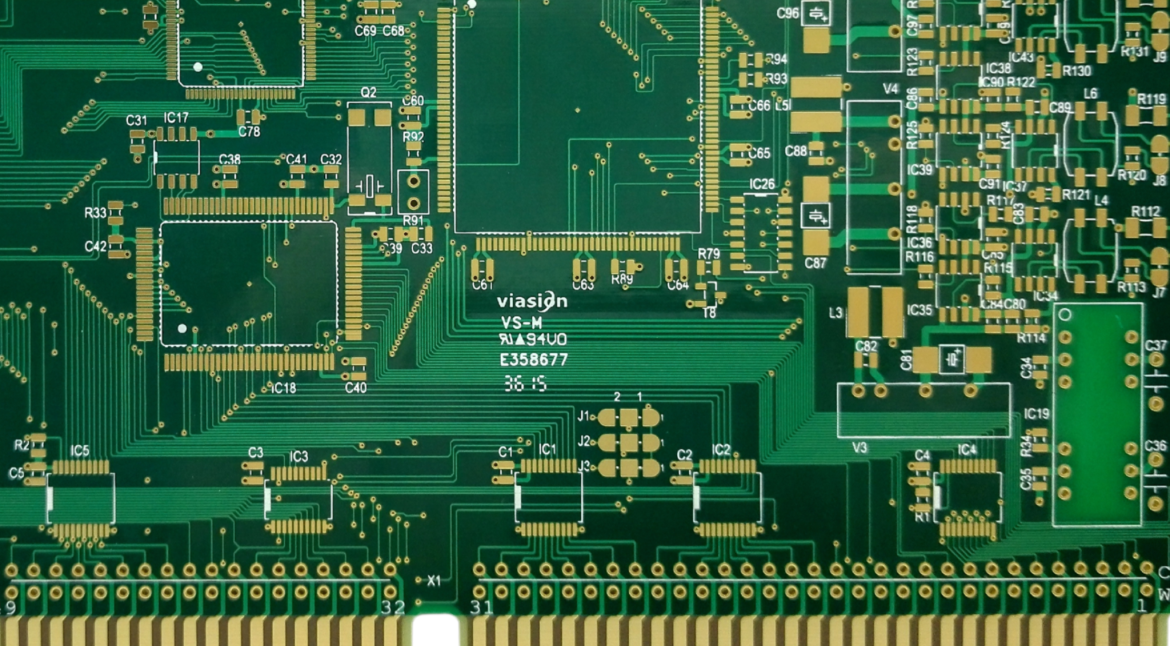
Solder Mask Adhesion and Copper Surface Preparation Solder mask adhesion is decided long before the mask is applied. The copper surface that the mask has to grip is produced by the etching process, modified by the surface treatment, and then exposed to storage and handling before the mask ever reaches…

Ultrasonic Transducer: Design Rules and Process Limits An ultrasonic transducer converts an electrical burst into pressure waves and converts the returning echo back into a voltage. The same ceramic element does both jobs on a simple ranging sensor, and the circuit has to drive it hard for a few cycles…
Copper Thickness and Current Capacity Planning for PCBs Two boards can carry the same circuit and behave completely differently under load, because the copper is not the same thickness. Copper thickness determines how much current a trace can carry before it gets too hot, how much voltage it drops along…
Time Domain Reflectometry For Impedance Measurement A controlled impedance requirement is a promise that the board will present a defined impedance to a signal, and the only way to keep that promise is to measure it. The measurement is made on a test coupon, which is a structure built into…
Ionic Contamination And Cleanliness Testing A flux that is described as no clean leaves a residue on the board, and the description means that the residue is designed to be harmless rather than that no residue is present. Whether it is actually harmless depends on the chemistry, the process and…
Solder Bath Composition and Alloy Contamination Control The solder in a wave or selective soldering machine is not a fixed material. It picks up copper from the boards, it loses the more reactive elements to oxidation, and it accumulates whatever the process drags into it. The result is an alloy…
Hole Wall Roughness and Its Effect on Plating Adhesion The wall of a drilled hole is the surface that the plating has to grip, and its condition decides whether the copper stays attached through assembly and through the life of the product. A wall that is too smooth gives the…
Component Storage, Floor Life and Solderability A component that has been in a store for two years is not the component that was qualified. The terminations oxidise, the moisture content changes, and the packaging that protected it has been opened and resealed more than once. Why Components Age The termination…
Current Derating: Design Rules and Process Limits A connector datasheet lists a current per contact, and it is tempting to read that figure as the current the contact can carry. It is not. The rating is established under defined test conditions, and a real application differs from those conditions in…
Immersion Silver Finish In Assembly An immersion silver finish deposits a thin layer of silver on the copper pads, which protects them from oxidation and provides a solderable surface. It is flat enough for fine pitch components, it is cheaper than a gold finish, and it avoids the nickel layer…