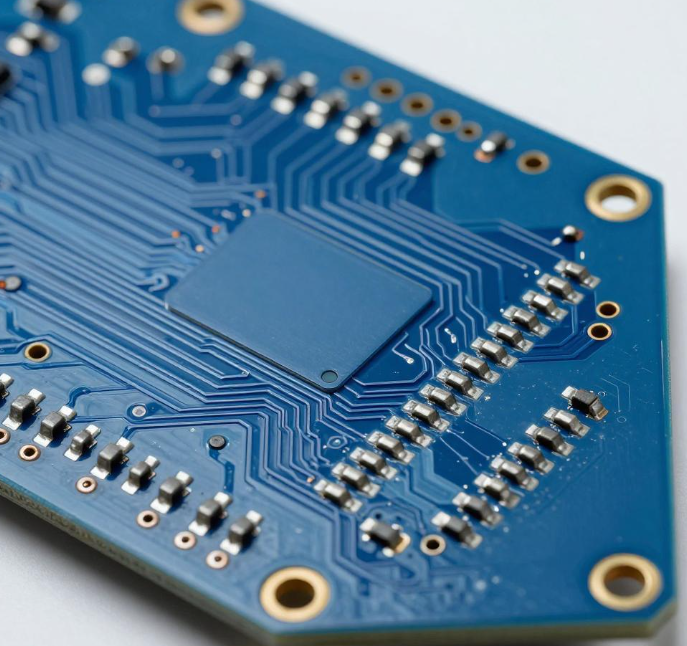
High Volume PCB Assembly: Complete Guide to Mass Production, Quality Control, and Kingda Solutions

In today’s fast-moving electronics industry, High Volume PCB Assembly is essential for companies that need to manufacture large quantities of reliable electronic products while maintaining consistent quality and competitive costs. As demand grows from automotive electronics, telecommunications, consumer electronics, industrial automation, medical devices, AI hardware, and smart-home products, manufacturers need…

PCB Components: Types, Functions, Selection, Sourcing, and Kingda PCB Assembly

PCB components are the fundamental building blocks that turn a bare printed circuit board into a functional electronic system. From simple resistors and capacitors to sophisticated microcontrollers, power semiconductors, and integrated circuits, every component performs a specific electrical or mechanical function. Whether you are developing a consumer product, industrial controller,…

Electronic Components for PCB Design: Types, Selection Guide, Packages, and Kingda PCB Assembly

Whether you are designing a simple sensor board, an industrial controller, a medical device, an automotive control unit, or an advanced aerospace system, every Printed Circuit Board (PCB) depends on electronic components working together to perform specific electrical functions. Each component has a different role. Some store electrical energy, others…

Prototype PCB Assembly: Process, Benefits, Quick-Turn Services, and Kingda Solutions

In modern electronics development, moving from a circuit concept to a production-ready product requires more than a PCB design. Engineers need physical prototypes to verify electrical performance, component compatibility, firmware integration, thermal behavior, mechanical fit, and manufacturability before committing to mass production. This is where Prototype PCB Assembly becomes essential.…

The Hidden Backbone of Modern Farming: Why PCBs Matter in Smart Agriculture

Modern agriculture is becoming increasingly intelligent, connected, and automated. Today’s farms can use drones to monitor crops, soil sensors to measure moisture and nutrients, automated irrigation systems to control water delivery, and autonomous machines to improve productivity. Behind many of these technologies is a critical electronic component: the Printed Circuit…

Future Trends in Autonomous Vehicle Control PCBs: AI, 5G V2X, Sustainability, and Kingda Solutions

As Autonomous Vehicles (AVs) continue to evolve, the electronic systems controlling perception, communication, computation, and vehicle actuation are becoming increasingly complex. At the foundation of these systems are automotive PCBs, which connect processors, sensors, communication modules, power-management circuits, memory, and other electronic components. Future Autonomous Vehicle Control PCBs must support…

Autonomous Driving PCB: Self-Driving Car PCB Design, Manufacturing, Applications, and Kingda Solutions

The rapid development of autonomous driving, electric vehicles (EVs), and advanced driver-assistance systems (ADAS) is transforming the automotive electronics industry. As vehicles become more intelligent, they increasingly depend on high-performance computing, cameras, radar, LiDAR, connectivity modules, power electronics, and sophisticated vehicle-control systems. At the center of these technologies are automotive…

Traceability in Electronics Manufacturing: Technologies, Benefits, PCBA Implementation, and Kingda Solutions

Imagine discovering a defective electronic component after shipment but being unable to determine which supplier provided it, which production batch used it, or which products may contain the same component. Or imagine finding a PCB assembly failure without knowing which manufacturing process, machine, material lot, or production shift may have…

Electronics Manufacturing with Full Product Traceability: Quality Control, ERP Visibility, and Kingda Solutions

In modern electronics manufacturing, full product traceability has become an important part of quality management, production control, and risk mitigation. As electronic products become more sophisticated, manufacturers need more than final inspection to maintain consistent quality. They need a connected manufacturing system that links materials, components, production processes, inspections, testing,…