How to Choose the Right High Voltage PCB Substrate – Material Selection Criteria Explained
With the rapid growth of new energy vehicles (EVs), energy storage systems, industrial power supplies, rail transit, medical equipment, and renewable energy inverters, high voltage PCBs have become a critical component in modern power electronics.
Unlike standard PCBs, high‑voltage boards must withstand hundreds or even thousands of volts, demanding excellent insulation, voltage endurance, thermal stability, and long‑term reliability. The choice of PCB substrate directly determines product safety, reliability, and service life.
This article systematically introduces the key selection criteria for high‑voltage PCB materials, compares common substrates, and shares gopcb’s manufacturing expertise to help engineers and procurement professionals make informed decisions.
1. Why Is High‑Voltage PCB Material Selection So Important?
Standard electronics typically operate below 48 V, while high‑voltage PCBs are used in systems from 300 V, 600 V, 1000 V up to 10 kV or more. As voltage increases, issues such as electrical breakdown, leakage current, arcing, corona discharge, insulation aging, thermal failure, and surface creepage due to moisture become critical. Poor material choice can lead to premature failure even with excellent layout design. Thus, selecting the right substrate is the first and most crucial step in high‑voltage PCB design.
2. Key Performance Indicators for High‑Voltage PCB Materials
2.1 Dielectric Strength
Dielectric strength is the maximum electric field a material can withstand before breakdown. Higher values mean better voltage endurance. For products above 1000 V, materials with high dielectric strength should be prioritised.
2.2 Comparative Tracking Index (CTI)
CTI measures a material’s resistance to tracking (creepage) under contamination and moisture. Generally: CTI > 600 V (excellent), 400–600 V (good), < 250 V (moderate). Higher CTI allows smaller creepage distances and improves long‑term reliability, especially in power electronics and industrial equipment.
2.3 Dielectric Constant (Dk)
Dk affects signal propagation speed and electric field distribution. For high‑voltage, high‑frequency products like radar, communication equipment, RF power supplies, and medical devices, stable Dk over frequency and temperature is essential.
2.4 Dissipation Factor (Df)
Lower Df reduces high‑frequency losses, improving efficiency, signal integrity, and power conversion. PTFE, Rogers, and other low‑loss materials are often used in high‑voltage high‑frequency applications.
2.5 Glass Transition Temperature (Tg)
Higher Tg enables better thermal stability. Recommended minimums: industrial products ≥170 °C, EVs 180–200 °C, aerospace >200 °C.
2.6 Thermal Conductivity
High‑voltage products often generate significant heat. Better thermal conductivity lowers temperature rise, extends component life, reduces thermal stress, and improves overall reliability.
2.7 Water Absorption
Moisture absorption reduces insulation resistance, increases leakage current, and degrades voltage endurance. Low‑absorption materials are preferred for high‑voltage applications.
3. Common High‑Voltage PCB Materials
3.1 High‑Tg FR4
High‑Tg FR4 is the most widely used material due to its low cost, mature processing, good mechanical strength, and decent insulation. Suitable for 300–1000 V applications such as industrial power supplies, UPS, PLCs, motor drives, and industrial controls.
3.2 Ceramic PCB
Ceramic substrates offer extremely high insulation, excellent thermal conductivity, low CTE, long‑term reliability, and high‑temperature resistance. They are ideal for IGBT modules, EV controllers, new energy vehicles, medical equipment, laser devices, and high‑power LEDs – especially where the highest insulation performance is required.
3.3 PTFE High‑Frequency PCB
PTFE combines high‑voltage and high‑frequency performance with very low Df, stable Dk, and outstanding insulation. Used in radar, satellite communications, microwave equipment, and high‑frequency power supplies.
3.4 Polyimide PCB
Polyimide offers excellent high‑temperature resistance, chemical resistance, flexibility, and stable electrical properties. Applications include aerospace, military equipment, flexible high‑voltage circuits, and specialty electronics.
3.5 Metal‑Core (IMS) PCB
IMS PCBs provide superior thermal conductivity and mechanical strength, with low thermal resistance and good dimensional stability. Commonly used in LED drivers, industrial power supplies, power electronics, and high‑power inverters.
4. Performance Comparison of High‑Voltage PCB Materials
- High‑Tg FR4: voltage ★★★★☆, thermal ★★★☆☆, cost low – industrial control, power supplies
- Ceramic: voltage ★★★★★, thermal ★★★★★, cost high – EV, IGBT, medical
- PTFE: voltage ★★★★★, thermal ★★★★☆, cost high – high‑frequency comms, radar
- Polyimide: voltage ★★★★☆, thermal ★★★★☆, cost moderate – aerospace, flexible
- IMS: voltage ★★★★☆, thermal ★★★★★, cost moderate – LED, power electronics
5. How to Select the Right Material Based on Application
- New Energy Vehicles (EV): Ceramic, high‑Tg FR4, or IMS for BMS, OBC, DC/DC, and motor drives.
- Solar Inverters & Energy Storage: High‑Tg FR4 or ceramic for long‑term high‑voltage, high‑current, and high‑temperature environments.
- Medical Equipment: Ceramic or polyimide for high‑voltage imaging, laser, and high‑reliability devices.
- Industrial Power Supplies: High‑Tg FR4 and heavy‑copper PCB, balancing cost, voltage, and current capacity.
- High‑Frequency High‑Voltage: PTFE or Rogers for radar, microwave, satellite, and RF power systems.
6. Relevant IPC Standards for High‑Voltage PCB Design
Key standards include IPC‑2221 (generic design), IPC‑6012 (rigid PCB performance), IPC‑A‑600 (acceptability), IPC‑A‑610 (assembly acceptance), and IPC‑9592 (power conversion devices). Following these ensures insulation reliability, manufacturing consistency, and product safety.
7. DFM Recommendations for High‑Voltage PCBs
- Increase creepage and clearance distances according to working voltage.
- Choose high‑CTI materials to improve tracking resistance.
- Avoid sharp corners on copper traces; use rounded or chamfered corners to reduce electric field concentration.
- Add slots or isolation grooves in high‑voltage areas to lengthen creepage paths.
- Consider conformal coating or potting for environmental protection.
- Design balanced copper distribution to minimise warpage and thermal stress.
- Ensure strict cleanliness to prevent flux residues causing leakage or breakdown.
Early DFM optimisation significantly improves first‑pass yield and reduces rework costs. For professional DFM support, visit our PCB design & layout service.
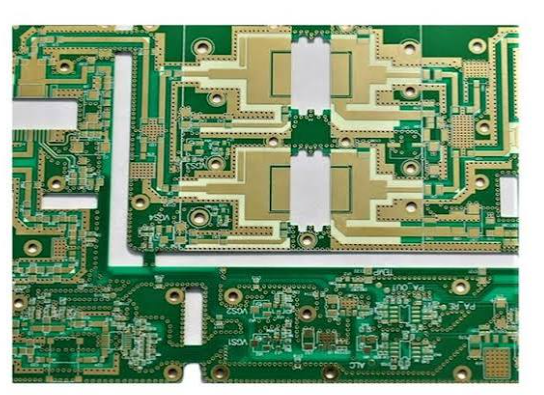
8. gopcb’s High‑Voltage PCB Manufacturing Capabilities
As a professional PCB manufacturer, gopcb specialises in high‑voltage, high‑reliability, and power electronics PCBs, offering one‑stop services from prototyping to mass production.
- Up to 40+ layer multilayer boards
- Materials: high‑Tg FR4, ceramic, PTFE, Rogers, polyimide, IMS, and more
- Heavy copper up to 20 oz
- High‑voltage isolation slots, routing, and special insulation structures
- Laser drilling, HDI, and impedance control
- IPC Class 2/Class 3 compliant
- Full inspection: AOI, flying probe, X‑ray, electrical test, HiPot, and reliability validation
- Prototyping, small‑batch, and high‑volume production
gopcb also provides material selection guidance, stack‑up optimisation, and DFM analysis to shorten development cycles and improve reliability. Explore our PCB manufacturing and turnkey assembly solutions.
9. High‑Voltage PCB Price Reference (2026)
Costs depend on material, layer count, thickness, copper weight, voltage rating, special processes, and order volume. Typical ranges:
- Prototype (1–10 pcs): $80–500 per lot
- Low volume (50–500 pcs): $10–80 per board
- High volume (1000+ pcs): $2–30 per board
Ceramic, PTFE, Rogers, heavy copper, or HiPot testing will increase cost.
10. Frequently Asked Questions
Q1: Which material is best for high‑voltage PCBs?
No single material fits all. For most industrial equipment, high‑Tg FR4 offers good cost‑performance. For high power, high voltage, and high thermal demand, ceramic is superior. For high‑frequency high‑voltage, PTFE or Rogers are preferred.
Q2: Can standard FR4 be used for high‑voltage PCBs?
Yes, for 300–1000 V applications with proper creepage/clearance design and high‑Tg material. It works for many industrial and power supply designs.
Q3: Why is CTI so important?
Higher CTI means better resistance to tracking under moisture and contamination, improving long‑term insulation reliability and allowing more compact layouts under safety standards.
Q4: Does increasing board thickness automatically improve voltage withstand?
Thickness contributes, but voltage performance also depends on dielectric strength, creepage, clearance, material properties, and overall design. Thicker alone is not a complete solution.
Q5: What tests are typically performed on high‑voltage PCBs?
Common tests include HiPot (dielectric withstand), insulation resistance, partial discharge, thermal cycling, and other reliability tests to ensure stable operation under long‑term high‑voltage conditions.
11. Conclusion
Selecting the right substrate for high‑voltage PCBs directly impacts insulation performance, voltage endurance, thermal management, and long‑term reliability. Designers must consider dielectric strength, CTI, Tg, thermal conductivity, moisture absorption, and application environment – not just cost.
For most industrial control, power supply, and renewable energy systems, high‑Tg FR4 provides a good balance. For high‑power, high‑heat, or extreme environments, ceramic, PTFE, polyimide, and IMS materials offer superior performance.
With extensive experience in high‑voltage PCB manufacturing, gopcb offers comprehensive support – from material selection, stack‑up design, DFM optimisation, prototyping to volume production – helping global customers build safe, stable, and reliable high‑voltage electronic products.
Start your project with our prototype PCB assembly or low‑volume assembly services, and let us assist you from design to delivery.