Overseas PCB Manufacturing: What AI Compute Changed About Expansion
Overseas PCB manufacturing used to follow consumer electronics, with factories moving to wherever assembly lines had already gone. The current wave is different, because the driver is computing infrastructure and the customers are data centre operators who care about supply continuity more than about land cost.
A capacity release in Thailand illustrates the shift. New equipment installed through 2026 is scheduled to add server board output in the fourth quarter, and the purpose of that capacity is regional delivery as much as raw volume.
Why Capacity Follows Compute Now
Server programmes are built around long procurement cycles and multi year platform roadmaps. When a customer commits to a rack architecture, board supply has to remain available for the life of that platform rather than for one quarter.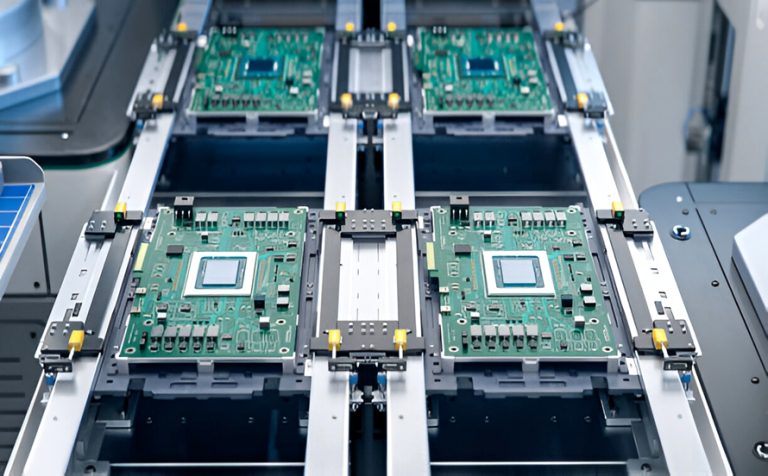
That requirement pushes suppliers to hold manufacturing in more than one region. A single site creates exposure to logistics disruption, tariff changes and local capacity limits, and none of those risks are acceptable for a product that cannot be redesigned quickly.
Regional Delivery as a Purchasing Criterion
Data centre construction is global and geographically uneven. Boards produced close to the build site reduce freight time, simplify customs handling and shorten the response to an engineering change.
The consequence is that a supplier’s factory map becomes part of the technical evaluation. Buyers ask which region will produce their boards, what local process capability exists, and how quickly a design revision can be implemented at that site.
Domestic Development, Overseas Volume
The emerging structure separates functions rather than duplicating them. Domestic plants handle new product introduction, small batch trials and process development, where engineers and material suppliers are close at hand.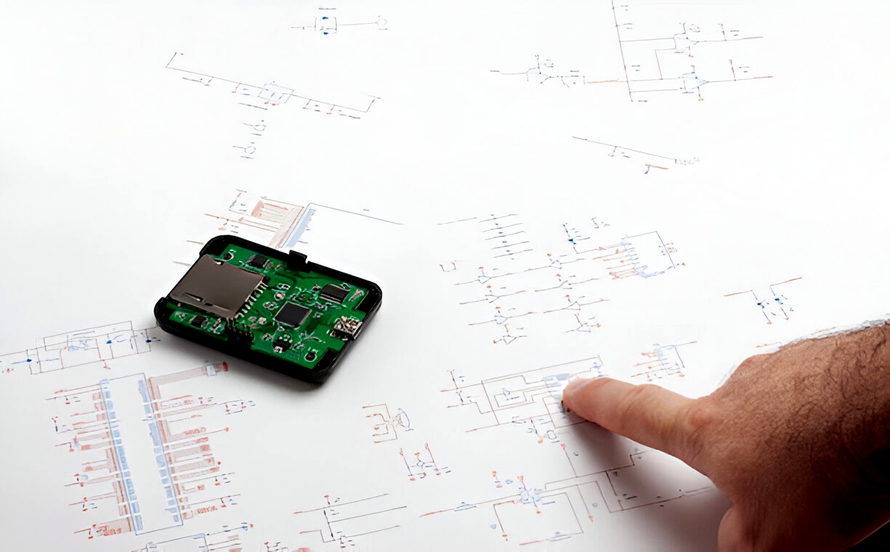
Overseas plants then take the volume once the process is stable. That split shortens the transfer risk, because the recipe arrives at the second site already validated rather than being developed twice.
The Product Mix Is Rising, Not Just Moving
Capacity being relocated is not mainstream board capacity. Server boards have moved from sixteen layers toward thirty, forty and beyond, and backplanes in the same systems push higher still.
Alongside layer count, high density interconnect, any-layer structures and fine line processes below seventy five micrometres are entering production. A new site that can only press ordinary multilayer boards is not really serving this market.
Why Process Experience Does Not Transfer Automatically
Equipment can be purchased and installed on a schedule. What cannot be purchased is the accumulated judgement about lamination cycles, registration drift, plating uniformity and impedance control on a dense stack.
That judgement is built by running difficult products. A new factory therefore starts with a learning period, and the customers who understand this plan their qualification around it rather than expecting instant parity with an established site.
Materials as the Binding Constraint
Low loss laminates, low profile copper foil and specialised glass cloth are already tight in supply. A factory in a new region has to secure those materials through a supply chain that may be thousands of kilometres from the laminate producers.
Material logistics influence cost and schedule as much as equipment does. Suppliers that qualify local stocking arrangements and a second material source reduce the chance that a shortage inland delays an overseas build. Securing supply is a component procurement problem as much as a manufacturing one.
Keeping Specifications Identical Across Sites
The same board produced in two countries must behave identically. Dielectric thickness, copper weight, impedance targets, surface finish and inspection criteria all have to be controlled to one specification rather than to two interpretations of it.
That requires the receiving site to qualify the stackup, the drill programme and the etch compensation independently, then demonstrate that measured results match the original. Transfer without verification simply moves the risk downstream.
Impedance and Layer Registration at Volume
High speed channels in server products are specified with tight windows, and some differential pairs are held near five percent. Registration errors that were tolerable at lower layer counts accumulate quickly on a dense stack.
Layer to layer alignment, back drilling depth and stub control therefore become the metrics that decide whether an overseas line can serve computing customers. These are process measurements rather than equipment specifications, which is why they take time to establish anywhere new.
Beyond Servers: The Same Capability Serves Other Markets
Automotive compute platforms are consolidating functions onto fewer boards and adopting high layer counts with high density interconnect. Robotics combines flexible circuits, rigid flex and heavy copper driver boards in one system.
Low altitude aircraft and energy conversion equipment add their own reliability requirements. A site qualified for server work is therefore well positioned for these markets, because the underlying capability is similar even when the standards differ. Suppliers serving industrial applications often build on exactly that overlap.
Thick Copper and Mixed Technology
AI racks include power boards that carry heavy copper alongside the signal layers of the compute boards. Copper weights far above standard change etching, plating and lamination conditions.
A factory that can only run one of those product families leaves part of the system to another supplier, adding coordination load. Mixed capability within one quality system reduces the number of interfaces a customer has to manage.
Cost Structure of a Second Site
Building overseas adds capital cost, certification cost, expatriate engineering time and duplicated inventory. Those costs have to be recovered through delivery reliability rather than through unit price.
Customers increasingly accept that trade, because a delayed rack costs far more than an incremental board price. This is why the conversation has shifted from cost per square metre toward certainty of supply.
Assembly and Test Follow Fabrication
Moving board production without moving assembly and test creates a new logistics problem, since dense assemblies are expensive to ship twice. High density placement, paste inspection and X-ray review increasingly follow the fabrication footprint.
Keeping fabrication and assembly in one region also preserves process knowledge. When a solderability or flatness problem appears, the two teams can examine it together instead of exchanging reports across time zones.
What Buyers Should Ask Before Committing
The useful questions are about qualification, not about square metres. Which layer counts are running in production at that site, which materials are approved locally, how impedance is verified, and what measured yield the line has achieved on comparable products.
Buyers should also ask how process changes are communicated and whether the same quality management system covers both locations. A supplier who can answer with data is a different proposition from one who answers with a construction schedule.
Dual Sourcing Without Losing Consistency
Qualifying two sites protects supply, but only if both produce identical hardware. That means duplicate first article approval, periodic cross site correlation builds and a shared change control record.
The cost of that discipline is real, yet it is smaller than the cost of discovering that a second site produces boards that behave differently in a completed system.
Planning a Transfer Realistically
A transfer programme should assume that the receiving site needs production experience before it reaches the capability of the original. Building that into the schedule avoids qualification surprises late in a platform ramp.
Practical sequencing starts with samples, moves to a pilot lot that exercises the full process, and only then releases volume. Teams that support low volume assembly during that phase identify process problems while the quantities are still small.
Logistics and Inventory Planning
Overseas production changes inventory mathematics. Boards that once travelled a few hundred kilometres may now cross an ocean, so safety stock has to cover a longer and less predictable transit time than a domestic route requires.
Suppliers and customers therefore agree on buffer quantities and bonded warehousing before volume begins. Planning those details late usually shows up as either excess stock sitting in a warehouse or a shortage in the middle of a platform ramp.
Engineering Support in the Customer’s Time Zone
Process questions do not wait for a convenient hour. A site in the same region as the customer can respond to a yield excursion or a design clarification during the working day rather than overnight.
That responsiveness is one reason customers value regional capacity beyond the freight saving. It turns a factory into part of the development team, which matters most during the first months of a new product.
Talent and Training in a New Region
Running a high layer count line requires technicians who understand how lamination, drilling and plating interact, and those skills are not available in every location at short notice.
Building them takes structured training, experienced staff on site and a period of running progressively harder products. Programmes that skip that step often reach nominal capacity without reaching the yield that computing customers require.
What the Next Few Years Will Look Like
More capacity will appear in Southeast Asia, and more of it will be aimed at computing hardware. Material supply and engineering talent will decide how quickly that capacity becomes productive.
The competitive question for suppliers is not whether they operate in several countries, but whether each location can hold the same specification. Customers are buying consistency, and consistency is what a global footprint has to deliver.