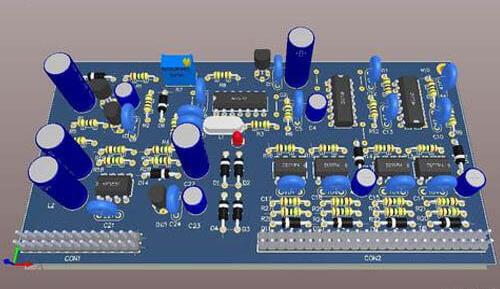
During PCB Manufacturing and PCB Assembly, engineers must not only control the manufacturing process but also identify potential design and process-related problems before they affect product performance. As PCB designs become more complex, with higher component density, finer traces, multilayer structures, and increasingly compact packages, the risk of manufacturing and…
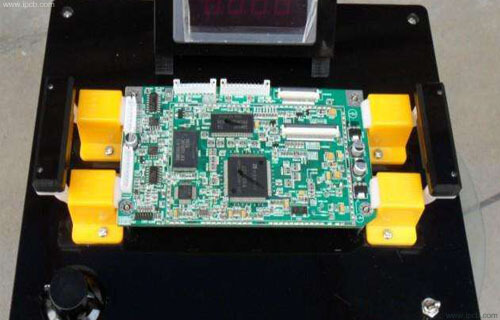
In PCB Assembly, accurate temperature control is essential for achieving reliable solder joints and consistent product quality. A Reflow Soldering process must provide sufficient heat to melt the solder paste and form reliable solder joints while preventing excessive thermal stress on components and the PCB. For this reason, PCB Temperature…
As electronic products continue to operate at higher speeds and frequencies, PCB Impedance has become an increasingly important consideration in PCB design and manufacturing. Impedance is particularly critical in high-speed digital, RF, microwave, and other signal-sensitive applications where even small variations in transmission-line geometry or dielectric properties can affect signal…
As electronic products continue to become smaller, thinner, and more highly integrated, conventional PCB structures are increasingly challenged by limited routing space and higher interconnection density requirements. HDI PCB technology has therefore become an important solution for modern compact electronic products. HDI stands for High-Density Interconnect. An HDI PCB uses…
How to Etch a PCB: PCB Etching Methods, Toner Transfer & DIY Guide You have just successfully tested your circuit on a breadboard. What comes next? Whether you are a hobbyist, student, maker, or electronics engineer, moving a prototype from a breadboard to a PCB (Printed Circuit Board) is an…
For anyone working with electronic products, PCB and PCBA are familiar terms. However, these two concepts are sometimes confused because they are closely related but represent different stages of electronic manufacturing. What exactly is a PCB? How does it become a PCBA? What are the differences between PCB and PCBA,…
How to Test a Capacitor on a PCB: PCB Capacitor Testing Methods & Troubleshooting Guide Capacitors are among the most common passive components found on a PCB (Printed Circuit Board). They play essential roles in power filtering, decoupling, energy storage, timing, signal coupling, noise suppression, and voltage stabilization. When a…
As electronic products continue to become smaller and more highly integrated, PCBA Assembly is increasingly based on Surface Mount Technology (SMT). SMT enables manufacturers to place a large number of components in a limited PCB area while supporting compact product designs, higher assembly density, and automated production. However, many PCB…
The success of PCB Assembly depends not only on the manufacturing process but also on decisions made during the initial PCBA Design stage. Product functionality, cost, component selection, manufacturing capability, and assembly sequence must all be considered before production begins. As electronic products continue to become smaller and more highly…
How Does a PCB Work? PCB Structure, Components & Working Principle Guide At first glance, a PCB (Printed Circuit Board) may appear to be nothing more than a flat board covered with copper traces and miniature electronic components. However, a closer look reveals that a PCB is a carefully engineered…