Drill Smear And Desmear Control In Multilayer Boards
Drilling a multilayer board generates heat at the cutting edge, and that heat is enough to soften the resin and smear it across the inner layer copper. The smear is an insulating film, and if it is not removed the plated barrel cannot make electrical contact with the inner layers it is supposed to connect.
Desmear is the process that removes it. It is a sequence of chemical steps that etches a small amount of resin from the hole wall, and it is one of the most important steps in the manufacture of a reliable plated through hole.
How Drill Smear Forms
The drill bit rubs against the hole wall as it cuts, and the friction raises the local temperature above the softening point of the resin. The softened resin is dragged along the wall and deposited over the inner layer copper, where it cools into a thin, hard film.
The amount of smear depends on the bit geometry, the number of hits, the spindle speed and the feed rate. A worn bit, an excessive hit count or a feed that is too slow all raise the temperature and increase smear, which is why drill parameters and bit life are controlled so tightly.
Why It Matters For Plating Adhesion
Plating adhesion depends on a clean, micro-roughened surface on the hole wall. Smear covers the inner layer copper with resin, and the copper that is subsequently plated sits on resin rather than on copper. The result is a connection that looks complete but has no electrical path.
The defect is often intermittent. A partially smeared layer may make contact through a small area, and the resistance of that contact is high enough to fail a thermal cycle or to appear in the field as an intermittent open. The plating defects it belongs to are described under copper plating defects prevention.
Desmear Chemistry
A typical desmear line begins with a solvent or swelling step that softens the resin, followed by an oxidising step that removes it. A neutralising step then stops the reaction, and a final conditioning step prepares the surface for the electroless copper that follows.
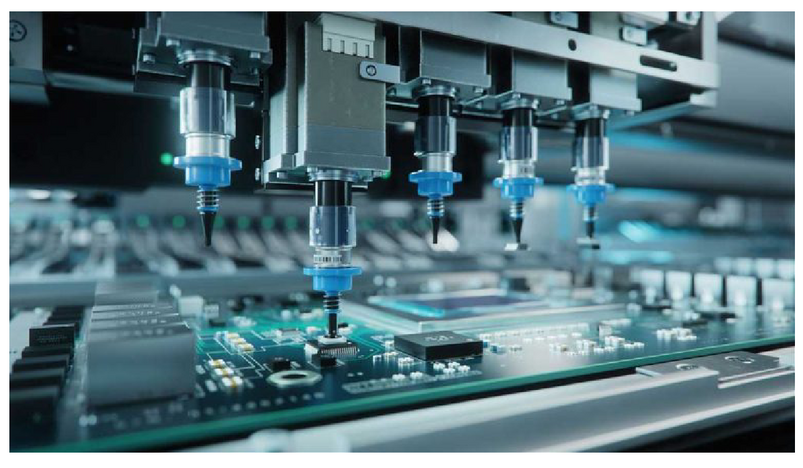
The process removes a small amount of resin, typically 0.02 to 0.05 mm from the hole wall, and creates a micro-roughened surface. Removing too little leaves smear behind, while removing too much exposes glass fibres and weakens the barrel.
Permanganate Versus Plasma
Permanganate desmear is the standard wet process. It is well understood, cheap to run and effective on the epoxy resins used in most boards. Its limitation is that it works on the resin and not on the glass, so a board with a high glass content needs careful control.
Plasma desmear uses an ionised gas to remove material from the hole wall. It reaches recesses that a liquid cannot reach and treats the glass as well as the resin, which makes it the choice for high reliability boards, for thick panels and for materials that resist the wet chemistry. It is slower and more expensive. How small holes are filled by plating is described under electroplating and via filling in HDI.
Process Control And Verification
Control of the desmear line depends on bath concentration, temperature and time, and all three have to be monitored. The swell and oxidiser baths are analysed daily, and the etch rate is confirmed by a weight loss test on a sample coupon.
Verification of the finished hole is done by cross section. The section should show a clean interface between the copper plating and the inner layer copper, with a micro-roughened resin surface and no resin left across the inner layer. The evaluation is normally done at the start of a job and after any process change.
Smear Related Defects
An interconnect defect is the classic smear failure, and it is detected by a resistance measurement on a daisy chain or by thermal cycling. A nail head or a pull away at the inner layer is a related defect, and both require the same corrective action in the desmear line.
Where the smear is severe the barrel may also fail to plate properly, producing a void in the plating or a thin deposit at the knee of the hole. How the drilling and plating requirements are specified for a build is described under multilayer PCB prototype requirements.
Process Control and Verification
On a design of this kind, drill smear is the item that decides how the rest of the board is arranged. A stack-up that is drawn rather than described removes most of the ambiguity from a quotation, and it lets the fabricator price the board against the dielectric and copper weights that will actually be used. Where the requirement is not written down, the shop supplies its own default, and the default is chosen for the process rather than for the design.
The measurements that matter are the repeatable ones: conductor width and spacing, annular ring, finished hole size, plating thickness and surface finish are all verifiable on a coupon that travels with the panel. Running a first article through the same checks as the production panel confirms that the two agree, and that comparison is the cheapest form of process control available at prototype stage.
Keeping a sample from the panel turns a dispute into a measurement, because the same coupon can be re-examined by both parties without rebuilding the batch. Reviewing the design before the data is released is cheaper than correcting it after the panel is in the tank, because every step downstream inherits the decision made at the front end.
Process Control and Verification
On a design of this kind, drill smear is the item that decides how the rest of the board is arranged. A stack-up that is drawn rather than described removes most of the ambiguity from a quotation, and it lets the fabricator price the board against the dielectric and copper weights that will actually be used. Where the requirement is not written down, the shop supplies its own default, and the default is chosen for the process rather than for the design.
The measurements that matter are the repeatable ones: conductor width and spacing, annular ring, finished hole size, plating thickness and surface finish are all verifiable on a coupon that travels with the panel.
Process Control and Verification
On a design of this kind, drill smear is the item that decides how the rest of the board is arranged. A stack-up that is drawn rather than described removes most of the ambiguity from a quotation, and it lets the fabricator price the board against the dielectric and copper weights that will actually be used. Where the requirement is not written down, the shop supplies its own default, and the default is chosen for the process rather than for the design.
A first article check confirms that the process and the drawing agree on the points listed above, and that the coupon data supports the values used in the design.
Where a measurement falls outside the expected window, the sample is retained so that the cause can be established before the balance of the batch is released.
FAQ
Is desmear always required? For a multilayer board with plated through holes it is standard practice. Only boards that will not be plated, or that use a material designed to drill cleanly, can skip it.
How much resin should desmear remove? Typically 0.02 to 0.05 mm from the hole wall. The value should give a clean copper interface without exposing large areas of glass fibre.
How is smear detected before shipment? By cross sectioning a sample hole and by electrical test on a daisy chain. Cross sectioning gives the definitive answer, while electrical test detects the open that smear causes.