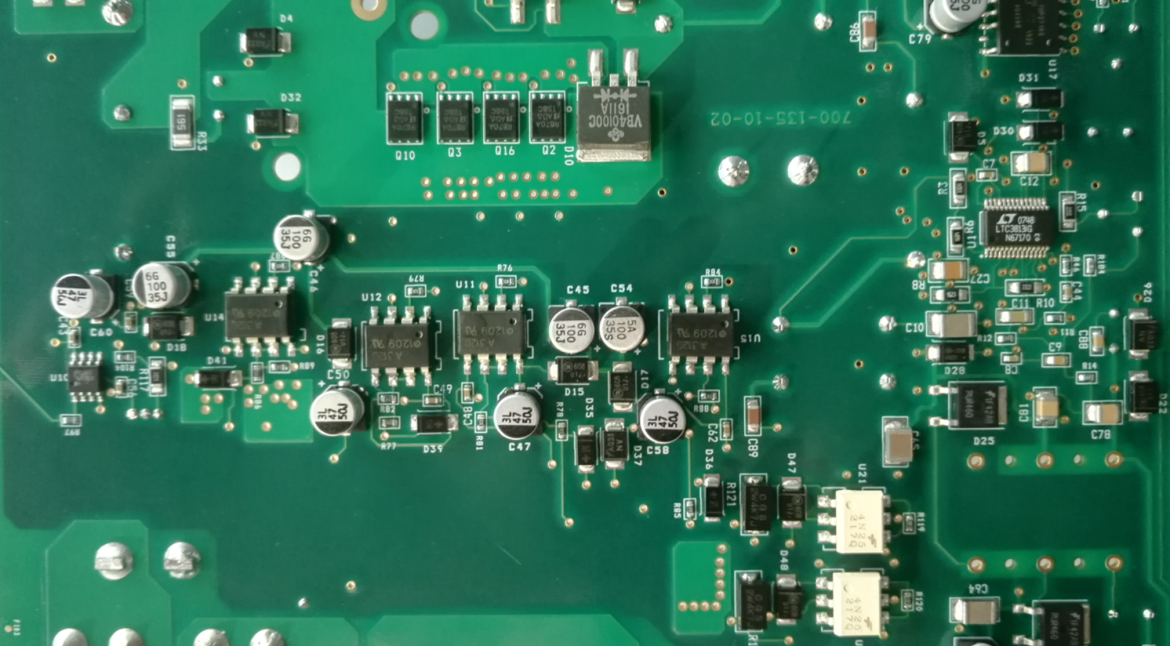
Designing Boards for High Performance IC Devices A high performance IC asks more of its board than any other part on the assembly. Its core current steps in nanoseconds, its memory interface runs on a parallel bus with hundreds of synchronous lines, and its supply rails have impedance requirements that…
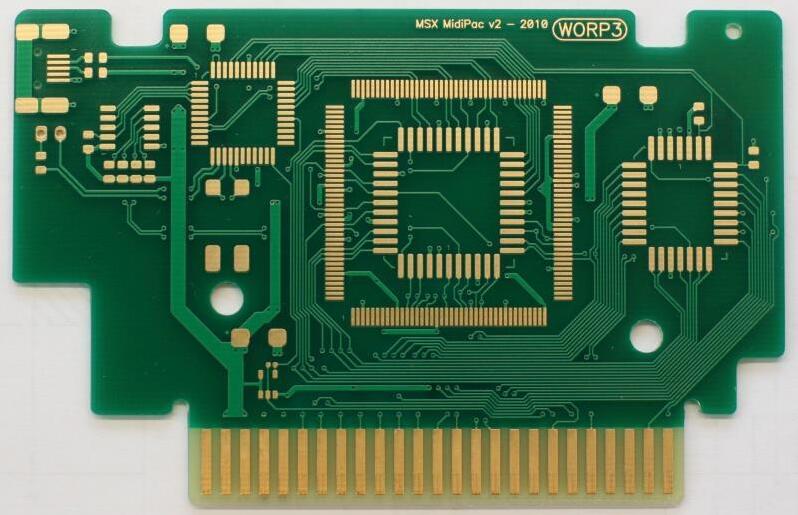
Building a High Quality PCB: Design Priorities Almost everything that makes a high quality PCB is decided before the board is ordered. The stackup, the copper weight, the surface finish, the tolerances and the test coverage are all choices, and the ones that are made by default are the ones…
Embedded Capacitance In PCB Laminates A power and ground plane pair separated by a dielectric is a capacitor, because two conductors with an insulator between them always are. In an ordinary board the separation is large and the capacitance is small, so the planes are treated as a low impedance…
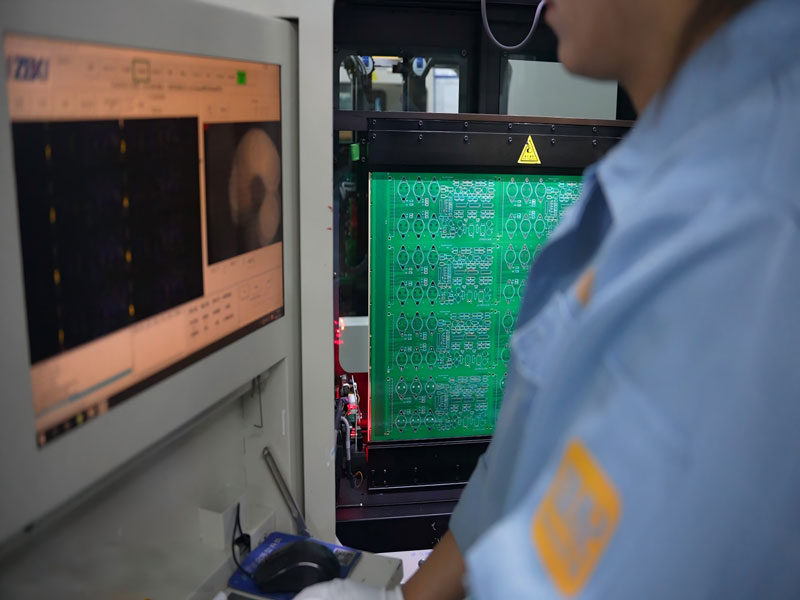
Impedance Test Coupon Design and Verification Methods Controlled impedance is a promise about a physical dimension that nobody can see. The trace width, the dielectric thickness and the material properties all determine whether a signal sees fifty ohms or sixty, and none of them can be confirmed by looking at…
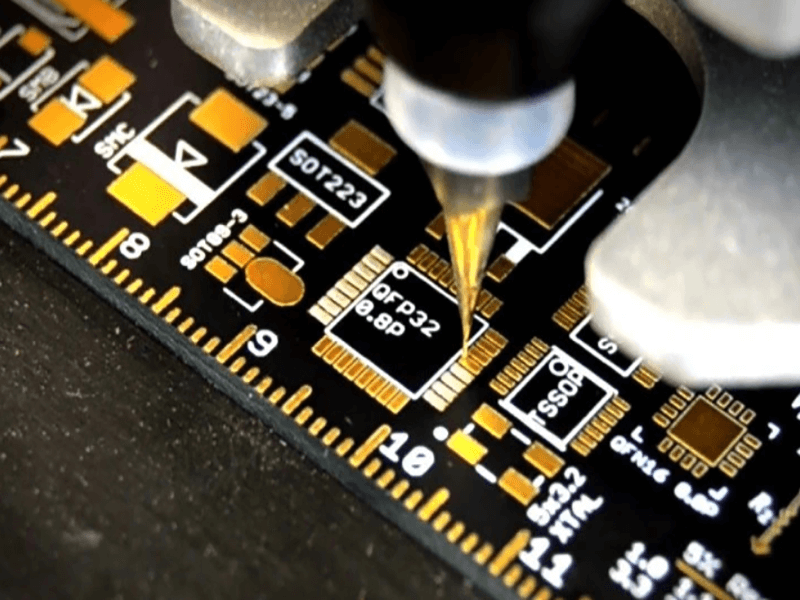
Placement Force and Paste Displacement Control A placement machine has to press the component into the paste hard enough to make it stick and softly enough to leave the deposit in place. The window is narrow, and it changes with the nozzle, the paste and the pad size. What the…
Microvia Reliability: Stacked, Staggered and Filled A microvia is a small hole with a thin wall, and its reliability depends on the shape of the wall rather than only on its thickness. The copper that plates a blind hole tapers, and the taper is where the cracks begin. Why Microvias…
PCB Annular Ring Design And Tolerance The annular ring is the width of copper that remains around a drilled hole after the barrel has been plated. It is the feature that connects the barrel to the trace, and it is consumed by every tolerance in the process, from the drill…
Electrical Overstress and Latch-up Investigation A device that fails with no sign of mechanical damage has usually been taken beyond its ratings, and the question is which rating and for how long. The damage is often invisible, which is why the investigation begins with the circuit rather than with the…
Strain Gauge Bridge Completion Circuit Design Measuring strain with a single gauge means completing the bridge with fixed resistors on the board, and that simple statement hides most of the practical difficulty. The completion arms must match the gauge in resistance and in temperature behaviour, and the wiring to the…
Flex Circuit Stiffener Design A flexible circuit is thin, and thinness is what allows it to bend but also what makes it difficult to attach a connector or to mount a component. A stiffener is a piece of rigid material bonded to a defined area of the flex, which restores…