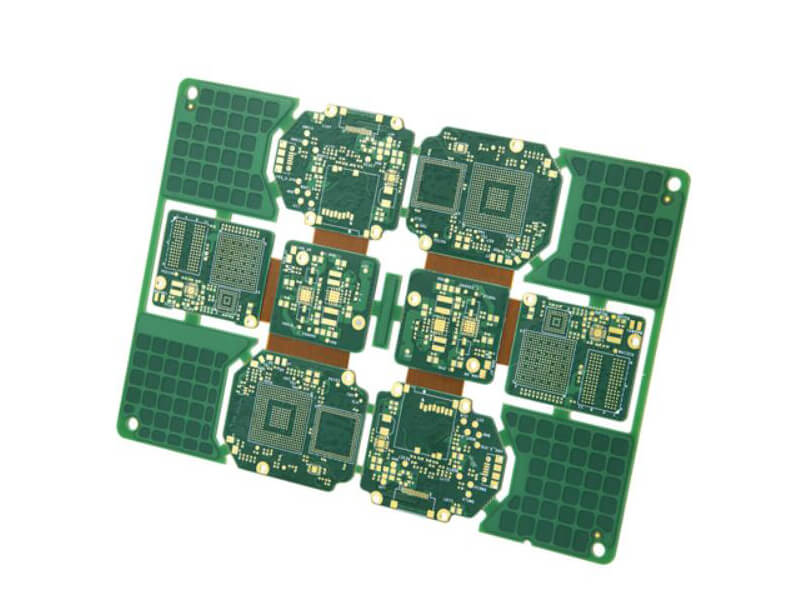
What Tg Means on a PCB Laminate Datasheet Tg is the abbreviation for glass transition temperature, and it is one of the first numbers printed on a laminate datasheet. It describes the point at which the resin stops behaving like a rigid solid and starts to soften, and everything the…
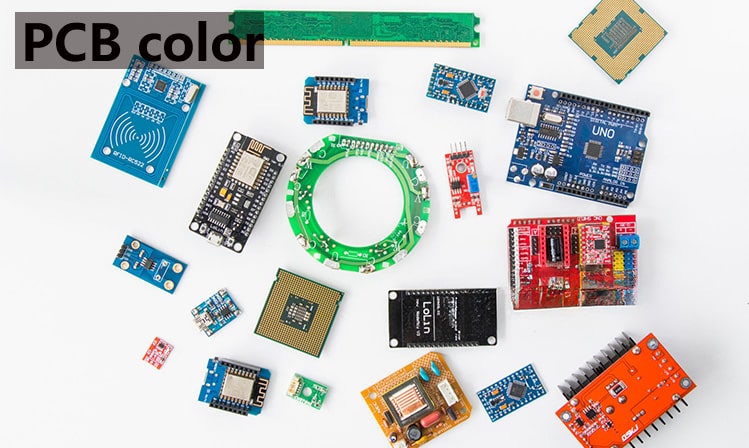
Black FR4 PCB: Pigment, Process Window and Inspection Black is the most requested colour in PCB fabrication and one of the least understood. A black board can mean a black solder mask over a conventional laminate, or a laminate whose resin has been pigmented through the thickness, and the two…
Conformal Coating Types: Acrylic, Silicone and Parylene A conformal coating is a thin polymer film applied over a populated board to keep moisture, salt, dust and chemical vapour away from the conductors and joints. It is one of the cheapest reliability improvements available, and one of the easiest to get…
ECU PCB Design: Power Supply and Sensor Input Layout An engine control unit sits in one of the least forgiving positions in a vehicle. It draws its supply from a battery that can be disconnected while the alternator is charging, it drives inductive loads that generate large voltage spikes, it…
PCB Capture Pad Design: Annular Ring, Registration and Reliability A capture pad is the copper area that surrounds a drilled hole on the layer where the via begins or ends. It exists for two reasons: to guarantee that the hole lands inside copper despite registration and drill tolerance, and to…
Running a Pre-Release PCB Design Review Most board re-spins are not caused by a clever circuit that did not work. They are caused by a footprint with the wrong pad spacing, a connector placed too close to its neighbour, a silkscreen reference sitting on top of a via, or a…
Medical Electronics PCB: Applications and Requirements Medical electronics is a broad category that ranges from a disposable glucose strip to a surgical robot, and the boards inside them have little in common except the regulatory framework they sit in. What distinguishes a medical PCB is not usually the circuit but…
Power Plane Design: Current Capacity and Splitting Power distribution is the part of a layout that is easiest to defer and most expensive to get wrong. It is not a single net with a single rule; it is a set of copper shapes, via arrays and plane boundaries that have…
PCB Hole Structures: Blind Via, Buried Via and Microvia The holes in a circuit board are not all the same thing, and the differences between them determine how dense a design can be, how much it costs and how reliable it turns out. A through hole that accepts a component…
PCB Dimensions: Thickness, Tolerances and Edge Clearance PCB dimensions are the set of mechanical parameters that decide whether a board can be built, assembled and fitted into its enclosure: length and width, thickness, copper weight, hole size, outline tolerance and the clearance between the outermost copper and the board edge.…