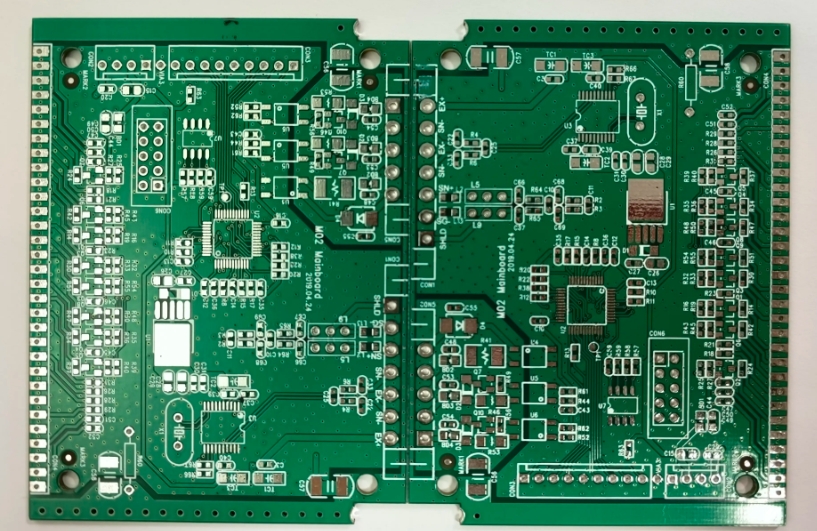
Black Oil-Resistant PCB: Materials, Coatings and Applications A black oil-resistant PCB is a board whose solder mask has been selected and processed to survive contact with oils, fuels and lubricants while maintaining electrical performance. The colour is a consequence of the pigment system, and the resistance comes from the resin…
Overmolding for Flexible Circuits: A Practical Guide Overmolding seals a flexible circuit inside a molded polymer body. It is used on cables, medical leads, sensor assemblies and handheld products where the circuit must be protected from moisture, mechanical abuse and handling, and where a separate enclosure would be too bulky…
Fast PCB Fabrication: How Express Turnaround Actually Works Fast PCB fabrication is often described as a service level, but it is really a set of decisions about data readiness, process standardization and queue position. Understanding which of those three is binding explains why an order can be completed in twenty-four…
Camera Module PCB Design: Layout for Image Sensors A camera module packs an image sensor, a lens, a clock source and a high-speed serial interface into a space measured in millimetres. The board is small, dense and electrically sensitive, and it usually sits on the end of a flexible interconnect…
How to Arrange Layers in a Rigid-Flex PCB Stackup A rigid-flex board is built by laminating flexible polyimide layers into rigid sections, and the stackup is what makes that possible or impossible. Unlike a conventional board, the layer arrangement has to satisfy two different sets of mechanical conditions at once:…
Single-Sided PCB Manufacturing: A Complete Guide A single-sided board carries its copper pattern on one face only, which sounds like a limitation and is in fact the reason it survives. It is the cheapest board that can be fabricated, the fastest to turn around and the easiest to inspect, and…
Thermostat PCB Design: Sensors, Switching and Isolation A thermostat is a small, unglamorous product that hides a surprising amount of design discipline. It combines a sensor with low-level analog signal conditioning, a switching output that may control mains voltage, and a user interface, all inside a housing that is often…
Ultra-Thin Flexible PCB: Construction and Handling Limits An ultra-thin flexible PCB solves problems that rigid boards cannot: a sensor in a moving assembly, a display folded inside a hinge, or a cable replacement that must survive millions of flex cycles. The thinner the construction, the better it bends, and the…
Immersion Silver PCB: Cost Factors and When to Use It Surface finish decides how well a board solders, how long it can be stored, and how much of the budget it consumes. Immersion silver sits in the middle of that range: flatter than hot air levelling, cheaper than an immersion…
Carbon Ink PCB: Conductive Printing for Switches and Contacts Copper is the default conductor on a circuit board, but it is not always the right one. Where the requirement is a contact rather than a current path, a carbon-based conductive ink can replace metal at a fraction of the cost.…