EMC Test Items Explained: What Each Test Applies to a Product Every product that is sold into a regulated market is measured against a list of disturbances, and the list is fixed well before the design starts. Knowing what each item applies to the product, and how it stresses the…
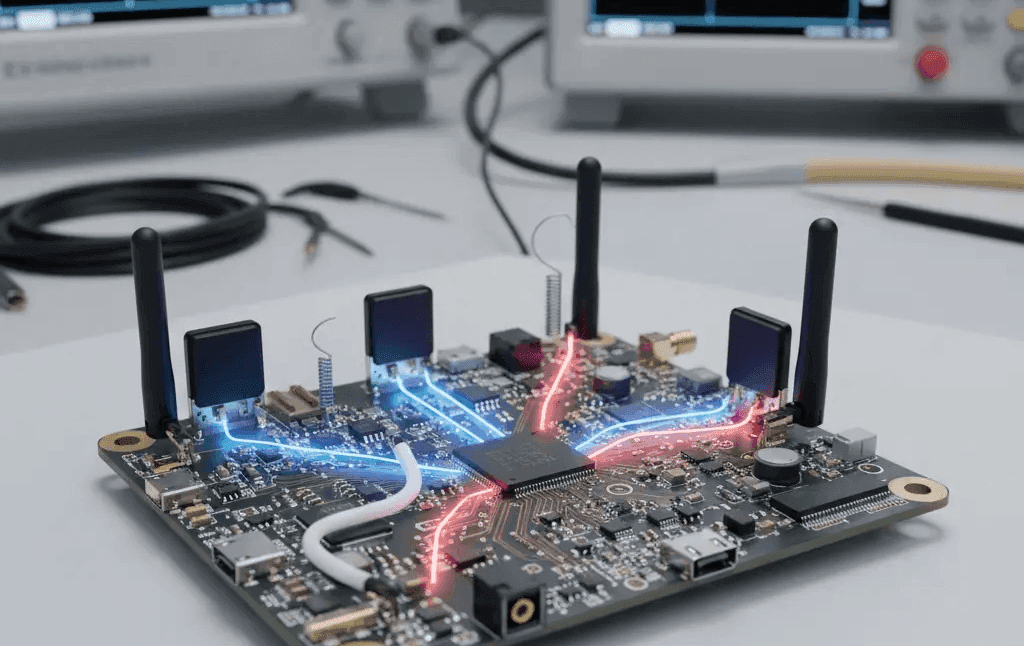
Control Board PCB Design Principles for Noise Immunity A control board is a small computer surrounded by the things it controls, and its reliability depends on how well the layout keeps the noisy parts of that arrangement away from the sensitive ones. The rules are not complicated, and most of…
PCB EMC Problems: Finding the EMI Source and the Coupling Path When a product fails an EMC test, the temptation is to reach for the enclosure and the cables first and start wrapping. That approach sometimes works and never explains itself, and it produces a product whose compliance depends on…
What Drives PCB Manufacturing Cost: Layers, Vias and Materials Layout effort goes into placement and routing, and the cost that the layout creates is usually noticed later, when the quotation arrives. Most of that cost is decided by a small number of choices, and almost all of them can be…
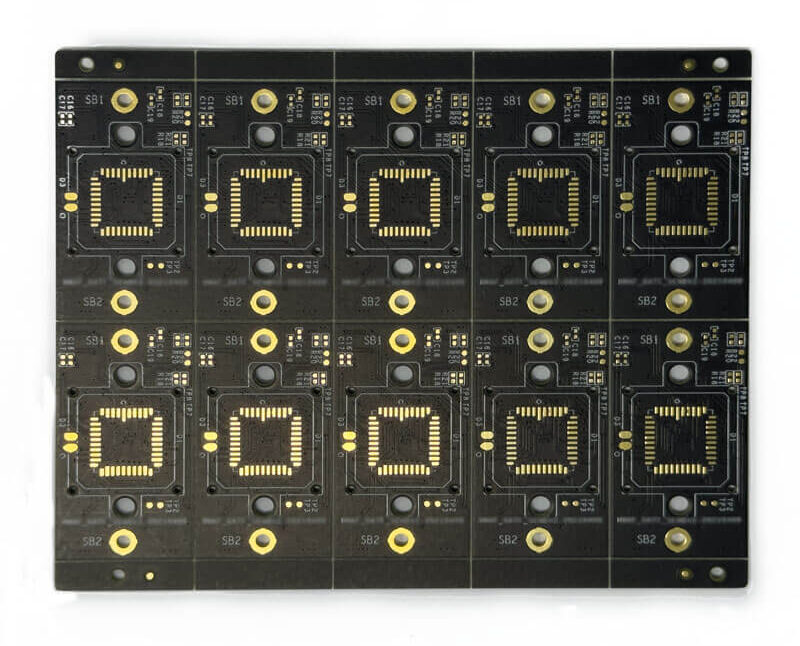
Panelization for Assembly: V-Cut, Tabs and Tooling Strips Surface mount lines handle panels, not single boards. A bare board that is 60 mm by 40 mm cannot be fed through a printer, a placer and a reflow oven on its own, so it is built as part of an array…
Schematic Conversion Between Design Tools: What Breaks Designs change hands. A product line is acquired, a customer supplies an older board for a derivative, an engineering team consolidates onto one tool, or a design is taken over from an external developer who used something else. In each case a schematic…
Repeated Module Placement in Multi-Channel PCB Layout Many boards are the same circuit repeated. An eight channel amplifier, a four port transceiver, an LED driver array or a bank of identical sensor front ends: the schematic describes one channel and the layout has to place and route it several times.…
EMC Design Rules for High-Speed PCB Layout EMC problems are almost never solved by a component added at the end of a project. They are avoided by decisions taken at the start of the layout, when the placement, the stack-up and the routing of the critical nets are still open.…
Handling Power and Ground in a Mixed-Signal PCB Layout Mixed-signal boards are difficult for reasons that have little to do with the components. The resistors, converters and processors are all ordinary parts; what makes the design hard is that the digital section injects current into the same structures the analog…
Shielding Methods for High-Speed PCB Design As data rates rise, the signals that carry the data become more sensitive and their energy becomes smaller at the same time. A fast edge spends a very short time at each level, and the receiver has to decide what it saw from a…