How to Tell a High-Speed Signal from a Low-Speed One in PCB Design The question of which signals on a board are high speed and which are not comes up in every layout review, and it is usually answered with the clock frequency. That answer is wrong often enough to…
Importing and Updating a Netlist in PCB Layout The transfer from a schematic to a layout is where a design stops being a drawing and starts being a physical object, and the netlist is the document that carries the intent across. Every change after that transfer travels the same route,…
Adding a Logo on a PCB: Silkscreen Versus Copper Artwork A logo or a marking on a board is a small feature with a surprising number of ways to go wrong. It shares space with pads and vias, it has to survive the assembly process, and it has to be…
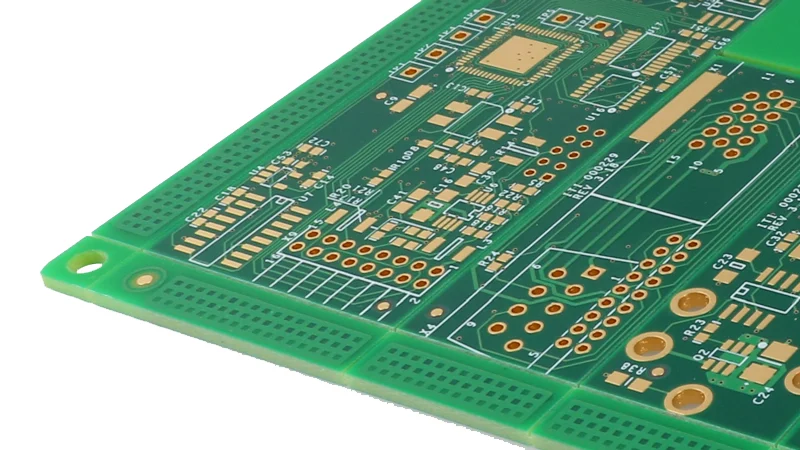
Anatomy of a Printed Circuit Board: Pads, Vias and Layer Types A printed circuit board looks like a single object, but it is a stack of different materials and a set of features that each do one job. Knowing what those features are called and what they are for makes…
Releasing Gerber Files and Fabrication Data to a PCB Manufacturer Releasing a board for manufacture means handing a fabricator a set of files that describe the copper, the solder mask, the legend and the holes without ambiguity. Almost every format in that set is a convention rather than a standard…
Solder Paste Mask Openings on Pads: What to Open and What to Close The paste mask layer is the least examined layer in a finished design and one of the most consequential. It decides where the stencil will have an opening, and therefore where solder paste will be printed, and…
Removing PCB Routing Quickly During Layout Revisions Every layout goes through a phase where the routing that exists is no longer the routing that is wanted. A part moves, a net class changes, a differential pair has to be re-matched, or a design revision arrives after the board is already…
Power Delivery System Design for High-Speed PCBs Supply voltages keep falling and supply currents keep rising. When a core moved from a 130 nm process to a 90 nm process, the rail that had been comfortable at a higher voltage was expected to run near 1.2 V, with a larger…
PCB Riveting and Fusion Technology in Multilayer Lamination Before a multilayer board is pressed, the inner layers have to be held in the right position relative to each other. If they move during the lamination cycle the board comes out with layer-to-layer misregistration, and misregistration on a dense board ends…
Multi-CPU Parallel Computer Systems: Hardware and Software Design A parallel computer built from several processors on one board changes the economics of a compute platform. Instead of pushing a single device to its clock limit, the computation is split across processors that each keep their own local memory and run…