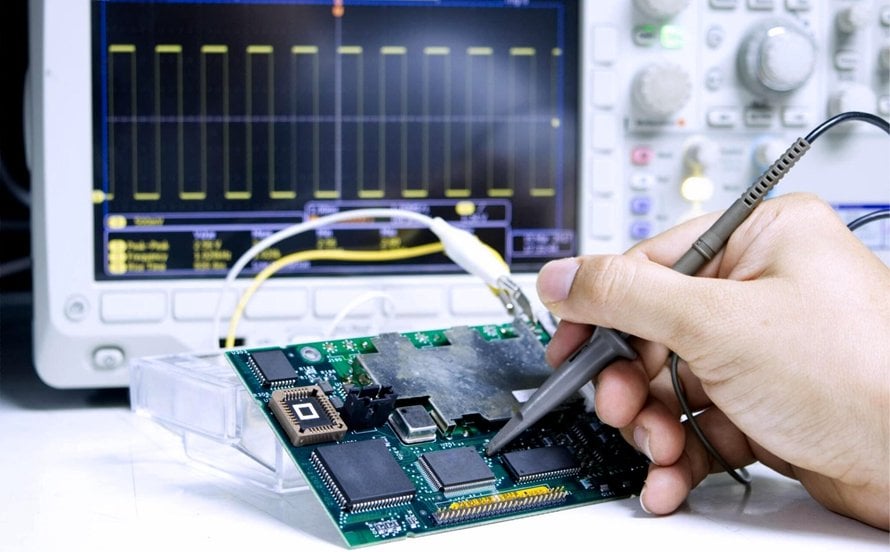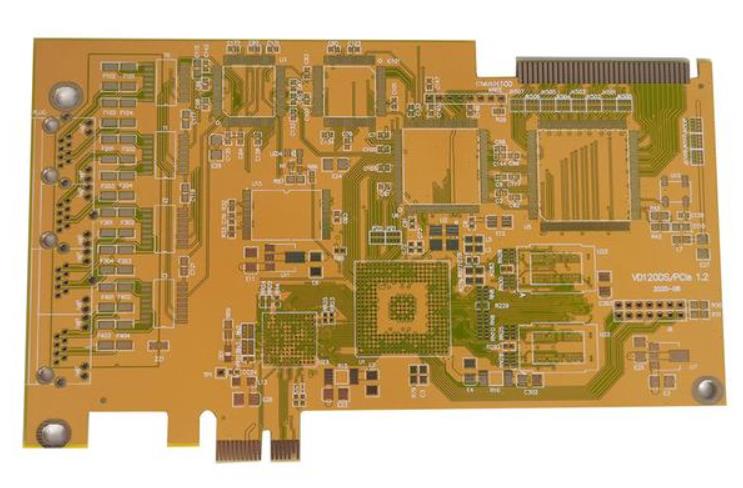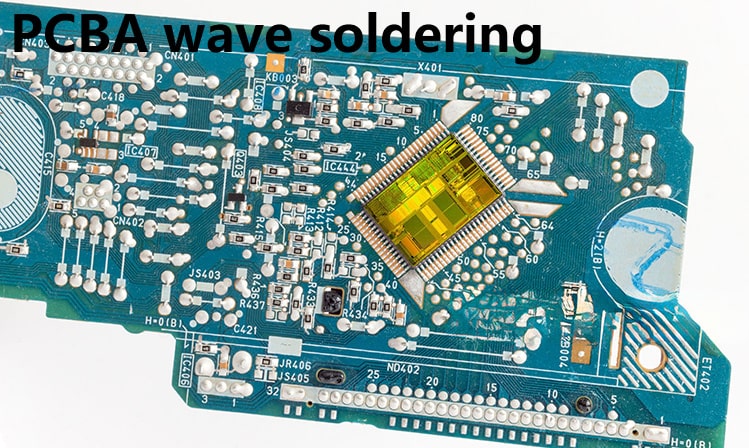
USB-C Hub Design: PD Negotiation, Alt Mode and Routing A USB-C hub or dock looks like a small accessory and contains problems from several disciplines at once. It negotiates power with the host, it switches video lanes between two protocols, it carries multi-gigabit differential pairs through connectors and PCB traces,…
Humidifier Circuit Design: Driving an Ultrasonic Transducer A humidifier looks like a simple appliance: a tank, a fan and something that turns water into mist. Electrically it contains a mains input, an isolated supply, a high frequency high voltage driver, a microcontroller with sensors, and a set of protections that…
Core Board Power Design: Rails, Sequence and Copper A core board built around a high performance applications processor is a power design problem wearing a digital costume. The device presents a dozen or more supply rails at different voltages and very different current levels, it changes its load in nanoseconds,…
AI Motherboard PCB Design: Signal, Power and Thermal Limits A board built around an accelerator is not simply a bigger version of a processor board. Three characteristics change at once: the data rate between the device and its memory and network interfaces moves into the tens of gigabits per lane,…
Analog and Digital Circuits: Where the Difference Shows Up in Layout The usual summary is that digital circuits handle zeros and ones while analogue circuits handle continuously varying signals. That is true and it stops well short of anything useful. The difference that matters on a board is not the…
SMT BOM Verification: Five Fields That Prevent Wrong Parts Wrong parts and lost components are the two most common production problems on an SMT line, and a large share of both are decided long before the line starts. They are decided in the bill of materials. A BOM that is…
DDR Routing Topology: Point to Point, T Branch and Fly-by A single memory device attached to a controller makes every net look like a point to point connection, and the layout rules are correspondingly simple. Add more devices or more ranks, and the nets stop being equivalent: the address and…
Crystal Oscillator Types: SPXO, TCXO, OCXO and VCXO Compared A bill of materials lists a frequency, and a substitute part with the same frequency is ordered. Sometimes the board boots, sometimes it starts intermittently, sometimes the frequency error grows with temperature, and sometimes the current consumption and warm-up time are…
CMRR vs Common Mode Gain: Why a High Number Still Moves Apply the same signal to both inputs of an amplifier, which is a purely common mode stimulus in theory, and the output still moves a little. The immediate conclusion is that the amplifier is not delivering the CMRR printed…
Reflection Coefficient: Magnitude, Sign and What It Predicts Saying that a load is not 50 ohms and will therefore reflect is correct and almost useless. The engineering question has two parts: how much comes back, and does the returning wave add to the incident voltage at that node or subtract…