Preventing Board Handling Damage in SMT Production
Most assembly defects have a process signature that can be traced to a machine setting. Handling damage is different. It is caused by a person or a mechanism touching a board in a way that leaves no mark at the time, and it appears later as a cracked component, an intermittent joint or a latent ESD failure. Because there is nothing to see, it is consistently underestimated in yield analysis.
Why Handling Damage Is Underestimated
The damage is often latent rather than immediate. A ceramic capacitor that has been stressed by bending may pass every electrical test at the factory and fail after thermal cycling in the field. An ESD event may degrade a gate oxide without changing the device’s characteristics enough to fail a functional test. Both appear in the field rather than on the line.
There is also an attribution problem. When a board fails, the investigation usually starts with the process that produced the last visible feature rather than with the movements the board experienced between operations. Board handling sits between processes and is rarely documented, which makes it an easy place for a defect to hide.
Conveyor and Magazine Damage
Conveyors are a common source of subtle damage. Edge rails that grip the board too tightly mark the edges and can crack components placed close to them. A conveyor with a misaligned section can cause boards to catch and flex, and a board that hesitates at a transfer point can be pushed by the one behind it.
Magazines and racks present a different problem. Slots that are too wide allow boards to tilt and contact each other, while slots that are too narrow require force to insert. Rails that have become rough through wear can scrape the solder mask. A regular inspection of conveying and storage equipment, including the condition of the surfaces that touch the board, catches most of these before they become a defect trend.
Fixtures, Clamps and Support
Test and assembly fixtures apply force to hold a board in position, and the way that force is distributed determines whether the board is damaged. A fixture that supports the board only at its corners allows it to flex under probe pressure, which loads components in the middle. A fixture with conformal support underneath distributes the load and removes the flexing.
Clamping pressure is the second variable. Pneumatic clamps that close with a fixed force can over-compress a thin board, and a worn pad on a clamp concentrates the force at a point. Periodic verification of clamping force, and inspection of the contact surfaces, keeps this under control. Fixture design considerations overlap with the dimensional requirements covered in this guide to breakaway tab design.
Manual Handling Risks
Manual handling is the least controlled part of the process and the most likely to cause damage. Pressing on a populated area to seat a board in a housing, prising a board out of a fixture with a screwdriver, and stacking boards directly on top of one another are all common practices that damage components.
Scraping is a specific and under-recognised risk. Dragging a board across a work surface, or sliding it into a magazine with the component side down, scrapes components against the surface and applies shear force to their joints. Providing stands, edge grips and clear work instructions that describe how a board should be picked up and set down removes most of this category.
ESD as a Handling Hazard
Every manual contact with a board is an ESD event waiting to happen, and the risk rises when the operator is not grounded. A wrist strap, a grounded work surface and appropriate footwear are the baseline controls, and they are covered in more detail in the context of assembly floor practice. The damage they prevent is often undetectable at the time.
The connection to handling is direct: the parts most vulnerable to ESD are also the parts most often touched, such as connectors, test points and exposed device pins. Providing temporary protection for those features and enforcing grounding at every manual station is the practical strategy. Where a board must be handled outside a protected area, it should be in a protective bag rather than carried bare.
Depaneling and Separation Damage
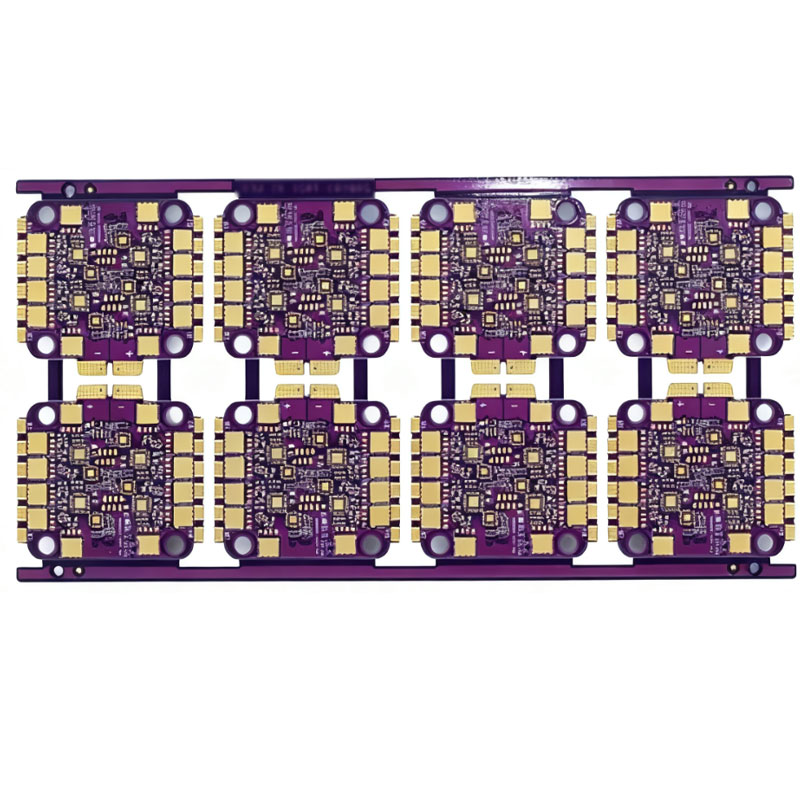
Separating boards from a panel is a handling operation in its own right, and it is often the most mechanically severe event an assembly experiences. Bending a panel to break a scored web, twisting a board out of a tab, or using a dull router all transfer stress into components near the separation line.
The countermeasures are geometric and procedural. Supporting the panel directly beneath the cut, choosing a separation method appropriate to the components mounted near the edge, and reducing the force required by using perforated tabs all reduce the stress delivered. Because the damage may not appear until thermal cycling, the effect of a change in depaneling method is best verified by testing samples rather than by inspecting them.
Inspection for Handling Damage
Handling damage is difficult to find because the most damaging events leave no external mark. Inspection should therefore include targeted checks: ceramic components near board edges and mounting holes, joints on the corners of large packages, and connectors that have been pressed or twisted during assembly.
Magnified visual inspection under consistent lighting finds edge chips and cracks in component bodies. Where the concern is internal damage, techniques such as acoustic microscopy or cross sectioning on a sample provide confirmation. Because handling damage tends to be intermittent, a failure that appears on a few boards is more consistent with a handling event than with a machine setting, and that distinction guides the investigation. The judgement required is similar to that described in this guide to PCB quality judgement.
Training and Work Instructions
Work instructions for handling should be explicit rather than aspirational. They should state where a board may be held, which features must not be touched, how many boards may be stacked, and what to do if a board is dropped. Photographs of correct and incorrect handling are more effective than written prohibitions.
Training should also explain the consequence rather than only the rule. An operator who understands why sliding a board across a bench damages a ceramic capacitor is far more likely to change the habit than one who is simply told not to do it. That understanding also helps people identify hazards the instruction did not anticipate.
Measuring and Reducing Handling Losses
Handling losses can be measured by tracking defects that have no process signature, by location on the board, and by the operation after which they appear. A defect that clusters near edges and corners points to conveying or depaneling, while a scatter across the board suggests manual handling or fixture pressure.
Recording where damage is found, and correlating it with the operations the board passed through, turns an invisible problem into a manageable one. Once the dominant source is identified, a change to a fixture, a conveyor rail or a work instruction can be made and its effect measured. Handling control sits alongside the rest of the process discipline described in this guide to the PCB production flow.
FAQ
How can handling damage be detected if it leaves no mark? It often cannot be detected directly. The practical approach is to inspect the locations most likely to be affected, use magnified inspection for edge chips and body cracks, and confirm internal damage on a sample with acoustic microscopy or a cross section. Tracking where defects cluster is often more revealing than inspecting individual boards.
Is a dropped board always scrap? Not always, but the risk is high and difficult to assess. A board that has been dropped should be quarantined and inspected, with particular attention to ceramic components, large packages and heavy parts. Where the product is critical, scrapping a small number of boards is usually cheaper than a field failure.
What is the single most effective handling control? Providing proper support and eliminating bending. Most severe damage comes from flexing the board while it is constrained, whether in a fixture, a conveyor or during depaneling. Conformal support underneath, controlled clamping force and reduced separation stress address the majority of the risk.