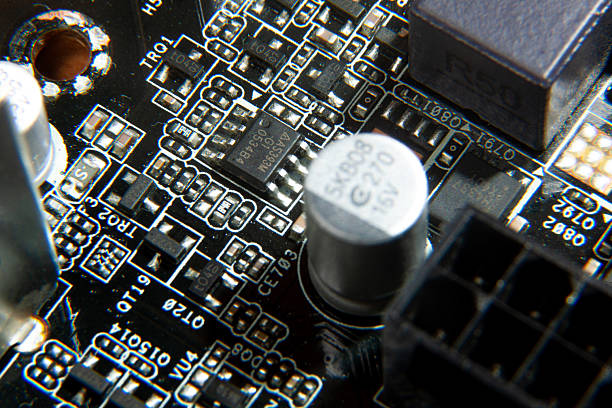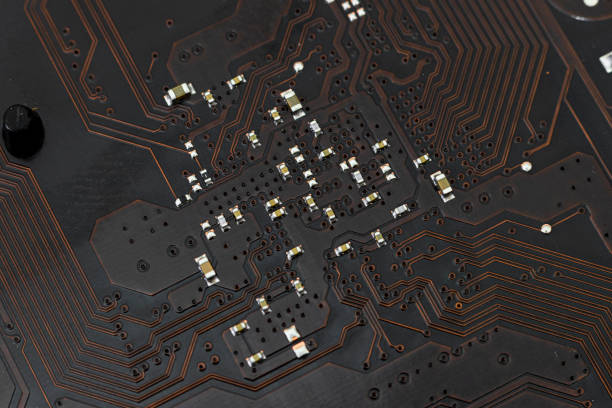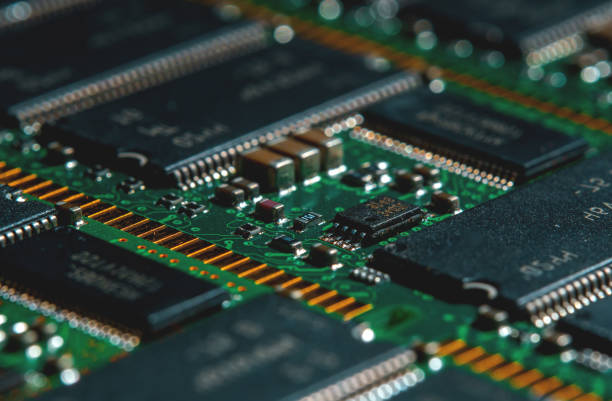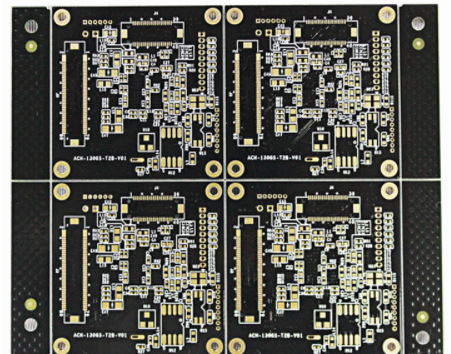
Impedance Control in High-Speed PCB Manufacturing: Why It Matters As electronic systems continue to demand faster data transmission and higher operating frequencies, maintaining stable signal performance has become increasingly challenging. Servers, high-end networking equipment, industrial controllers, telecommunications systems, and other advanced electronic products all rely on PCBs capable of transmitting…

High-Speed High-Frequency PCB Manufacturing: A Practical Manufacturing Guide As electronic products continue to evolve toward higher data rates, higher operating frequencies, greater integration, and smaller form factors, PCB performance has become increasingly important to overall system reliability. In high-speed and high-frequency applications, signal transmission is more sensitive to material properties,…
Any-Layer Interconnect PCB: Design and Assembly Considerations As electronic devices continue to become smaller, faster, and more functionally integrated, conventional PCB interconnection structures are facing increasing design challenges. Traditional layer-to-layer interconnection can limit routing flexibility, consume valuable board space, and create additional signal paths. An Any-Layer Interconnect PCB provides a…
How Strict Testing Ensures Long High-Speed High-Frequency PCB: Process Details and Inspection Points The same discipline applies to High-Speed High-Frequency PCB, where a small process drift turns into a large yield loss. PCB lifespan directly affects the reliability, maintenance requirements, and total cost of ownership of end equipment. Whether…
How to Manufacture High-Reliability 5G Base Station PCBs: What Matters on the Production Line 5G base stations are critical infrastructure for modern communication networks and are expected to operate reliably for extended periods, often in demanding outdoor environments. The reliability of the PCB inside a base station directly affects…
PCB Prototype to Mass Production: From Prototype to Volume Production The prototype stage is essential for validating product feasibility, identifying manufacturing issues, and refining production processes. Mass production, meanwhile, focuses on efficient manufacturing, stable quality, and reliable delivery at scale. The same discipline applies to PCB Prototype to Mass…
Multilayer PCB Manufacturing Process: Key Process and Quality Checks Multilayer PCB manufacturing is a precise and systematic process in which every production stage directly affects the electrical performance, mechanical strength, reliability, and service life of the finished circuit board. From raw material preparation and inner-layer fabrication to lamination, drilling,…
As the electronics industry continues to develop rapidly, circuit layouts are becoming increasingly dense and complex. This trend has created higher requirements for PCB manufacturing, particularly for high-density rigid-flex and flexible circuit applications. During the PCB pattern transfer process, many manufacturers use dry film resist to protect selected copper areas…
Printed circuit boards (PCBs) are an essential part of modern electronic devices, providing reliable electrical interconnections between components, sub-boards, and mainboards. Depending on their construction and application requirements, PCBs can generally be categorized into rigid PCB, rigid-flex PCB, and flexible PCB. Among these technologies, flexible PCB solutions have become increasingly…
Printed circuit boards can generally be divided into two major categories: rigid PCB and flexible PCB. As their names suggest, rigid PCBs maintain a fixed shape, while flexible PCBs can bend, fold, or conform to three-dimensional structures according to the requirements of the end product. Both technologies remain widely used…