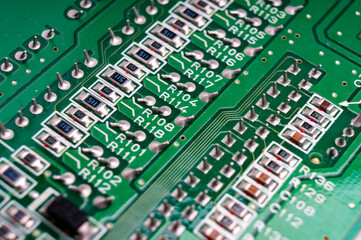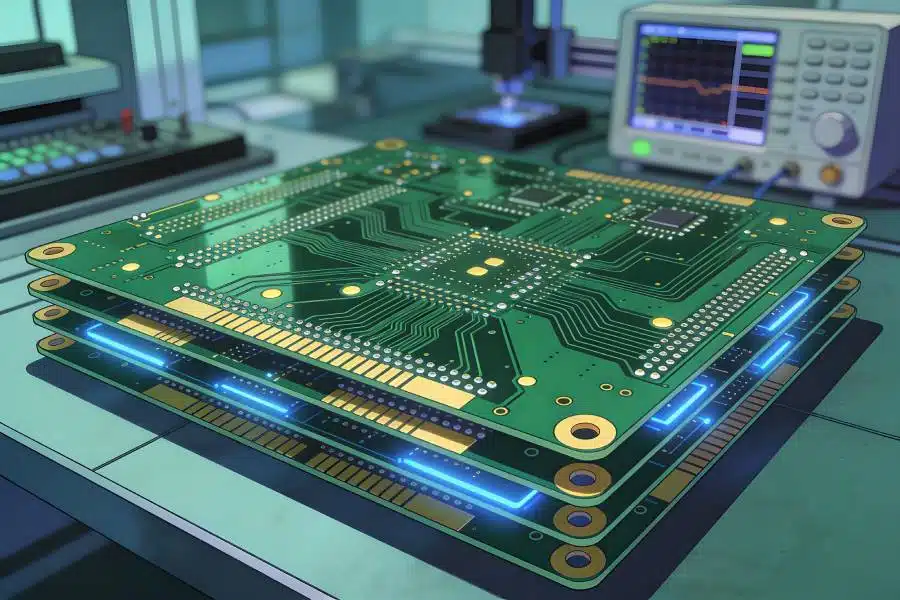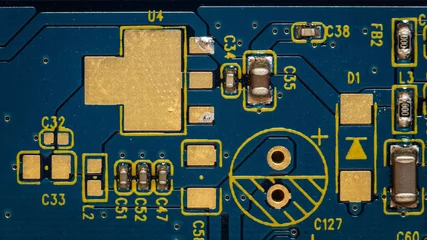
Why Is 50 Ohm Impedance Commonly Used in PCB Design? In PCB design, impedance generally refers to the characteristic impedance of a transmission line. It describes how electromagnetic signals propagate along a conductor and is determined by factors such as trace geometry, dielectric material, copper thickness, and the surrounding reference…
Why Should You Avoid 90-Degree PCB Traces? 3 Key Reasons When engineers first learn PCB layout, one of the most common rules they encounter is to avoid 90-degree traces. But is a right-angle PCB trace always unacceptable? The answer is no. Whether a 90-degree trace should be avoided depends largely…
What Is AOI Inspection? Complete PCB Inspection: What Buyers and Engineers Should Check AOI inspection, or Automated Optical Inspection, is an important quality-control technology used throughout modern electronics manufacturing. It uses cameras and image-processing algorithms to inspect PCBs and PCB assemblies for visible manufacturing defects. Unlike manual visual inspection, an…
PCB Gold Fingers: Design, Process, and Quality Notes Gold-plated contact pads along the edge of computer memory modules, graphics cards, expansion cards, and other electronic boards are commonly known as gold fingers. In the PCB industry, these contacts are also referred to as PCB Gold Fingers or edge connectors. Gold…
PCB Solder Mask and Gerber Files: A Practical Manufacturing Guide In PCB manufacturing, solder mask coverage is an important part of the final board appearance, electrical insulation, and assembly performance. One common misunderstanding is that selecting an option such as “via tenting” or “via opening” when placing an order can…
How to Prevent PCB Short Circuits During PCB Design: Design and Assembly Considerations In PCB design and manufacturing, a PCB Short Circuit is one of the most common and costly defects engineers and manufacturers need to prevent. A short circuit can result from incorrect copper routing, overlapping vias, insufficient clearance,…
How to Choose a Medical Diagnostic Equipment PCB Manufacturer: A Practical Manufacturing Guide Medical diagnostic equipment serves as a critical part of modern clinical diagnosis, ranging from ultrasound systems and patient monitors to advanced CT and MRI equipment. The performance of these systems directly affects the accuracy and reliability…
2026 PCB Reverse Engineering Cost: Complete Price Guide With the accelerating pace of electronic product updates, many companies still need to maintain products that are obsolete or lack design documentation. Industrial control equipment, medical devices, automotive electronics, communication systems, and military products often face production stoppages due to lost original…
Satellite PCB vs Aerospace PCB: A Complete Guide to Design, Materials, Manufacturing & Applications In the avionics industry, satellite PCBs and aerospace PCBs are often used interchangeably, and many procurement professionals assume they are merely different names for the same thing. However, from an engineering perspective, while both belong to…
2026 High Frequency Hybrid PCB Cost: Materials, Price Factors & Manufacturing Guide With the rapid development of 5G communications, automotive millimeter‑wave radar, aerospace electronics, satellite communications, and high‑speed RF equipment, high frequency hybrid PCBs have become a critical component in advanced electronic systems. Unlike traditional FR‑4 PCBs, high frequency hybrid…