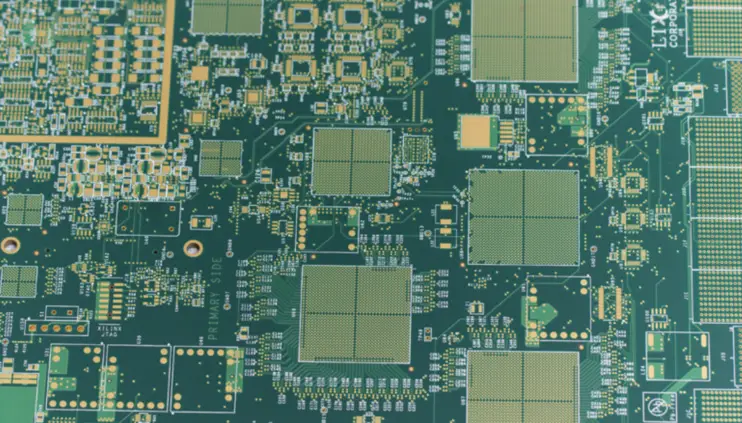
LTCC vs HTCC vs FR-4: How to Choose a Substrate Co-fired ceramics are the quiet workhorses of high-frequency and high-reliability electronics. LTCC and HTCC are both ceramic substrates built from stacked, printed layers fired as one body, and they differ from each other mainly in firing temperature and conductor metallurgy.…

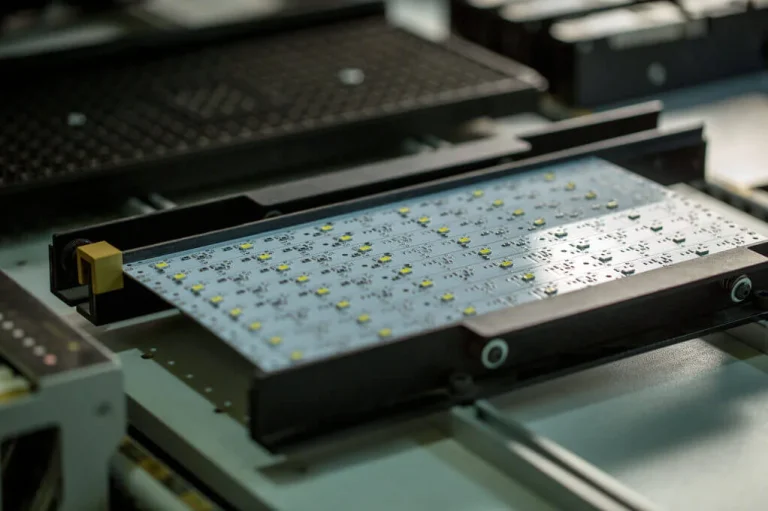
Single Layer PCB Fabrication: Process and Where It Wins A single layer PCB is the simplest board that can be manufactured, and it remains in production in enormous volumes. Lighting drivers, power adapters, simple consumer devices, appliance controls and a long list of industrial modules are all built on one…
Robot Arm Control PCB: Sensors, Motor Drive and MCU Layout A robotic arm is a machine that must know where it is, move smoothly to where it needs to be, and stop safely if anything goes wrong. The board that coordinates all of that is a real-time control system with…
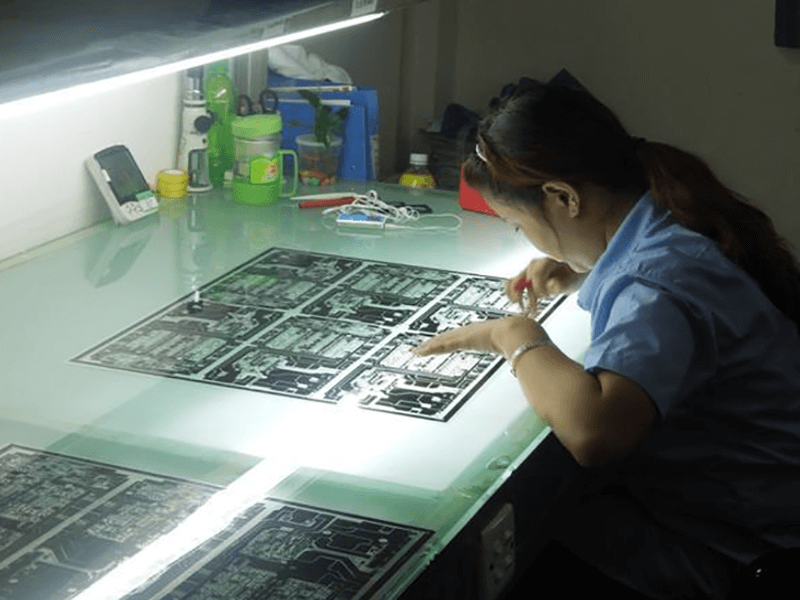
PCB Manufacturing Services: Process, Lead Time, Quality PCB manufacturing services are the bridge between a design file and a physical board, and the quality of that bridge decides whether a product ships on schedule. Two suppliers can quote the same Gerber package and deliver boards that behave very differently, because…
Smartwatch PCB: Fitting Radio, Display and Battery in a Case A smartwatch is the most tightly packed consumer product in volume production. The case is a few centimetres across, the display occupies most of the front surface, a battery takes most of the internal volume and the radio still has…
Thermally Conductive PCB: How the Dielectric Layer Works A thermally conductive laminate is built around a simple idea: replace the glass-reinforced dielectric with something that carries heat far better, so that the components on the board have a short path to a metal structure. The important word is laminate, because…
Imaging System PCB: A Complete Technical Guide An imaging system is a measurement instrument that happens to produce a picture. Whether it is a medical scanner, a machine vision camera or a scientific detector, the board behind it has one job that dominates every other consideration: to preserve the signal…
Voice Assistant PCB: Microphones, Audio Path and Radio A voice assistant board has to do something that most embedded systems do not: it has to listen continuously with enough sensitivity to hear a command across a room, and it has to do that without consuming enough power to drain its…
PCB Routing vs PCB Layout: What the Difference Really Means The two terms are used interchangeably in job listings and product descriptions, and the confusion causes real problems when a project is planned. Routing and layout are two phases of one process, and treating them as the same thing obscures…
High Temperature PCB: Materials, Design and Applications Most boards spend their life near room temperature, and the design rules that follow from that assumption are built into every laminate datasheet. Move the operating temperature up and those assumptions weaken one by one: the laminate softens, expansion increases, solder joints see…