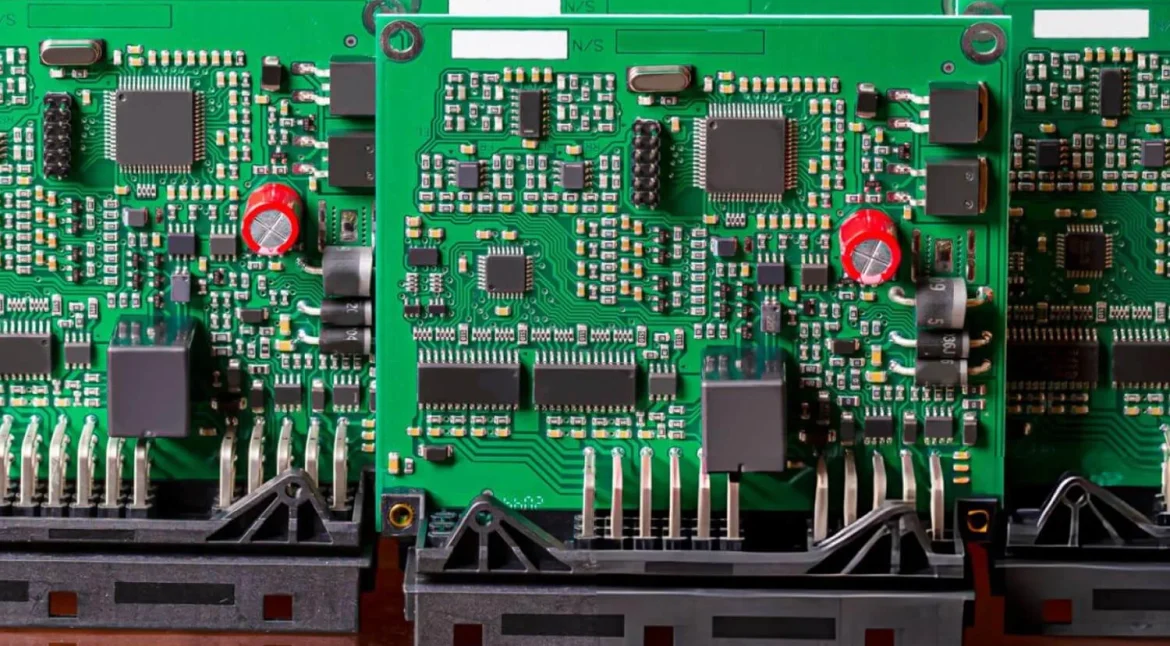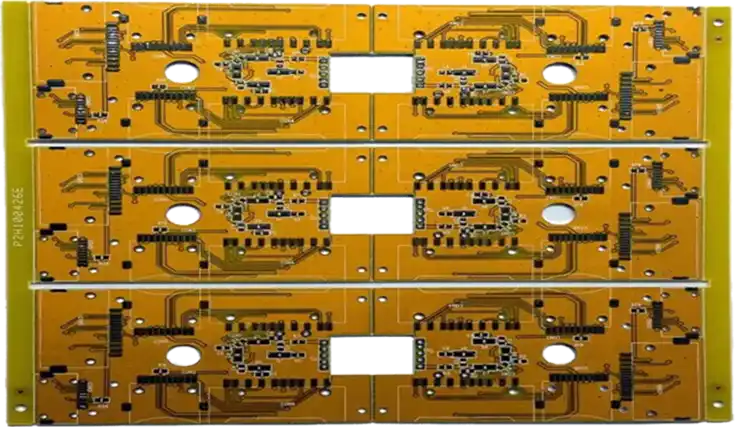
PCB Design and PCB Fabrication Working Together Design and fabrication are usually described as consecutive steps, as though the designer finishes and the fabricator begins. In practice they are a loop. The design determines what the fabricator has to achieve, and the fabricator”s capability determines what the design can ask…

PCB Circuit Board Explained: Materials, Design and Process A printed circuit board is the physical carrier of an electronic design. It holds the components, connects them electrically, removes the heat they generate and provides the mechanical structure that lets the product survive handling. Each of those functions is performed by…
Multilayer Design Rules That Shorten Layout Time Complex layouts take a long time, and most of that time is not spent drawing copper. It is spent deciding, re-deciding and correcting decisions that were made without enough information. Reducing the schedule is therefore not a matter of working faster at the…
Right Angle Routing and Differential Traces Routing is the part of the layout that most theoretical work eventually depends on. A perfect stackup and a well-considered placement still produce a poor result if the traces themselves are drawn without regard for how signals behave along them. Three geometries cause most…
PCB Routing Techniques: Microstrip, Stripline and Impedance Every trace on a board is a transmission line, whether the designer treats it as one or not. Once the edge rate of a signal is fast enough that the rise time approaches the propagation delay of the route, the trace stops behaving…
PCBA Development Process: From Requirements to Production A printed circuit board assembly is rarely a product in itself. It is the part that makes a product function, and it sits between a set of requirements and a physical object that has to be built in quantity at a price. The…
EMI Reduction Through Stackup and Layout Choices Controlling emissions is usually discussed in terms of filters, chokes and shielding, all of which are applied to a finished design. The measures that decide the outcome, however, are taken before any of those components are considered. They are geometric: which layer a…
Multilayer PCB Prototype Requirements Before Production The prototype is the step where a design stops being a description and becomes an object. It is also the last inexpensive opportunity to find a problem: after the design enters volume production, every correction carries the cost of tooling, re-qualification and inventory. The…
Signal Quality Improvements That Cost Almost Nothing Improving signal quality is usually presented as a choice between spending money and accepting compromise. Add more layers, add termination, add a metal shield, add a faster material. In practice a large part of the improvement available to any design is free, because…
Ground Routing and Power Trace Planning Routing begins with a decision that is easy to postpone and expensive to revisit: where the ground and the power go. Signal traces are what designers picture when they think about routing, but the ground and power distribution network is what determines whether the…