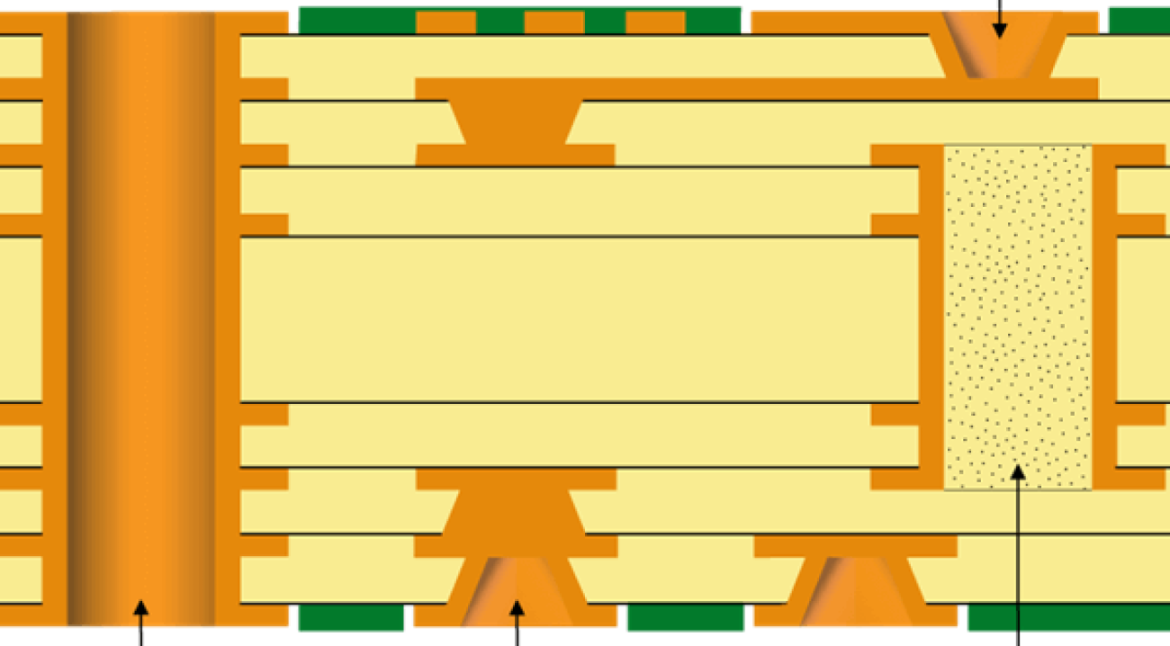
What Is an Embedded PCB? An Embedded PCB is a printed circuit board in which active or passive electronic components are integrated into the internal structure of the board rather than being mounted exclusively on its outer surfaces. Traditional PCB assembly typically places components on the top or bottom surface…
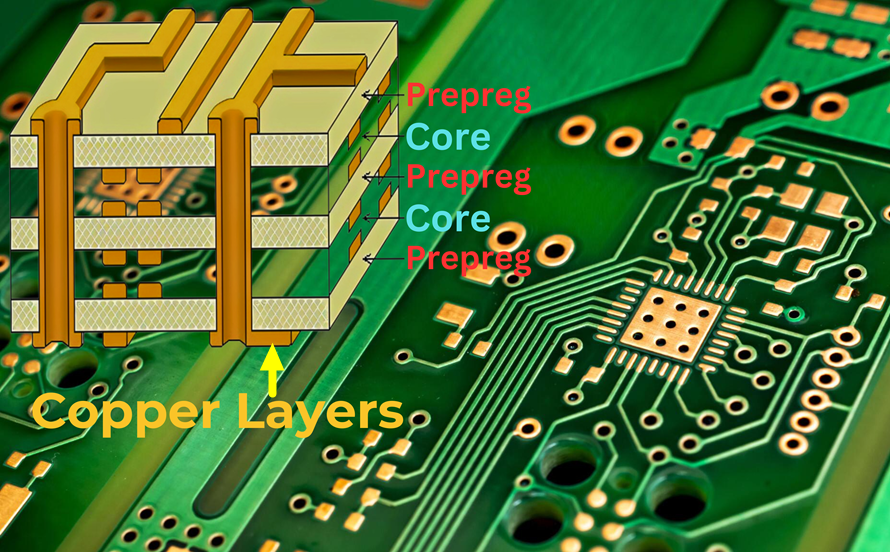
What Is a 6-Layer PCB? As the name suggests, a 6-Layer PCB contains six conductive copper layers separated by dielectric materials. These layers are interconnected through plated through-holes, blind vias, buried vias, or other interconnection structures to provide electrical connections between components and circuits. In a typical six-layer board, the…
What Is an IC Substrate PCB? An IC Substrate PCB is a high-density interconnection substrate used as the fundamental interface between an integrated circuit (IC) package and a conventional printed circuit board (PCB). It provides electrical connections, mechanical support, signal routing, power distribution, and thermal management between the semiconductor die…
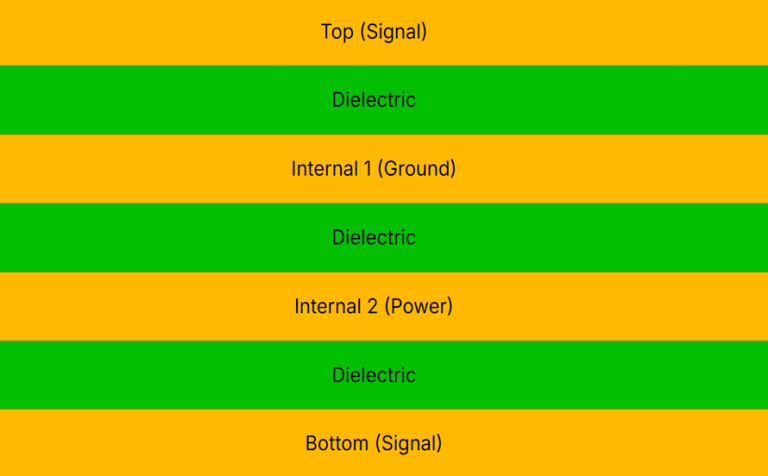
What Is a 4-Layer PCB? As electronic technology continues to advance, modern electronic products are becoming smaller, faster, and more functionally integrated. This development has increased the demand for printed circuit boards with higher routing density, better electrical performance, and greater design flexibility. A 4-Layer PCB is a multilayer printed…
What Is a Double-Sided PCB? With the rapid development of electronic technology, the demand for printed circuit boards continues to grow. As electronic products become smaller, smarter, and more powerful, PCB technology must provide greater circuit density, improved electrical performance, and reliable manufacturing. Among the different types of PCBs, the…
What Is a Single-Sided PCB? A Single-Sided PCB is a printed circuit board with a conductive copper layer on only one side of the substrate. The copper layer can be located on either the top or bottom side of the board, depending on the circuit design and assembly requirements. Among…
What Is Quick-Turn PCB Manufacturing? As electronic products become more advanced and market competition becomes increasingly intense, companies need to develop, test, and launch products faster than ever. Traditional PCB production may take several weeks, which can delay product validation and increase development costs. To meet the demand for shorter…
What Is a High-Speed PCB? A High-Speed PCB is a printed circuit board specifically designed to transmit and process signals at high data rates and frequencies. As signal frequencies and edge rates increase, factors such as signal integrity, impedance, crosstalk, propagation delay, power integrity, and electromagnetic interference (EMI) become increasingly…
What Is a High-Frequency PCB? A High-Frequency PCB is a printed circuit board designed to transmit and process high-frequency electrical signals while maintaining stable electrical performance, controlled impedance, and low signal loss. High-frequency PCBs are commonly used in applications involving RF, microwave, wireless communication, radar, satellite communication, automotive sensing, medical…
What Is a Microvia PCB? A Microvia PCB is a printed circuit board that uses extremely small vias to create high-density interconnections between PCB layers. Microvias are particularly important in high-density electronic products where conventional through-holes would consume too much routing space. In PCB manufacturing, a microvia is generally understood…