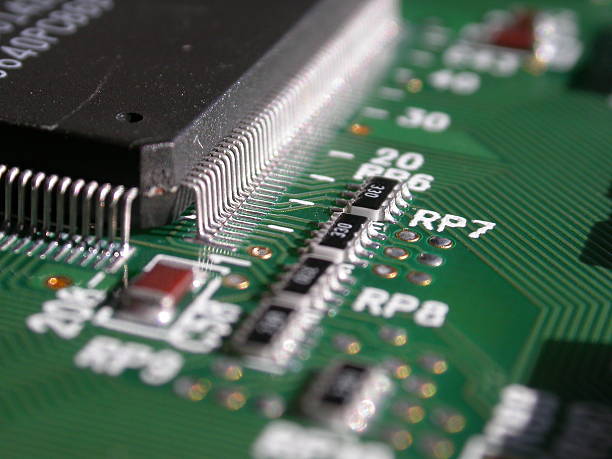
RF PCB Manufacturer for High-Performance RF Applications In industries such as wireless communication, radar systems, satellite navigation, and advanced electronic equipment, RF PCB serves as a critical platform for high-frequency signal transmission. The same discipline applies to RF PCB Manufacturer, where a small process drift turns into a large…
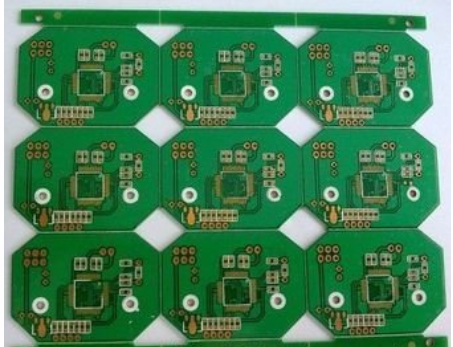
PCB Resin Plugging with Aluminum Sheet Process In advanced PCB Manufacturing, resin plugging with aluminum sheet is an important process developed for specific PCB structures and performance requirements. This technology is especially suitable for high-end circuit boards such as Multilayer PCB, high-speed PCB, and other products requiring excellent via…
IPC Copper Clad Laminate Standards for PCB Manufacturing Copper Clad Laminate is one of the most important base materials in PCB production, and its quality directly affects the performance, reliability, and service life of printed circuit boards. The same discipline applies to IPC Copper Clad Laminate Standard, where a…
Medical PCB Manufacturer for Healthcare Applications The medical industry has extremely high requirements for PCB reliability, stability, and safety. Therefore, a professional Medical PCB Manufacturer must possess advanced manufacturing capabilities, strict quality management systems, and industry-specific expertise to meet the demanding requirements of medical equipment applications. Medical devices directly affect…
PCB Etch Back Process and Its Importance in PCB Manufacturing Among the many processes involved in PCB Manufacturing, PCB Etch Back is a critical technology that has a significant impact on circuit board performance, reliability, and long-term stability. The same discipline applies to PCB Etch Back, where a small…
PCB Inner Layer Circuit Manufacturing Process The inner layer circuit is the core structure of a multilayer circuit board, and its manufacturing quality directly determines the electrical performance, stability, and reliability of the final PCB product. With electronic devices continuously developing toward miniaturization, higher performance, and increased integration,…
Carbon Ink PCB Manufacturing and Applications Among various PCB solutions, Carbon Ink PCB has become an important option for specific electronic applications due to its unique electrical and mechanical properties. By printing carbon ink onto the PCB surface to create conductive traces or contact points, carbon ink boards provide…
RF PCB Lamination Structure Design As a critical platform for high-frequency signal transmission, the lamination structure of an RF PCB directly determines signal stability, transmission loss, and electromagnetic interference resistance. Compared with conventional circuit boards, RF PCB lamination structures require more precise planning in terms of material selection, layer…
Effect of Material Hardness on PCB Manufacturing Process During PCB Manufacturing, material hardness is an important factor that is often overlooked but plays a critical role in product quality and performance. From substrate materials and copper foils to various auxiliary materials, different hardness characteristics directly influence multiple manufacturing stages,…
Multilayer PCB Inner Layer Lamination Sequence The Multilayer PCB lamination sequence is a critical factor that determines the structural stability, electrical performance, and manufacturing yield of a circuit board. For complex products such as high-layer-count mixed-material PCBs and high-frequency high-speed PCBs, a properly designed inner layer lamination sequence ensures…