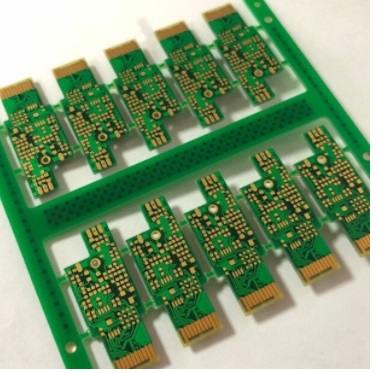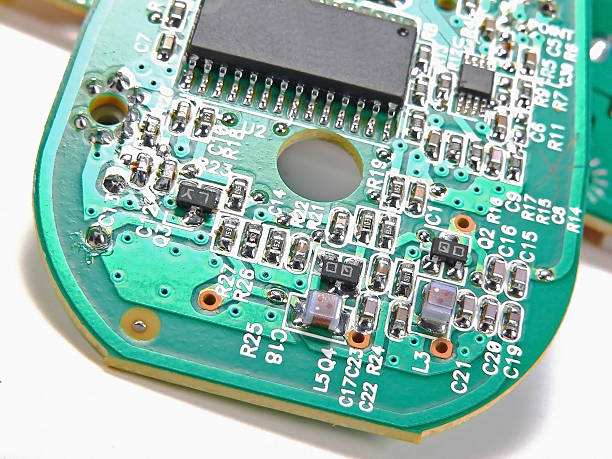
PCB Manufacturing Cost: Key Factors That Affect PCB Pricing PCB manufacturing cost is a major consideration for electronics companies, product developers, and procurement teams. Understanding how PCB pricing is calculated can help businesses select suitable materials, optimize board designs, control production expenses, and choose the right manufacturing process. The final…
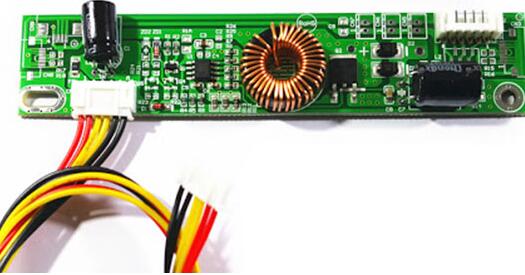
During PCBA Manufacturing, the PCB itself has a direct influence on the efficiency, stability, and quality of the assembly process. Although SMT placement, solder paste printing, reflow soldering, and inspection are performed on the assembly line, many potential problems originate from the PCB design or fabrication stage. If the PCB…
In Multilayer PCB manufacturing, PCB Pre-Baking is an important process performed after liquid photoresist coating and before exposure and development. Its primary purpose is to remove excess moisture and solvents from the photoresist surface, creating a stable film condition for subsequent photolithography. Proper pre-baking directly affects the adhesion, exposure quality,…
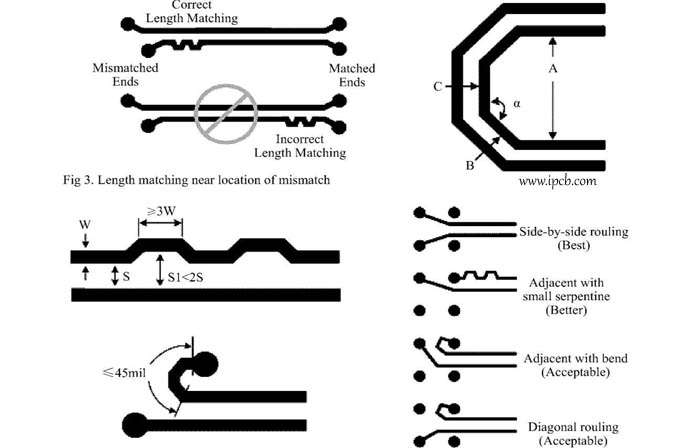
In High-Speed PCB design, differences in trace length can create propagation-delay mismatches that affect signal timing, especially when multiple signals must arrive at their destinations within a narrow timing window. Serpentine Routing is commonly used to compensate for small length differences and achieve more accurate Length Matching between related signals.…
During PCB Manufacturing and PCB Assembly, engineers must not only control the manufacturing process but also identify potential design and process-related problems before they affect product performance. As PCB designs become more complex, with higher component density, finer traces, multilayer structures, and increasingly compact packages, the risk of manufacturing and…
In PCB Assembly, accurate temperature control is essential for achieving reliable solder joints and consistent product quality. A Reflow Soldering process must provide sufficient heat to melt the solder paste and form reliable solder joints while preventing excessive thermal stress on components and the PCB. For this reason, PCB Temperature…
As electronic products continue to operate at higher speeds and frequencies, PCB Impedance has become an increasingly important consideration in PCB design and manufacturing. Impedance is particularly critical in high-speed digital, RF, microwave, and other signal-sensitive applications where even small variations in transmission-line geometry or dielectric properties can affect signal…
As electronic products continue to become smaller, thinner, and more highly integrated, conventional PCB structures are increasingly challenged by limited routing space and higher interconnection density requirements. HDI PCB technology has therefore become an important solution for modern compact electronic products. HDI stands for High-Density Interconnect. An HDI PCB uses…
How to Etch a PCB: PCB Etching Methods, Toner Transfer & DIY Guide You have just successfully tested your circuit on a breadboard. What comes next? Whether you are a hobbyist, student, maker, or electronics engineer, moving a prototype from a breadboard to a PCB (Printed Circuit Board) is an…
For anyone working with electronic products, PCB and PCBA are familiar terms. However, these two concepts are sometimes confused because they are closely related but represent different stages of electronic manufacturing. What exactly is a PCB? How does it become a PCBA? What are the differences between PCB and PCBA,…