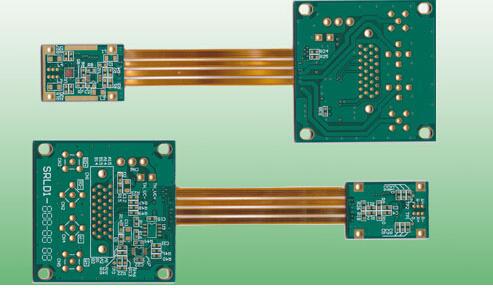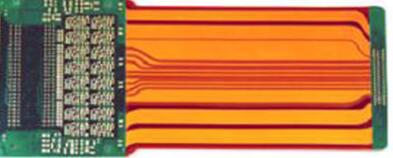
Flexible printed circuits are lightweight, thin, and highly bendable, making them ideal for compact electronic products and applications where conventional rigid PCBs cannot provide sufficient mechanical flexibility. However, this flexibility can also create challenges in areas where components must be mounted, connectors inserted, or the circuit needs additional mechanical support.…
With the rapid development of electronic communication technology, traditional PCB Manufacturing methods must continually evolve to meet the demands of modern electronic products. Today’s devices require smaller dimensions, higher circuit density, improved electrical performance, and shorter development cycles. For engineers, shortening the time between PCB Design completion and a functional…
HDI PCB stands for High-Density Interconnect PCB. High-Density Interconnect technology is an advanced PCB Manufacturing technology developed to accommodate the increasing demands for miniaturization, higher component density, faster signal transmission, and greater functionality in modern electronic products. A printed circuit board is a structural platform composed of insulating materials and…
Solder Bridging is one of the most common soldering defects encountered during SMT Assembly, particularly around fine-pitch integrated circuits (ICs). It occurs when molten solder unintentionally connects two or more adjacent pads or component leads, creating an electrical short circuit. The risk of bridging increases significantly as component pitch becomes…
SMT Assembly is one of the most widely used technologies in modern electronics manufacturing. It enables electronic components to be mounted directly onto the surface of a printed circuit board (PCB), providing high production efficiency, excellent assembly density, and consistent manufacturing quality. Compared with traditional through-hole assembly, SMT Processing can…
PCB Lamination is one of the most critical processes in Multilayer PCB manufacturing. During lamination, copper-clad inner layers, Prepreg, and copper foil are stacked and bonded under controlled temperature and pressure to form a mechanically stable multilayer structure. The quality of the lamination process directly affects layer-to-layer registration, dielectric thickness,…
The price of a printed circuit board is influenced by much more than its dimensions and layer count. PCB Price depends on material selection, board structure, manufacturing processes, design complexity, quality requirements, production volume, and the capabilities of the selected PCB Manufacturer. For engineers and purchasing teams, understanding these cost…
Surface finish is an important part of the PCB Manufacturing process because it protects exposed copper and provides a solderable surface for component assembly. Hot Air Solder Leveling (HASL) has been widely used as a PCB surface finish for many years. Depending on the application and regulatory requirements, manufacturers may…
In PCB Design, safety clearance is one of the fundamental considerations for electrical performance, manufacturing reliability, and mechanical compatibility. Designers need to consider many different types of spacing, including the distance between traces, pads and vias, copper and the board edge, silkscreen and pads, components and neighboring structures, and components…
Printed circuit boards are essential components of virtually every electronic product. They provide the electrical and mechanical foundation for connecting and supporting electronic components, making PCB quality directly related to the performance, reliability, and service life of the final product. During the PCB Manufacturing process, numerous manufacturing variables must be…