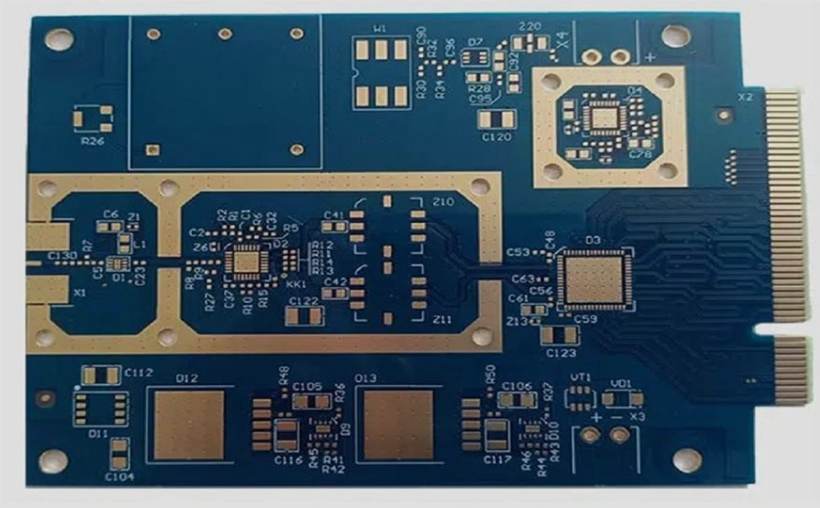
FR4 vs Rogers PCB for RF Modules: Which Material Suits Your RF Product? With the rapid development of wireless technologies such as 5G, Wi-Fi 6/7, Bluetooth, LoRa, Zigbee, GPS, automotive millimeter-wave radar, and satellite communications, RF modules demand increasingly stringent PCB materials. For RF module design, the PCB is not…

High Temperature PCB Manufacturing Process – Materials to Testing With the rapid development of new energy vehicles, aviation, industrial automation, petroleum exploration, defense hardware, and high-power supplies, circuit devices are increasingly required to run stably for extended periods in high-temperature environments ranging from 150°C to over 300°C. Standard FR4 circuit…
2026 PCB Reverse Engineering Cost: Complete Price Guide With the accelerating pace of electronic product updates, many companies still need to maintain products that are obsolete or lack design paperwork. Industrial control hardware, medical devices, automotive electronics, comms systems, and military products often face production stoppages due to lost original…
Satellite vs Aerospace PCB: Key Design Differences In the avionics industry, spacecraft PCBs and aviation PCBs are often used interchangeably, and many buying professionals assume they are merely different names for the same thing. However, from a design perspective, while both belong to the high-reliability PCB category, they differ much…
HDI PCB 1+N+1 vs 2+N+2: Microvia Structure Comparison Guide In HDI PCB manufacturing, 1+N+1 and 2+N+2 are two of the most common structure types. Both use microvia technology, but they differ significantly in stack‑up approach, manufacturing difficulty, cost, reliability, and application fields. This article provides a comprehensive analysis of HDI…
High Frequency Hybrid PCB Cost 2026: Materials, Factors & Guide With the rapid development of 5G comms, automotive millimeter-wave radar, aerospace electronics, satellite comms, and high-speed RF hardware, high frequency hybrid PCBs have become a critical part in advanced electronic systems. Unlike traditional FR-4 PCBs, high frequency hybrid PCBs use…
Fine Line PCB Trace Cost Guide: 3/4/5 mil Pricing Analysis As electronics move toward miniaturization, high speed, and high integration, the demand for fine line PCB trace technology continues to rise. Smartphones, automotive electronics, medical devices, 5G communication equipment, AI hardware, and high-performance computing all require higher density PCB layouts…
PCB Conformal Coating Thickness Guide: Standards & Best Practices As circuit devices continue to evolve toward miniaturization, higher power density, and greater reliability, the long-term stable operation of PCBs has become a critical factor in product design. In car electronics, industrial controls, medical devices, aviation, and outdoor electronics, PCBs often…
Industrial PCB Prototype Manufacturing: Process, Cost & Lead Time Complete Guide In industrial automation, industrial control, power hardware, robotics, instrumentation, energy systems, and industrial IoT, PCBs often need to run reliably over long periods while enduring temperature variations, physical vibration, electrical stress, and harsh industrial environments. So, before moving to…
4-Layer PCB for EV Charging Stations: Design & Manufacturing Guide With the rapid adoption of electric vehicles, EV charging stations (EV Charging Stations) demand ever-higher reliability, comms strength, electrical safety, and long-term stability from their control systems. In modern AC and DC chargers, the control board typically integrates a microcontroller,…