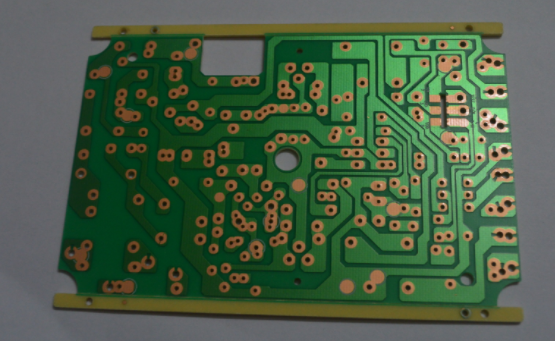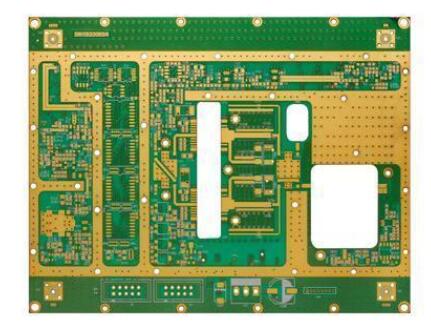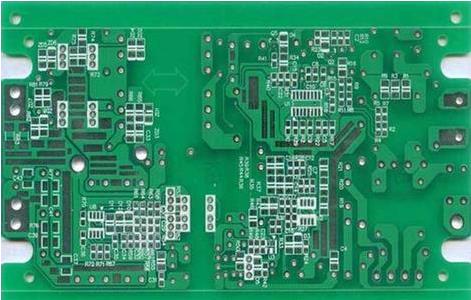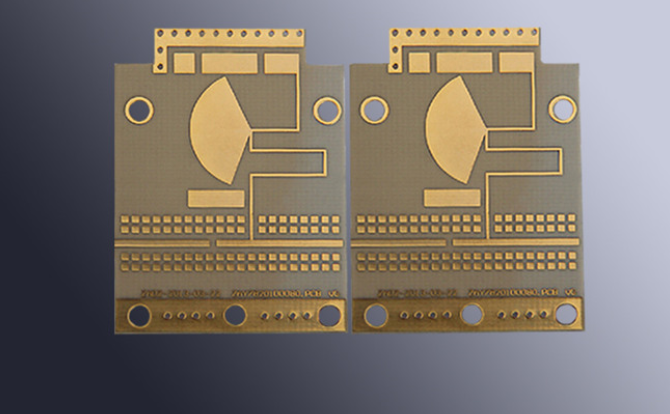
As electronic products become smaller, lighter, and more highly integrated, conventional rigid and flexible circuit boards are increasingly being combined to meet complex design requirements. This has led to the rapid development of rigid-flex PCB technology. A rigid-flex PCB combines the mechanical strength of a rigid PCB with the flexibility…

Multilayer PCB manufacturing is an important part of modern electronics production. As electronic products become smaller, faster, and more highly integrated, multilayer PCBs are increasingly used to accommodate complex circuits within limited board space. Kingda provides professional PCB manufacturing solutions covering multilayer PCBs, high-density interconnect (HDI) PCBs, thick copper boards,…
The rapid commercialization of 5G is creating new growth opportunities across the electronics industry. As communication frequencies increase and data transmission speeds become faster, conventional PCB materials are increasingly challenged by higher signal loss, stricter impedance requirements, and greater thermal demands. This trend is driving strong demand for advanced high-frequency…
As electronic systems continue to operate at higher frequencies and data rates, the demand for advanced High-Frequency PCB technology is increasing rapidly. Communication systems, radar, automotive electronics, satellite equipment, wireless networks, and other RF applications increasingly require circuit boards with stable electrical performance, low signal loss, precise impedance control, and…
As electronic products continue to become smaller, faster, and more powerful, the requirements for PCB Manufacturing are becoming increasingly demanding. Advances in information technology, communications, automotive electronics, industrial automation, medical equipment, and other industries are driving PCB manufacturers to improve production precision, process stability, product customization, and environmental performance. Over…
With the rapid development of science and technology, particularly information and communication technologies, the demand for advanced printed circuit boards continues to increase. Modern applications in wireless communications, transportation, radar, aerospace, automotive electronics, and other high-performance fields require circuit boards capable of handling higher frequencies, faster signal transmission, tighter impedance…
As electronic systems continue to operate at higher frequencies and data rates, conventional PCB materials are increasingly challenged by signal loss, impedance variation, thermal stress, and manufacturing requirements. High-Frequency PCB Materials are specially engineered substrates designed to provide stable electrical performance at RF, microwave, and other high-frequency operating ranges. In…
RO4350B PCB is widely used for high-frequency and high-speed electronic applications that require stable electrical performance, low dielectric loss, and reliable manufacturing characteristics. As operating frequencies continue to increase, conventional FR-4 materials may not provide sufficient electrical performance for certain RF and microwave applications. Designers therefore need to select a…
As the processing speed of microprocessors, signal converters, and high-speed data transmission equipment continues to increase, digital systems are reaching data rates of 100 Gbps and beyond. At these speeds, conventional PCB materials may no longer provide the electrical performance required for reliable high-speed signal transmission. Therefore, selecting the appropriate…
When designing RF and microwave systems, engineers pay close attention to intermodulation distortion (IMD), especially in applications where multiple high-power signals are transmitted simultaneously. In passive circuits such as antennas, transmission lines, cables, connectors, filters, and other RF components, a related phenomenon known as Passive Intermodulation (PIM) can become a…