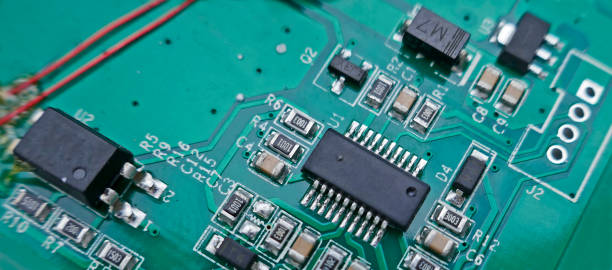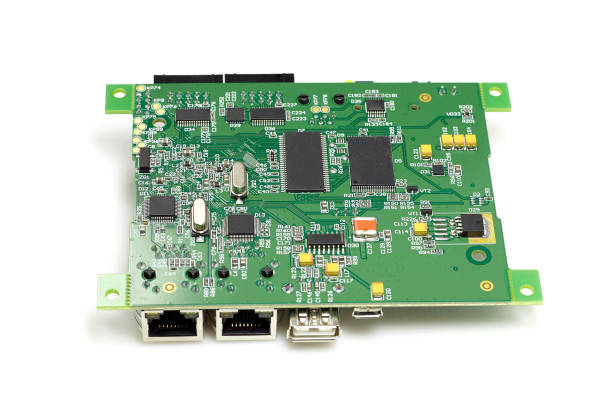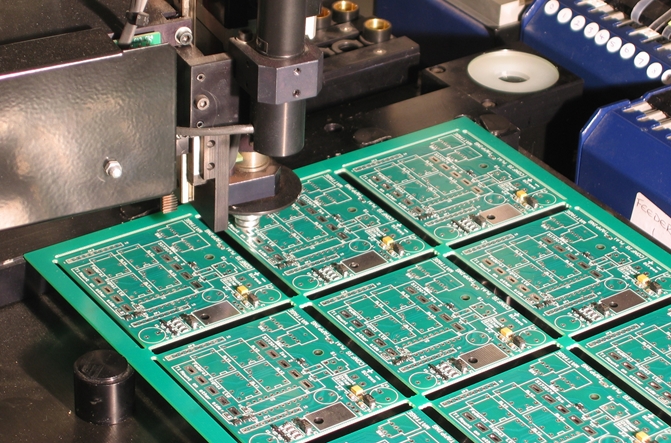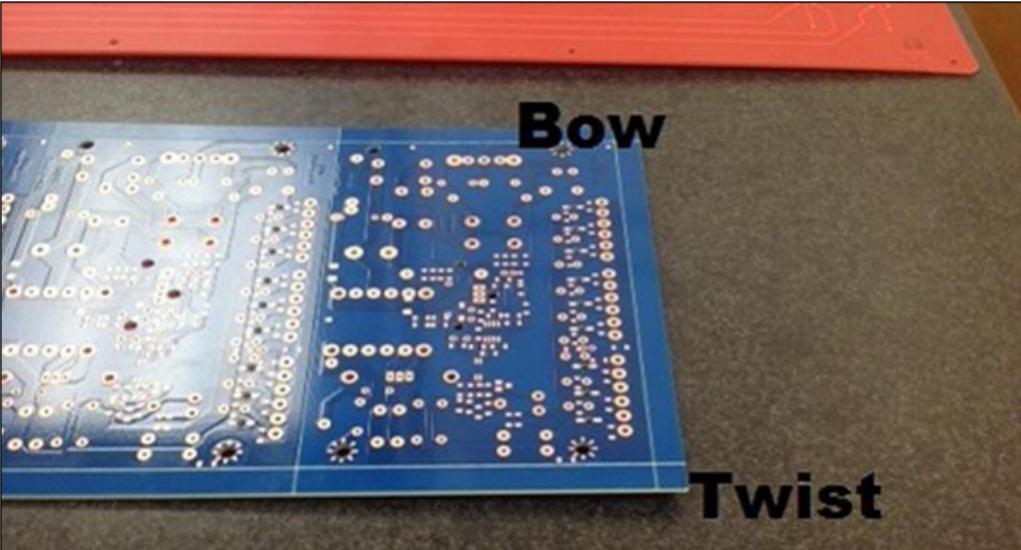
PCB flatness is an important quality requirement throughout PCB Manufacturing and assembly. As electronic products become smaller, thinner, and more highly integrated, the dimensional stability and flatness of printed circuit boards have become increasingly critical. During automated surface-mount assembly, excessive PCB Warpage can cause positioning errors, poor solder paste printing,…
Blind and Buried Via PCB Manufacturing Challenges: A Complete Guide A Blind and Buried Via PCB is designed to achieve high-density interconnection while using less board space than conventional through-hole structures. Blind vias connect an outer layer to one or more internal layers without passing through the entire board, while…
How to Repair a Keyboard PCB: Keyboard PCB Repair, Troubleshooting & Rework Guide The development of electronic technology has transformed nearly every modern product and application. From early computing systems to today’s compact smart devices, each generation of computers has evolved alongside advances in electronics, semiconductor technology, and PCB design.…
Medical PCB Cleaning Standards: Why Cleanliness Matters A Medical PCB is a critical electronic component in diagnostic equipment, patient monitoring systems, life-support devices, laboratory instruments, and other medical electronics. Its cleanliness can directly affect electrical reliability, signal integrity, service life, and overall equipment safety. Unlike conventional consumer electronics, medical…
Even the most carefully designed High-Frequency PCB can experience variations in electrical performance after fabrication. Although modern computer-aided engineering (CAE) and electromagnetic (EM) simulation tools can predict circuit behavior under carefully defined conditions, simulation results are only as accurate as the manufacturing parameters used in the model. In practical PCB…
How to Repair a PCB Pad: PCB Pad Repair, Lifted Pad & Trace Repair Guide Printed circuit boards have become increasingly compact and sophisticated as electronic products continue to demand higher functionality, smaller dimensions, and greater reliability. A modern PCB may contain hundreds or thousands of components, with each component…
ENIG PCB vs HASL PCB to Complete Comparison Guide In modern PCB surface finish technology, the treatment applied to exposed copper pads plays an important role in solderability, corrosion resistance, assembly performance, and product reliability. Among the commonly used surface finishing options, ENIG PCB and HASL PCB are two…
How to Change PCB Colors in Altium: PCB Design & Layout Visualization Guide PCB design is the foundation of the final printed circuit board and one of the most critical stages in product development. The PCB layout provides the basis for subsequent PCB manufacturing, assembly, testing, inspection, and troubleshooting. A…
As electronic systems continue to operate at higher frequencies and faster data rates, material selection has become increasingly important in PCB Manufacturing. Glass fiber is widely used to reinforce dielectric substrates because it provides excellent mechanical strength, dimensional stability, and durability. However, glass reinforcement can also introduce electrical variations that…
When selecting a PCB manufacturing company, technical expertise, production capability, quality control, and supply chain reliability are all important factors to consider. A qualified PCB manufacturer should not only be able to fabricate standard circuit boards but also provide the engineering support and manufacturing flexibility required for complex electronic products.…