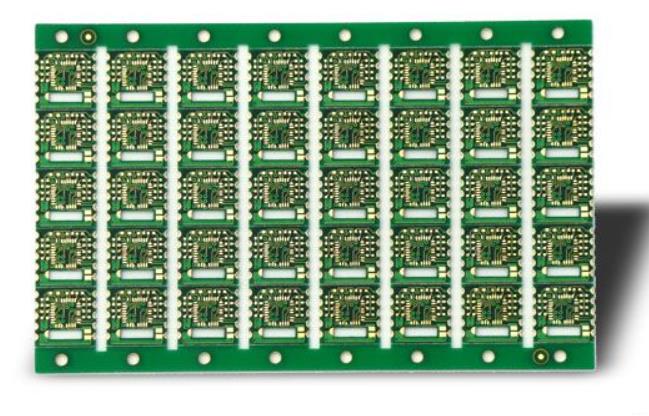
Quick Turn PCB Price Guide: The Real Cost of Speed In today’s electronics industry, time-to-market often outweighs marginal cost savings. Whether you’re a hardware startup validating a prototype or an engineering team responding to an urgent design change, quick-turn PCB manufacturing has become an essential service. However, speed comes at…
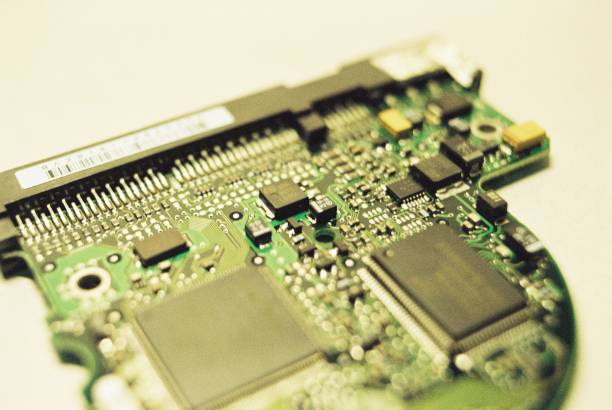
Why Does PCB Impedance Control? | Controlled Impedance PCB A PCB can be regarded as a high-speed pathway for electrical signals, and its electrical characteristics directly influence the stability, response speed, and reliability of an electronic system. As data rates and operating frequencies continue to increase, PCB Impedance Control has…
5G Base Station Antenna PCB Supplier The efficient operation of 5G base stations depends heavily on the stability and performance of their antenna and RF circuit boards. As a critical platform for signal transmission, reception, and processing, the 5G Base Station Antenna PCB can directly influence network coverage, data…
Back Drilling PCB Supplier: Precision Technology for High-Speed Multilayer PCBs In the manufacturing of high-layer-count and precision circuit boards, PCB back drilling is an important technology for improving high-speed signal transmission performance. By precisely removing the unnecessary portion of a plated through-hole, commonly known as a via stub, back…
How to Evaluate a PCB Manufacturer: 5 Key Criteria A printed circuit board is the structural foundation of most electronic products, and its quality and performance can directly affect the reliability of the finished product. Choosing the right PCB Manufacturer therefore requires more than simply comparing prices. A comprehensive…
Heavy Copper PCB Manufacturing: Key Processing Considerations Heavy Copper PCB technology is widely used in electric vehicles, industrial power supplies, high-power converters, and other applications that require high current-carrying capacity and effective heat dissipation. Compared with conventional printed circuit boards, heavy copper PCBs use significantly thicker copper foil, which…
Industrial Robot Control Board PCB: Design and Manufacturing Requirements Industrial robots are a critical part of modern smart manufacturing. Their ability to perform precise movements, maintain stable operation, and respond quickly to sensor feedback depends heavily on the performance of the electronic control system. At the center of this…
As automotive electronics continue to evolve toward higher levels of driver assistance and automated driving, radar has become an important sensing technology for modern vehicle safety systems. Advanced Driver Assistance Systems (ADAS) increasingly rely on radar, cameras, LiDAR, and other sensors to monitor the vehicle’s surroundings and provide information for…
As signal speeds continue to increase, selecting the right PCB Materials has become increasingly important for high-speed and high-frequency electronic systems. When signals operate at sufficiently high data rates or frequencies, the electrical characteristics of the PCB substrate can directly affect signal integrity, transmission loss, timing, and overall system performance.…
As electronic systems become faster, smaller, and more highly integrated, High-Speed PCB Design has become an essential part of modern electronic engineering. High-speed design is not determined simply by the nominal frequency of a digital signal. In many cases, the signal rise time, interconnect length, propagation delay, and electrical behavior…