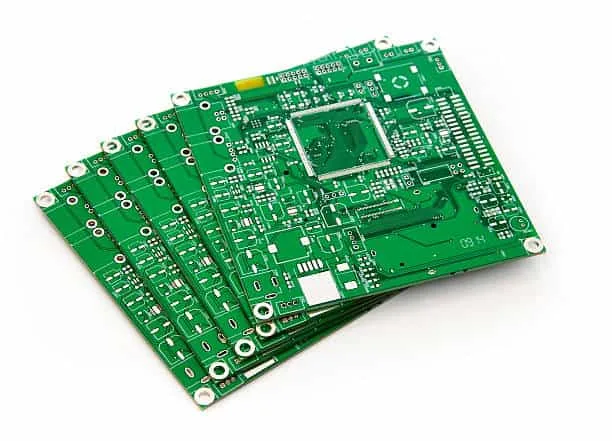
Chinese PCB Manufacturers

Chinese PCB Manufacturers: How to Choose a Reliable PCB Manufacturer in China

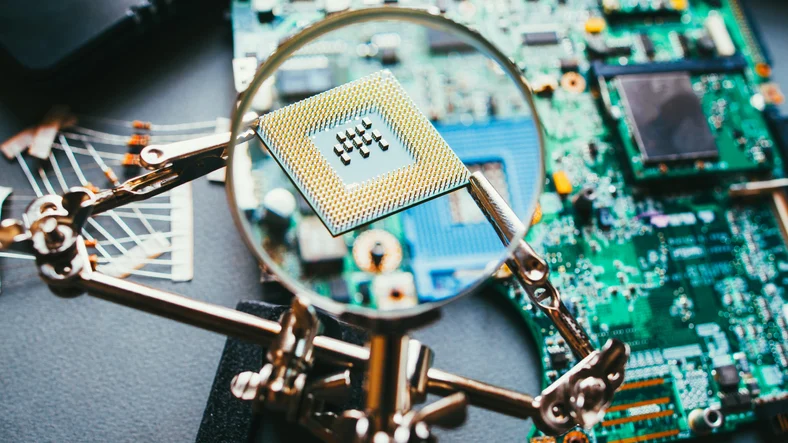
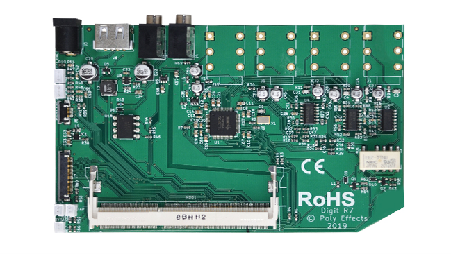
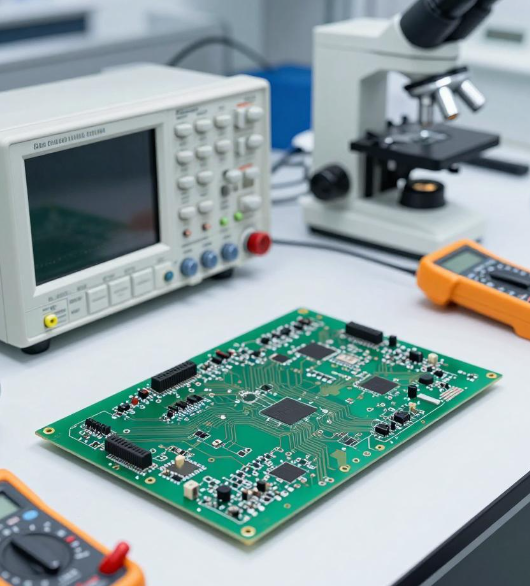
China has become an important global manufacturing base for printed circuit boards (PCBs) and PCB assembly (PCBA). With extensive manufacturing capabilities, mature electronics supply chains, competitive production costs, and increasingly advanced manufacturing technologies, Chinese PCB manufacturers serve customers across consumer electronics, industrial automation, automotive electronics, telecommunications, medical equipment, new energy,…
ENIG process control

ENIG PCB DFM and Panelization Optimization for Gold Thickness

Many hardware engineers attribute gold thickness uniformity entirely to the PCB manufacturer’s plating process. However, PCB layout, copper distribution, pad geometry, and panelization can also influence the plating environment and amplify local variation. A design that creates significant differences in exposed surface area, copper distribution, panel position, or solution accessibility…
gold thickness measurement

ENIG PCB Gold Thickness Uniformity: Inspection and Failure Analysis

Even after PCB design optimization and process control are completed, high-volume ENIG PCB production still requires systematic inspection and validation to prevent nonconforming boards from entering assembly. Gold thickness uniformity is particularly important because many thickness variations cannot be identified through visual inspection alone. A PCB may have an acceptable…
OSP surface finish

OSP PCB Oxidation Failure Mechanisms and Engineering Risks

OSP, or Organic Solderability Preservative, is widely used in consumer electronics, industrial control equipment, communication boards, and other applications because it provides a relatively flat soldering surface, supports fine-pitch BGA and QFN assembly, and can offer a cost-effective surface-finish solution. However, a common production problem is that prototype boards may…
PCBA Testing

PCBA Testing: Comprehensive Guide to PCB Assembly Testing Methods, Defects, and Quality Control

In modern electronics manufacturing, PCBA testing is a critical part of quality control used to verify whether an assembled printed circuit board meets its electrical, functional, and reliability requirements before shipment. A PCB assembly may appear visually perfect after SMT and THT assembly, yet hidden problems such as soldering defects,…
OSP surface finish

OSP PCB DFM, Packaging, and Storage: Reducing Oxidation Risk

The oxidation resistance of an OSP PCB is often attributed entirely to the PCB manufacturer’s surface-finishing process. However, PCB layout, panelization, packaging, transportation, storage, and assembly conditions can all affect the final performance of an OSP surface finish. Some PCB designs can create unfavorable manufacturing conditions from the beginning. Even…
PCBA Testing

PCBA Testing: A Complete Guide to PCB Assembly Inspection and Quality Control

In modern electronics manufacturing, the performance, reliability, and service life of a finished product are closely related to PCBA quality control. Even a small defect, such as a soldering crack, component misalignment, incorrect component value, solder bridge, or hidden BGA soldering issue, can lead to intermittent failures, costly rework, product…
PCB material selection

Halogen-Free PCB Standards and Application Guide

During the mass-production stage of industrial control, energy-storage, automotive, and export-oriented consumer electronics projects, engineers and procurement teams often make a simple assumption: a halogen-free PCB means a circuit board that contains absolutely no halogens. In practice, this definition is more nuanced. A PCB can be manufactured with a halogen-free…
PCB material selection

Halogen-Free PCB Thermal Parameter Selection Guide

Once a project requires a halogen-free PCB, engineers often focus primarily on glass transition temperature (Tg) when comparing laminate materials. However, Tg is only one part of the material selection process. Thermal decomposition temperature (Td), Z-axis coefficient of thermal expansion (Z-axis CTE), moisture absorption, and comparative tracking index (CTI) can…
halogen-free PCB

Halogen-Free PCB Acceptance Standards and Optimization Strategies

Batch delivery does not mean that a halogen-free PCB project has been successfully implemented. Many hardware teams consider PCB arrival and basic electrical continuity testing to be the end of the project. However, without systematic documentation review, material verification, sampling inspection, and reliability validation, problems may only appear during large-scale…